
- Puesto en BGG
- BGG #4879
- Puntuación BGG
- 6,9
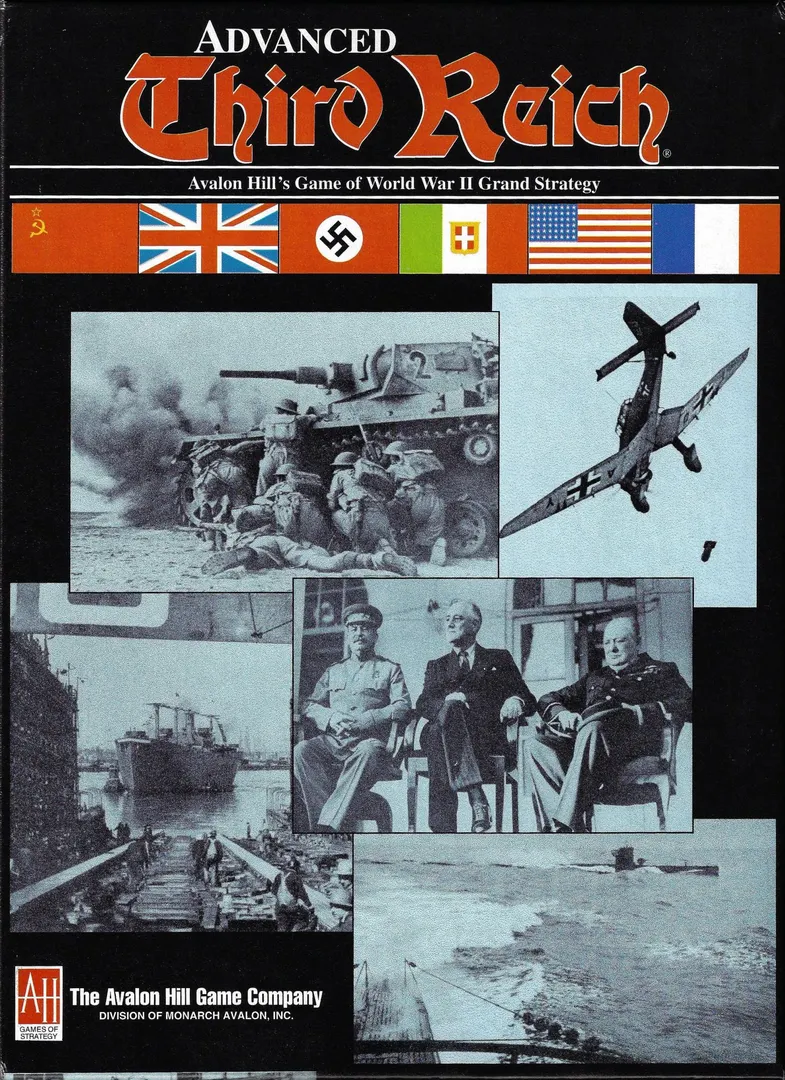
Advanced Third Reich
- 1–6 jugadores
- 180–1200 min
- Complejidad 4,5/5
- 1992
2015
Ayuda con las reglas de Gathering Storm
Explicaciones claras de turnos, efectos de cartas y situaciones dudosas, con referencias a fuentes oficiales e historial de preguntas guardado.
¿Qué quieres saber?
Las respuestas salen del reglamento oficial, con la página para comprobarlo.
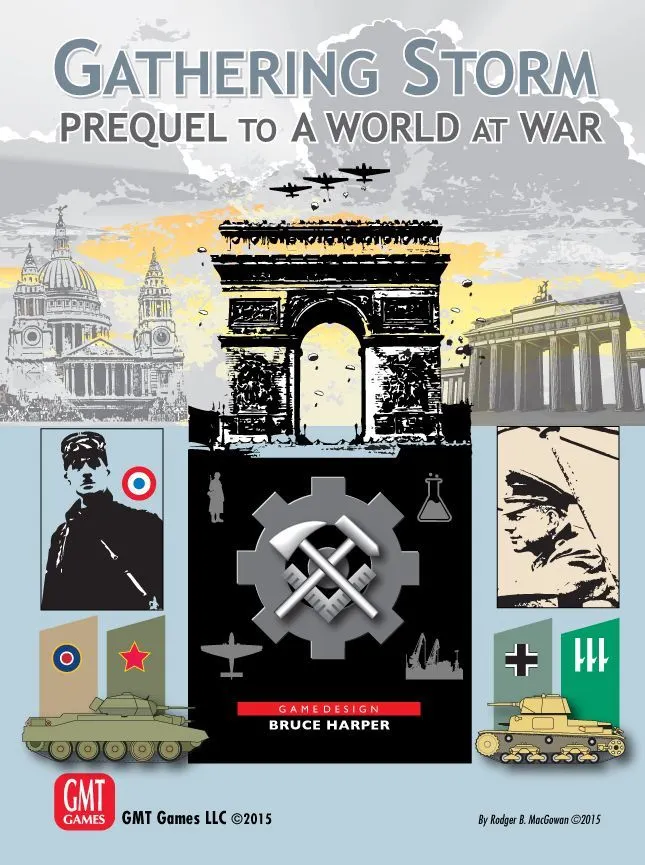
Gathering Storm es un juego de mesa publicado en 2015 para 2–5 jugadores, con partidas de 360 a 480 minutos y a partir de 12 años. Fue diseñado por Bruce Harper y sus mecánicas principales son Area Majority / Influence, Simultaneous Action Selection y Action Points.



En inglés
Gathering Storm does for GMT's A World at War what Days of Decision did for ADG's World in Flames. It allows players to simulate the diplomatic, economic, and political maneuverings that preceded the Second World War, either as a stand alone game or as an expansion for A World at War. (Unlike Days of Decision, Gathering Storm covers only the European events leading to war.) <From the publisher's website:> Gathering Storm, both a game in its own right and a prequel to GMT’s A World at War, covers the period from 1935 to the outbreak of World War II, whenever that might be. Like A World at War, Gathering Storm simulates the military, economic, political, diplomatic, research and production preparations for the Second World War, allowing the players to explore what might have happened if: - Admiral Doenitz had convinced his superiors of the importance of submarine warfare in the impending war with Britain. - Germany had pursued the Z Plan earlier and more consistently. - The development of the “Ural bomber” had been pursued. - Poland had become a German satellite, rather than resisting German aggression. - War had broken out over the Sudetenland, or even the remilitarization of the Rhineland. - Mussolini had given a lower priority to naval armaments, to the benefit of the Italian armor and air forces. - France had extended the Maginot Line. - de Gaulle’s arguments to expand and strengthen France’s armor units had been accepted. - Britain had rearmed sooner. - Russia had deferred the Great Purges. Or accelerated them. - The Spanish civil war had been won by the Loyalists. - A civil war had broken out in Yugoslavia. Or Greece. - Atomic fission had been discovered earlier. - The Second World War had begun with a Franco-Italian conflict. Or a French pre-emptive attack on Germany. Or a Russo-German war, with Italy and the Western Allies neutral. - War comes early. Or later, in 1940 or even 1941. - YOU had been in command. Gathering Storm can be played as a separate game in a single session, with its own victory conditions, but A World at War players will want to press on and see how the war they have created plays out. While using different mechanics, Gathering Storm's structure is consistent with A World at War and allows for a seamless transition to whatever alternate war the players planned – or stumbled into. Some 30 years in development, with three years of design and playtesting, Gathering Storm, includes the following: - Six random events each turn, providing unlimited replay value. - Economics based on tiles and activity counters, eliminating any paperwork. - Flexible mobilization rules, allowing players to emphasis civilian or military production – each at the expense of the other. - Unit construction which allows players to activate reserve units for immediate benefits, at a cost of limiting future options. - Variable research, which can focus on air, naval, military or intelligence projects, as well as short or long term gains. - A fast-moving diplomatic system, with each player allocating diplomatic counters each turn. Diplomatic targets are public, but the points allocated to them are not. - Shipbuilding that allows varied fleets, including the possibility of 5-factor super battleships. - Ahistorical A World at War counters, including armor units of different strengths and additional ships. - A dynamic crisis system, in which the Allies can appease or oppose the Axis, with neither side necessarily being certain whether war might break out. - No dice. Gathering Storm is a must-buy for any committed A World at War player, an excellent – and possibly dangerously time consuming – introduction to the A World at War universe for those unfamiliar with that game, and a enjoyable and instructive fast-paced game all on its own.
Según el catálogo, Gathering Storm admite de 2 a 5 jugadores. Este intervalo corresponde al número de jugadores indicado por la editorial, así que el juego puede prepararse para cualquier grupo dentro de ese margen. La preparación, algunas reglas y la puntuación pueden variar según el número de jugadores; consulta la configuración exacta en el reglamento de tu edición.
La duración indicada para Gathering Storm es de 360 a 480 minutos, la estimación de la editorial para una partida completa. El tiempo real depende del grupo, del número de jugadores y del conocimiento de las reglas: las primeras partidas suelen alargarse y los grupos con experiencia terminan antes. La preparación y la explicación de las reglas no están incluidas.
El catálogo indica Gathering Storm a partir de 12 años. Es la recomendación de la editorial y refleja la lectura necesaria, la complejidad de las reglas y las piezas pequeñas, no solo el tema. Los más pequeños a menudo pueden jugar con ayuda de un adulto: comprueba la edad recomendada en tu edición y la experiencia de tu grupo.
Gathering Storm tiene una puntuación de complejidad de 4,1 sobre 5 según los jugadores de BoardGameGeek, lo que lo convierte en un juego exigente. La puntuación refleja cuánto conocimiento de reglas, planificación y toma de decisiones exige una partida típica. Los juegos exigentes requieren una explicación inicial más larga, así que conviene usar una guía de preparación.
Gathering Storm pertenece a estas categorías: Wargame y World War II. Sus mecánicas principales son Area Majority / Influence, Simultaneous Action Selection y Action Points. Las categorías describen el tema y la ambientación de un juego, mientras que las mecánicas describen lo que los jugadores hacen realmente en su turno. Cada mecánica lleva a una página del catálogo con juegos similares.
Los autores acreditados de Gathering Storm son: Bruce Harper. Estos créditos proceden de los datos publicados del juego y nombran a las personas responsables de su diseño, no a ilustradores ni editoriales. Las páginas de autor de MeepleRules reúnen otros títulos de los mismos autores, algo útil cuando un juego te gusta y buscas otros parecidos.
El catálogo clasifica Gathering Storm como juego base. Se juega por sí solo con los componentes de la caja y no requiere ningún otro título. Las expansiones, si existen, añaden contenido o reglas nuevas y aparecen por separado en el catálogo con un enlace a este juego base.