
- Puntuación BGG
- 7,4
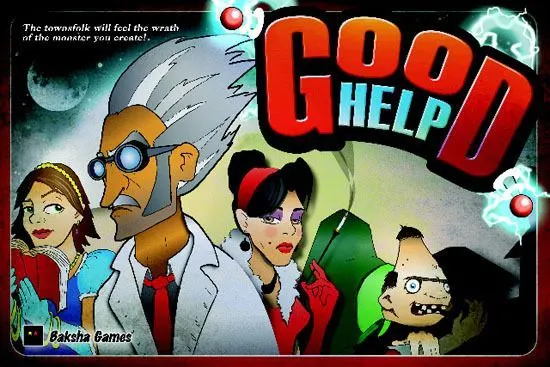
Good Help: Evil Doctors and an Angry Mob
- 3–6 jugadores
- 120 min
- 2011
2010
Ayuda con las reglas de Good Help
Explicaciones claras de turnos, efectos de cartas y situaciones dudosas, con referencias a fuentes oficiales e historial de preguntas guardado.
Para 3 jugadores
¿Qué quieres saber?
Las respuestas salen del reglamento oficial, con la página para comprobarlo.
Good Help es un juego de mesa publicado en 2010 para 3–6 jugadores, con partidas de 90 minutos y a partir de 12 años. Fue diseñado por Sean Scott Garrity y sus mecánicas principales son Set Collection, Roll / Spin and Move y Dice Rolling.
En inglés
You have just finished your evil doctorate. Now it's time for you to return to a castle on the outskirts of the town where you grew up, to begin your tyranny in the name of revenge. Every bully that gave you a wedgie in school and every cutie who laughed at your advances will feel the wrath of the monster you are about to create... Your goal in Good Help is to create the best monster that you can, then unleash it on the public – but don't take too long as the first player to have his monster destroy five buildings in town wins. Alternatively, you can set your monster on those of the other players, and if you have the last monster standing, you win. To assist you in your goal – and to preserve your reputation in town – you'll hire assistants, then send them out to collect body parts, buy supplies and earn money. Your assistants can confront those of other doctors to try to steal away the gold, supplies or limbs they carry. Each assistant has at least one vice, however, and when moving about town they might be lured away by the prospect of beer, jewelry, dresses or sausage, selling or dropping everything they have to get their fix. Good help is indeed hard to find!
Según el catálogo, Good Help admite de 3 a 6 jugadores. Este intervalo corresponde al número de jugadores indicado por la editorial, así que el juego puede prepararse para cualquier grupo dentro de ese margen. La preparación, algunas reglas y la puntuación pueden variar según el número de jugadores; consulta la configuración exacta en el reglamento de tu edición.
La duración indicada para Good Help es de 90 minutos, la estimación de la editorial para una partida completa. El tiempo real depende del grupo, del número de jugadores y del conocimiento de las reglas: las primeras partidas suelen alargarse y los grupos con experiencia terminan antes. La preparación y la explicación de las reglas no están incluidas.
El catálogo indica Good Help a partir de 12 años. Es la recomendación de la editorial y refleja la lectura necesaria, la complejidad de las reglas y las piezas pequeñas, no solo el tema. Los más pequeños a menudo pueden jugar con ayuda de un adulto: comprueba la edad recomendada en tu edición y la experiencia de tu grupo.
Good Help tiene una puntuación de complejidad de 2,3 sobre 5 según los jugadores de BoardGameGeek, lo que lo convierte en un juego algo ligero. La puntuación refleja cuánto conocimiento de reglas, planificación y toma de decisiones exige una partida típica. Los juegos exigentes requieren una explicación inicial más larga, así que conviene usar una guía de preparación.
Las mecánicas principales de Good Help son Set Collection, Roll / Spin and Move y Dice Rolling. Las mecánicas describen lo que los jugadores hacen en su turno, como tirar dados, elegir cartas o colocar trabajadores. Cada mecánica lleva a una página del catálogo con juegos similares si te gustó Good Help y buscas algo parecido.
Los autores acreditados de Good Help son: Sean Scott Garrity. Estos créditos proceden de los datos publicados del juego y nombran a las personas responsables de su diseño, no a ilustradores ni editoriales. Las páginas de autor de MeepleRules reúnen otros títulos de los mismos autores, algo útil cuando un juego te gusta y buscas otros parecidos.
El catálogo clasifica Good Help como juego base. Se juega por sí solo con los componentes de la caja y no requiere ningún otro título. Las expansiones, si existen, añaden contenido o reglas nuevas y aparecen por separado en el catálogo con un enlace a este juego base.