
- Puntuación BGG
- 7,2
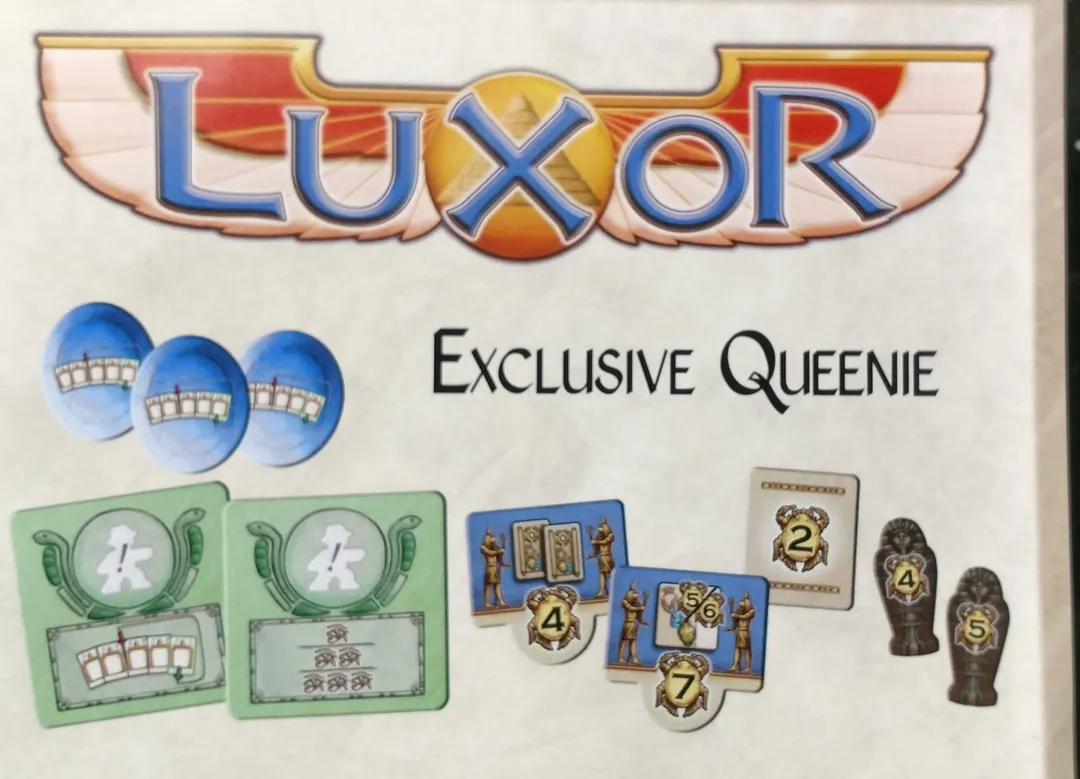
Luxor: Exclusive Queenie
- 2–4 jugadores
- 45 min
- 2018
2018
Ayuda con las reglas de Luxor
Explicaciones claras de turnos, efectos de cartas y situaciones dudosas, con referencias a fuentes oficiales e historial de preguntas guardado.
Para 2 jugadores
¿Qué quieres saber?
Las respuestas salen del reglamento oficial, con la página para comprobarlo.
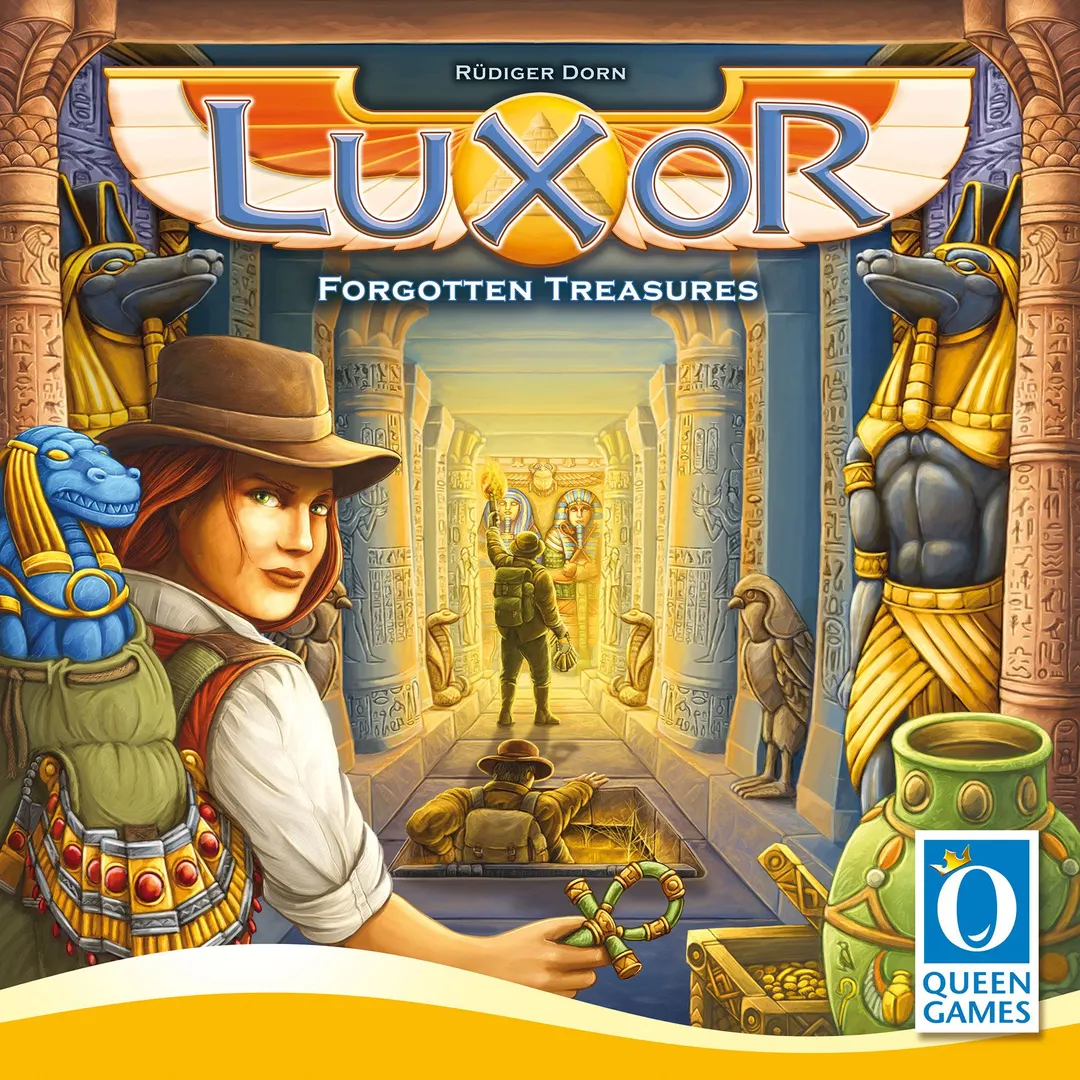
Luxor es un juego de mesa publicado en 2018 para 2–4 jugadores, con partidas de 45 minutos y a partir de 8 años. Fue diseñado por Rüdiger Dorn y sus mecánicas principales son Hand Management, Race y Set Collection.
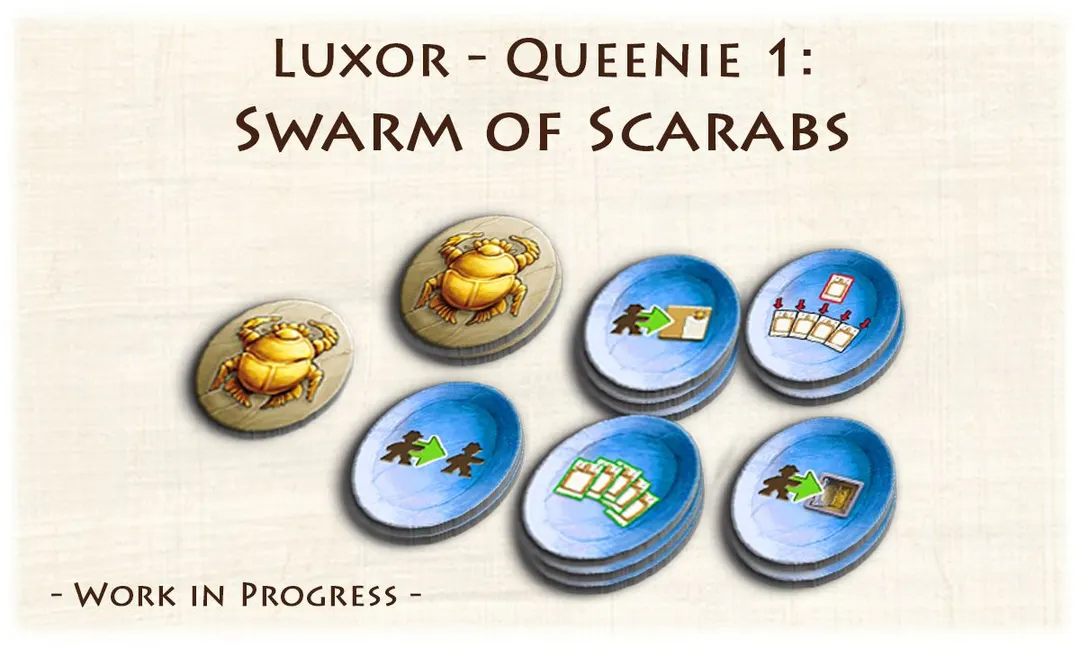
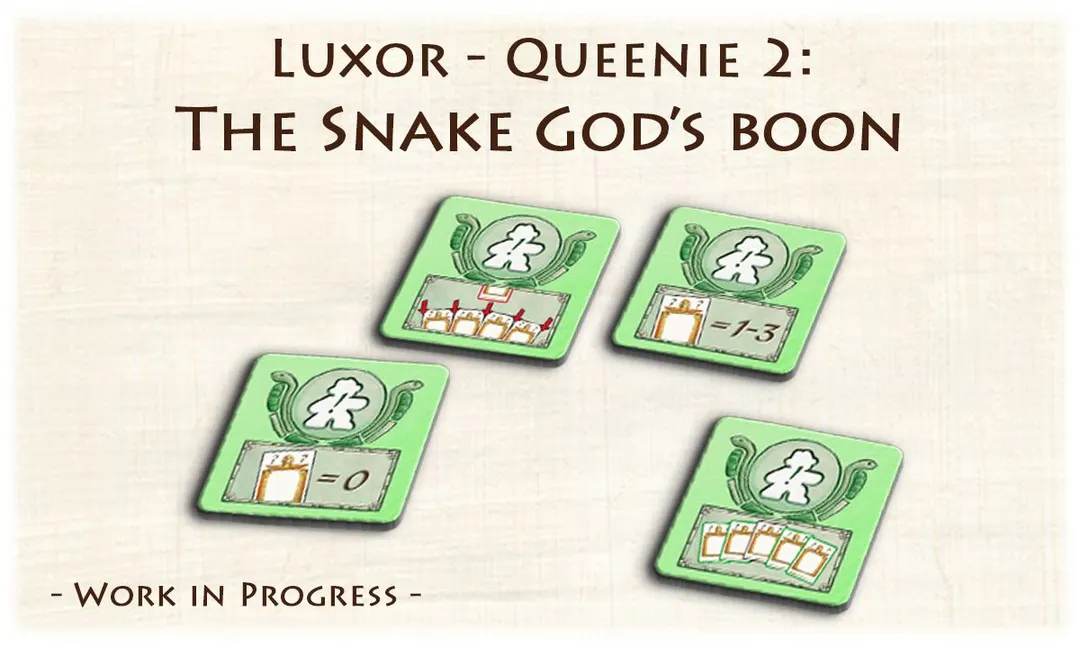
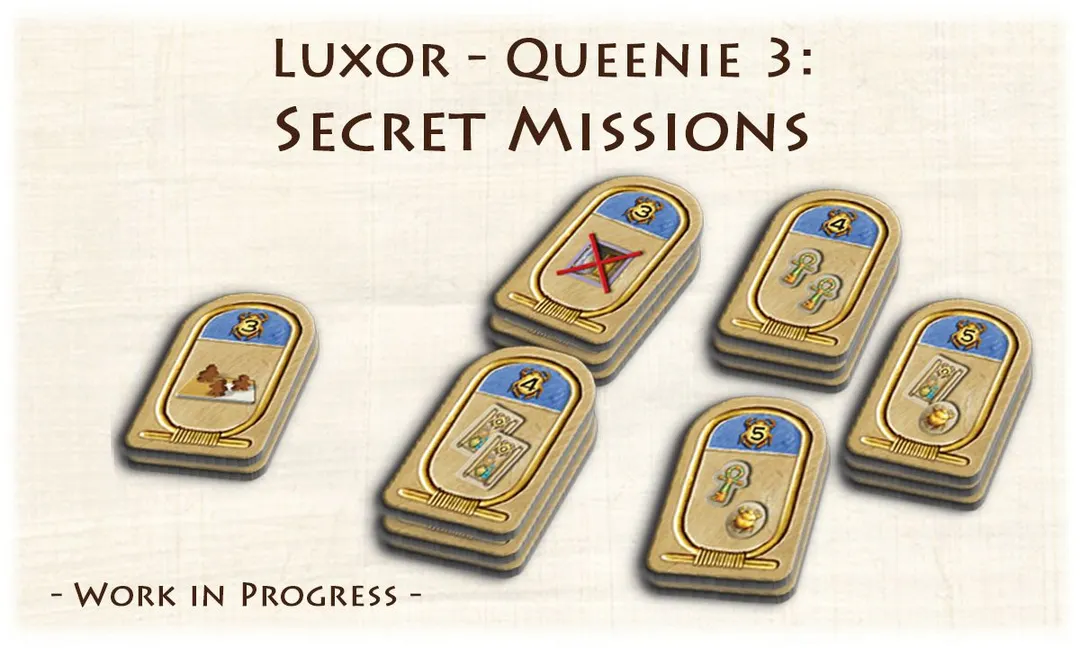
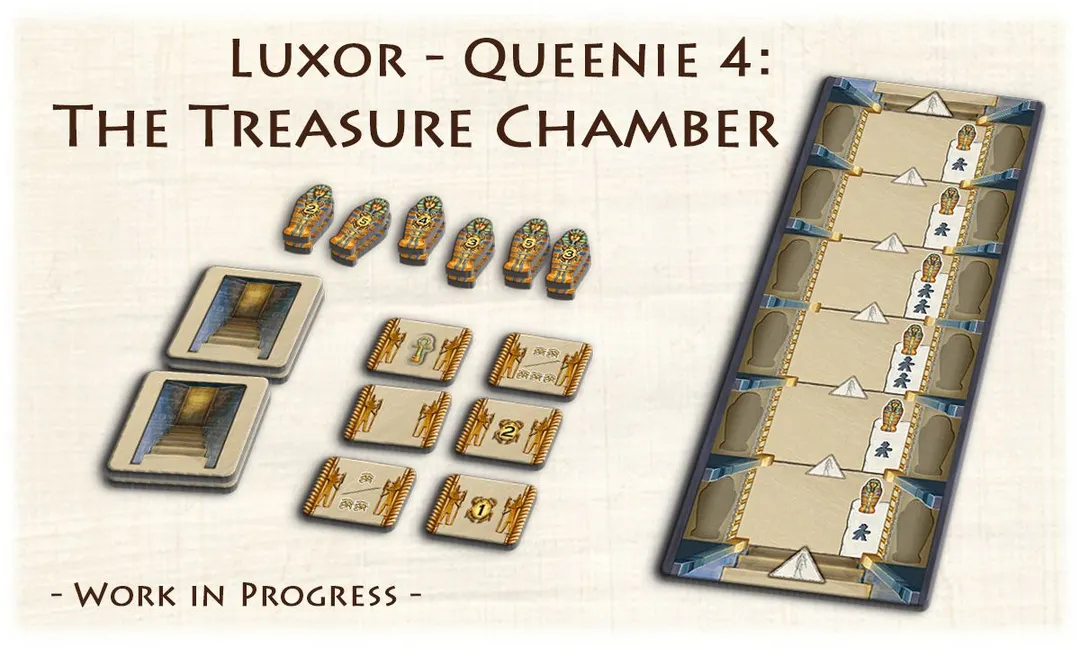
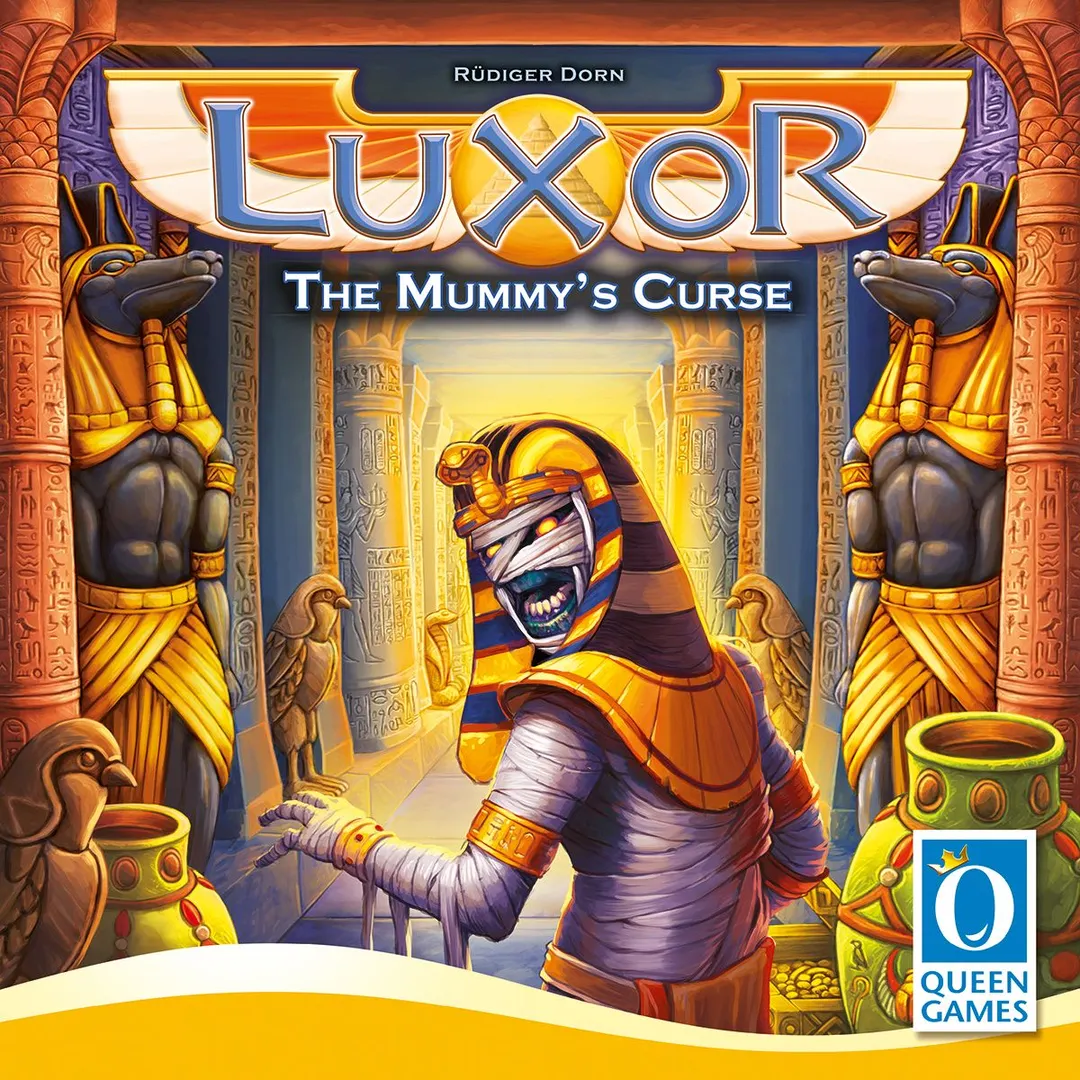



En inglés
On the hunt for priceless treasures, groups of adventurers explore the legendary temple at Luxor. Their ultimate goal is the tomb of the pharaoh, but many treasures can be collected as they search. As they explore, the challenge unfolds: The player who manages to quickly get their team of adventurers to the tomb, while salvaging as many treasures as possible, will be the winner. Luxor offers variable game play as the path that leads to the tomb is different for every game — and will even change during play! —description from the publisher In Luxor, players move their adventurers through the temple with the goal of reaching the tomb in the middle of the game board. At the start of the game each player gets dealt 5 cards, which he is not allowed to change the order of. In each round players take turns that consist of 3 actions: 1. Choose either the left or right most card to play to the discard pile. According to the played card move, one adventurer that many tiles forward towards the tomb. An adventurer only moves from tile to tile, jumping over empty spaces and not counting them. 2. When the adventurer has completed his movement, he performs the action of that tile, if possible. Depending on the tile this can have various effects: Treasure tile - If enough of a players adventurers player are placed on a tile, the player can collect that tile and earn points for it. Additionally he keeps the tile, trying to collect treasure sets consisting of the three different treasure kinds, vase, statue and necklace. Horus tile - The player can either gain a key or a Horus Card. He will need the key to enter the tomb and the special Horus card offers unique and strong ways to move his adventurers once he plays that card. Osiris tile - The tile acts as an catapult instantly moving the adventurer a certain amount of tiles forward. Temple tile - On these tiles players get special bonuses, like scarabs that are worth victory points or joker tiles, which complete treasure sets. The most unique tile is the tunnel. If an adventurer lands on a tunnel he instantly gets teleported to the next tunnel in play, creating a shortcut through the temple. 3. After performing the action of the tile, players draw one card from the draw pile to refill their hand to five cards. The drawn card is placed in the middle of the hand. At the start of the game, players can chose to move one of 2 adventurers. Every time an adventurer crosses over an Anubis statue for the first time he gains a new adventurer which is placed at the start. The game ends once two adventurers reach the tomb. But in order to get in the tomb and collect the valuable sarcophagi, players need to have a key, which they collect from landing on Horus tiles. One key is needed for each adventurer wanting to enter the tomb. The round is finished and then the game ends with a final scoring. The player who now has the most points is the winner!
Según el catálogo, Luxor admite de 2 a 4 jugadores. Este intervalo corresponde al número de jugadores indicado por la editorial, así que el juego puede prepararse para cualquier grupo dentro de ese margen. La preparación, algunas reglas y la puntuación pueden variar según el número de jugadores; consulta la configuración exacta en el reglamento de tu edición.
La duración indicada para Luxor es de 45 minutos, la estimación de la editorial para una partida completa. El tiempo real depende del grupo, del número de jugadores y del conocimiento de las reglas: las primeras partidas suelen alargarse y los grupos con experiencia terminan antes. La preparación y la explicación de las reglas no están incluidas.
El catálogo indica Luxor a partir de 8 años. Es la recomendación de la editorial y refleja la lectura necesaria, la complejidad de las reglas y las piezas pequeñas, no solo el tema. Los más pequeños a menudo pueden jugar con ayuda de un adulto: comprueba la edad recomendada en tu edición y la experiencia de tu grupo.
Luxor tiene una puntuación de complejidad de 1,9 sobre 5 según los jugadores de BoardGameGeek, lo que lo convierte en un juego ligero. La puntuación refleja cuánto conocimiento de reglas, planificación y toma de decisiones exige una partida típica. Los juegos exigentes requieren una explicación inicial más larga, así que conviene usar una guía de preparación.
Luxor pertenece a estas categorías: Adventure y Ancient. Sus mecánicas principales son Hand Management, Race y Set Collection. Las categorías describen el tema y la ambientación de un juego, mientras que las mecánicas describen lo que los jugadores hacen realmente en su turno. Cada mecánica lleva a una página del catálogo con juegos similares.
Los autores acreditados de Luxor son: Rüdiger Dorn. Estos créditos proceden de los datos publicados del juego y nombran a las personas responsables de su diseño, no a ilustradores ni editoriales. Las páginas de autor de MeepleRules reúnen otros títulos de los mismos autores, algo útil cuando un juego te gusta y buscas otros parecidos.
El catálogo clasifica Luxor como juego base. Se juega por sí solo con los componentes de la caja y no requiere ningún otro título. Las expansiones, si existen, añaden contenido o reglas nuevas y aparecen por separado en el catálogo con un enlace a este juego base.