

- Puesto en BGG
- BGG #8655
- Puntuación BGG
- 7,3
Second World War at Sea: Bomb Alley
- 2 jugadores
- 360 min
- Complejidad 3,1/5
- 2002
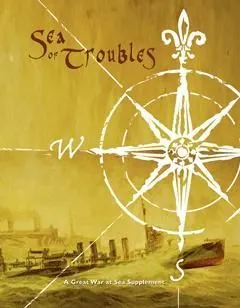
Ayuda con las reglas de Great War at Sea: Sea of Troubles
Explicaciones claras de turnos, efectos de cartas y situaciones dudosas, con referencias a fuentes oficiales e historial de preguntas guardado.
¿Qué quieres saber?
Las respuestas salen del reglamento oficial, con la página para comprobarlo.
Great War at Sea: Sea of Troubles es una expansión de Great War at Sea: Jutland publicada en 2007 para 2 jugadores y con partidas de 120 minutos. Fue diseñado por Michael Bennighof y sus mecánicas principales son Hexagon Grid y Simulation.








En inglés
From the Avalanche Website During the course of the First World War, the United States continued to build huge new battleships despite a pressing need for destroyers and merchant ships. In Britain, Royal Navy planners wondered just what their American allies were up to, because such a fleet could only have one potential adversary. Britain also made plans to construct new ships. Sea of Troubles is a 64-page book supplement for the Great War at Sea series based on the war plans of both sides. Most of the scenarios take place in the Caribbean Sea, using the map from U.S. Navy Plan Gold, but some actions are also placed in European waters on the maps for Jutland or Mediterranean. There are 210 die-cut and mounted playing pieces, the same pieces that originally appeared in our now out-of-print U.S. Navy Plan Red. The Americans get the huge 1919 program battleship mounting eight 18-inch guns as well as four examples of the South Dakota class with their dozen 16-inch guns apiece. There are also the Lexington class battle cruisers in their original configuration with 14-inch guns, and the 1914 design for a fast commerce-raiding armored cruiser armed with 10-inch guns. The Royal Navy adds the remainder of its R-class battleships not seen in Jutland, plus the huge battleships of the N3 design with nine 18-inch guns each, and the ungainly but powerful battle cruisers of the G3 design. Plus the Royal Canadian Navy makes an appearance with three dreadnought battleships and a flotilla of destroyers. There are over three dozen new scenarios featuring brawls between huge fleets of battleships, plus of course background articles on the ships, the fleets and the war plans of all potential participants. This is not a stand-alone game; ownership of Mediterranean, Jutland and U.S. Navy Plan Gold is required to enjoy all of the scenarios. NOTE: This product acts as a successor to the now out-of-print Great War at Sea: U.S. Navy Plan Red. As a result, both countersheets that ship with this product are still labeled 'US Navy Plan Red', although the scenarios for that product, set along the United States Eastern seaboard, are now deprecated in favor of scenarios set in the Mediterranean and North Sea. Additionally, while 'US Navy Plan Red' was a boxed-set and limited to a few scenarios that could work with the components included, as a module book 'Sea of Troubles' is not so constrained. There are more than 2 dozen scenarios in this product that cover more than just 'Plan Red', along with articles on the ships and historical flavor for this period. Plan Red was released in a second edition in 2013. It has a completely revised scenario book with 14 battle and 20 operational scenarios, and updated special rules. Sea of Troubles is out of print.
Según el catálogo, Great War at Sea: Sea of Troubles admite 2 jugadores. Es el número de jugadores indicado por la editorial, así que el juego está diseñado exactamente para esa cantidad de participantes. Las variantes para otros tamaños de grupo, si existen, se describen en el reglamento de tu edición; consúltalo antes de preparar otra configuración.
La duración indicada para Great War at Sea: Sea of Troubles es de 120 minutos, la estimación de la editorial para una partida completa. El tiempo real depende del grupo, del número de jugadores y del conocimiento de las reglas: las primeras partidas suelen alargarse y los grupos con experiencia terminan antes. La preparación y la explicación de las reglas no están incluidas.
Great War at Sea: Sea of Troubles tiene una puntuación de complejidad de 2,9 sobre 5 según los jugadores de BoardGameGeek, lo que lo convierte en un juego algo ligero. La puntuación refleja cuánto conocimiento de reglas, planificación y toma de decisiones exige una partida típica. Los juegos exigentes requieren una explicación inicial más larga, así que conviene usar una guía de preparación.
Great War at Sea: Sea of Troubles pertenece a estas categorías: Wargame, Nautical y Expansion for Base-game. Sus mecánicas principales son Hexagon Grid y Simulation. Las categorías describen el tema y la ambientación de un juego, mientras que las mecánicas describen lo que los jugadores hacen realmente en su turno. Cada mecánica lleva a una página del catálogo con juegos similares.
Los autores acreditados de Great War at Sea: Sea of Troubles son: Michael Bennighof. Estos créditos proceden de los datos publicados del juego y nombran a las personas responsables de su diseño, no a ilustradores ni editoriales. Las páginas de autor de MeepleRules reúnen otros títulos de los mismos autores, algo útil cuando un juego te gusta y buscas otros parecidos.
El catálogo clasifica Great War at Sea: Sea of Troubles como expansión de Great War at Sea: Jutland. Las expansiones añaden contenido, reglas o escenarios al juego base y normalmente no se pueden jugar solas, así que necesitas Great War at Sea: Jutland para usarla. Comprueba que tu edición de Great War at Sea: Jutland sea compatible, porque algunas expansiones se revisaron entre ediciones.