
- Puntuación BGG
- 6,4
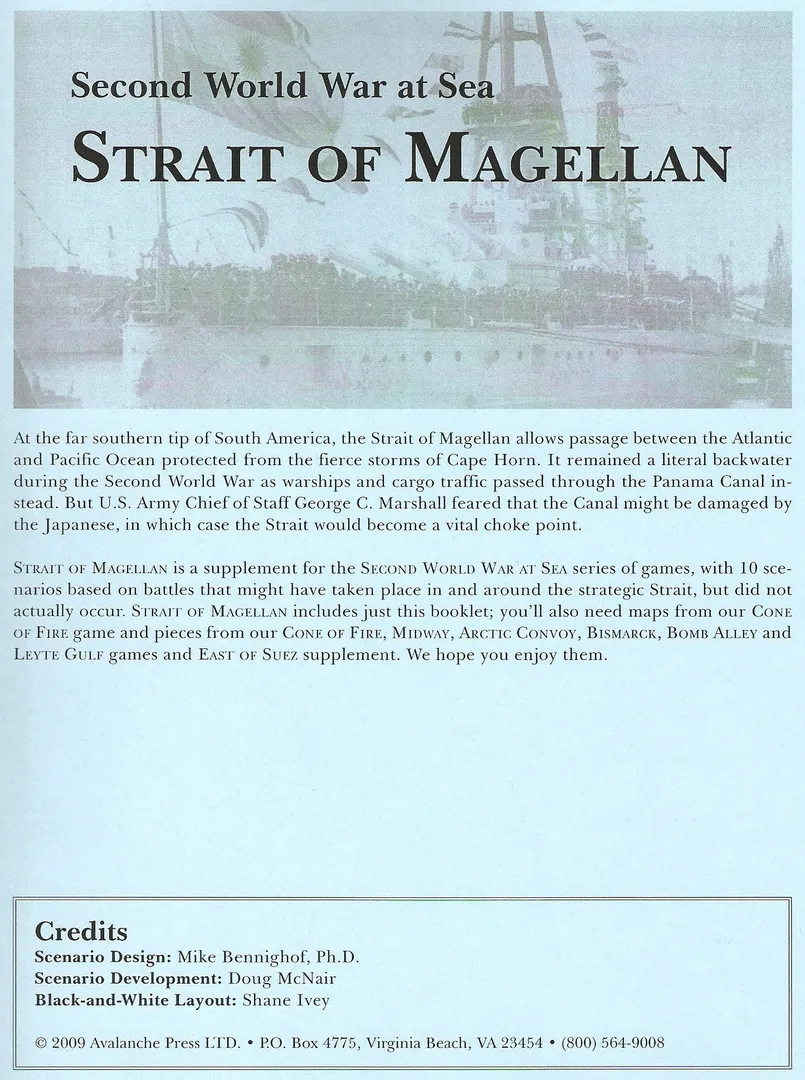
Second World War at Sea: Strait of Magellan
- 2 jugadores
- 60 min
- Complejidad 3,0/5
- 2009
2008
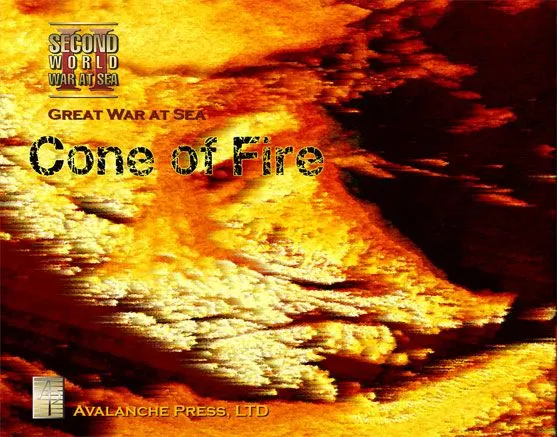
Ayuda con las reglas de Great War at Sea / Second World War at Sea: Cone of Fire
Explicaciones claras de turnos, efectos de cartas y situaciones dudosas, con referencias a fuentes oficiales e historial de preguntas guardado.
Para 2 jugadores
¿Qué quieres saber?
Las respuestas salen del reglamento oficial, con la página para comprobarlo.
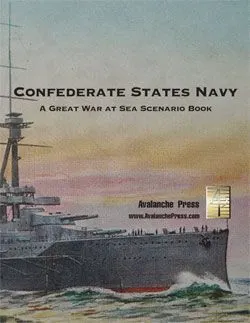
Great War at Sea / Second World War at Sea: Cone of Fire es un juego de mesa publicado en 2008 para 2–4 jugadores y a partir de 12 años. Fue diseñado por Michael Bennighof y Doug McNair y sus mecánicas principales son Dice Rolling, Secret Unit Deployment y Hexagon Grid.




En inglés
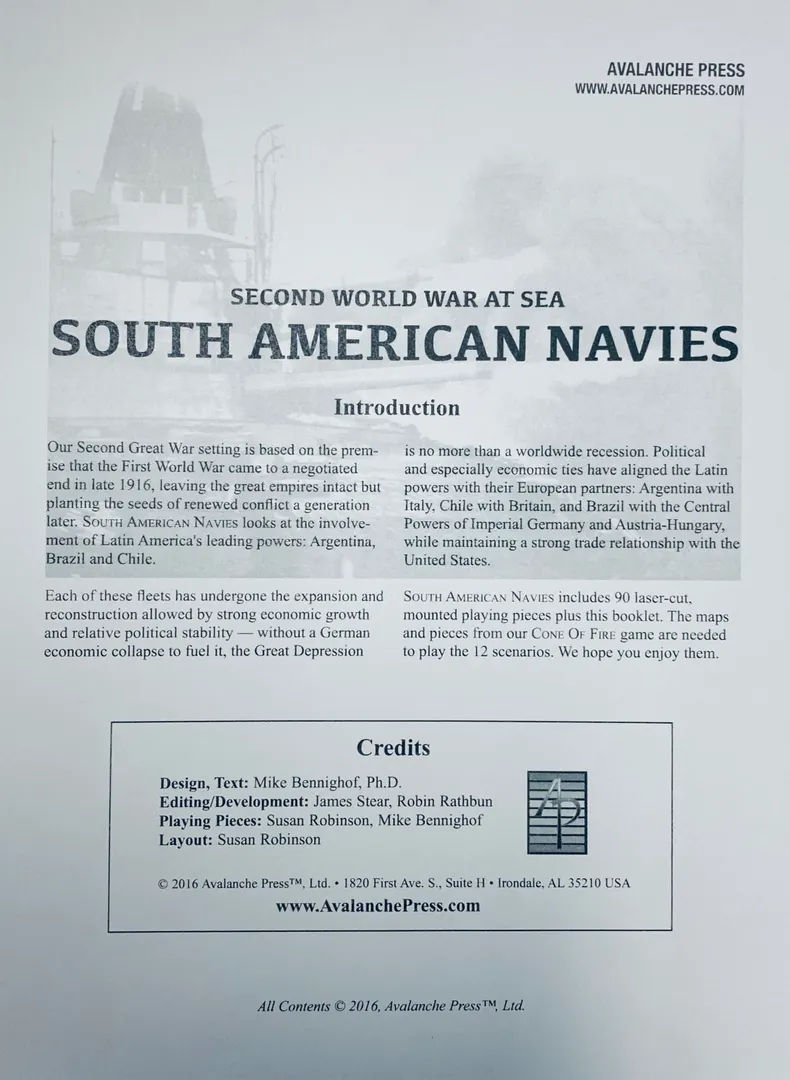
From the Avalanche Press website: At the turn of the last century, South America seemed poised to make the same economic leap as the northern half of the hemisphere. Fueled by booming exports of grain, cattle, coffee and rubber, Brazil and Argentina saw their economies grow rapidly and at one time both stood among the world's ten wealthiest nations. All that cash led their leaders to seek the prestige symbols of the day: dreadnought battleships. Argentina, Brazil and Chile all built dreadnoughts just like the Great Powers, but none of them ever fired a shot at a foreign enemy. Cone of Fire is a boxed game for both the Second World War at Sea and Great War at Sea series. The fleets of Argentina, Brazil and Chile plus those of Peru and Uruguay are added to both series, along with ships from Germany, France and Britain. Most of the scenarios, or game situations, are based on hypothetical situations arising from the actual war scares between the South American nations and sometimes European interlopers, and the war plans with which they addressed them. There are also scenarios based on the actual conflicts which took place in South American waters: the hunt for Admiral Maximilian Graf von Spee's German cruiser squadron in 1914, and the hunt for the cruiser that bore his name 25 years later. Alongside the ships actually operated by the South American naval powers, there are also ships they ordered and did not receive, or contemplated but did not order. The Brazilians have several projected classes of battleships that they never completed, as well as the modern warships they sought from the U.S. Navy during World War II. Argentina and Chile have their projected battleships, carriers and cruisers as well. And there are the actual jet aircraft flown by Argentina and Brazil. There are six maps, three at Second World War at Sea scale, and three at Great War at Sea scale. These cover the region from south of Tierra del Fuego, the southernmost tip of the Americas, to well north of Rio de Janeiro. There are huge stretches of ocean as well as the narrow, winding channels of the Chilean coast.
Según el catálogo, Great War at Sea / Second World War at Sea: Cone of Fire admite de 2 a 4 jugadores. Este intervalo corresponde al número de jugadores indicado por la editorial, así que el juego puede prepararse para cualquier grupo dentro de ese margen. La preparación, algunas reglas y la puntuación pueden variar según el número de jugadores; consulta la configuración exacta en el reglamento de tu edición.
El catálogo indica Great War at Sea / Second World War at Sea: Cone of Fire a partir de 12 años. Es la recomendación de la editorial y refleja la lectura necesaria, la complejidad de las reglas y las piezas pequeñas, no solo el tema. Los más pequeños a menudo pueden jugar con ayuda de un adulto: comprueba la edad recomendada en tu edición y la experiencia de tu grupo.
Great War at Sea / Second World War at Sea: Cone of Fire tiene una puntuación de complejidad de 2,9 sobre 5 según los jugadores de BoardGameGeek, lo que lo convierte en un juego algo ligero. La puntuación refleja cuánto conocimiento de reglas, planificación y toma de decisiones exige una partida típica. Los juegos exigentes requieren una explicación inicial más larga, así que conviene usar una guía de preparación.
Great War at Sea / Second World War at Sea: Cone of Fire pertenece a estas categorías: Wargame, Nautical y World War II. Sus mecánicas principales son Dice Rolling, Secret Unit Deployment y Hexagon Grid. Las categorías describen el tema y la ambientación de un juego, mientras que las mecánicas describen lo que los jugadores hacen realmente en su turno. Cada mecánica lleva a una página del catálogo con juegos similares.
Los autores acreditados de Great War at Sea / Second World War at Sea: Cone of Fire son: Michael Bennighof y Doug McNair. Estos créditos proceden de los datos publicados del juego y nombran a las personas responsables de su diseño, no a ilustradores ni editoriales. Las páginas de autor de MeepleRules reúnen otros títulos de los mismos autores, algo útil cuando un juego te gusta y buscas otros parecidos.
El catálogo clasifica Great War at Sea / Second World War at Sea: Cone of Fire como juego base. Se juega por sí solo con los componentes de la caja y no requiere ningún otro título. Las expansiones, si existen, añaden contenido o reglas nuevas y aparecen por separado en el catálogo con un enlace a este juego base.