
- Puesto en BGG
- BGG #11.695
- Puntuación BGG
- 8,0
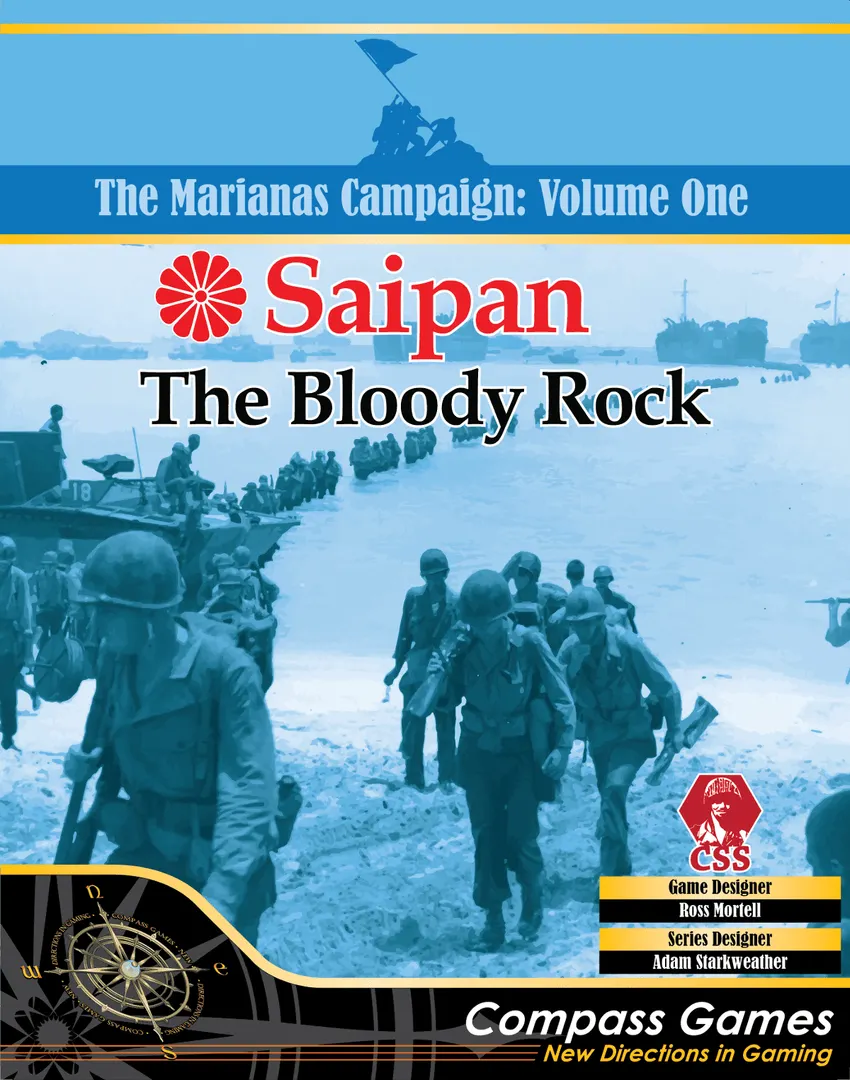
Saipan: The Bloody Rock
- 1–4 jugadores
- 120–2100 min
- Complejidad 4,0/5
- 2017
2017
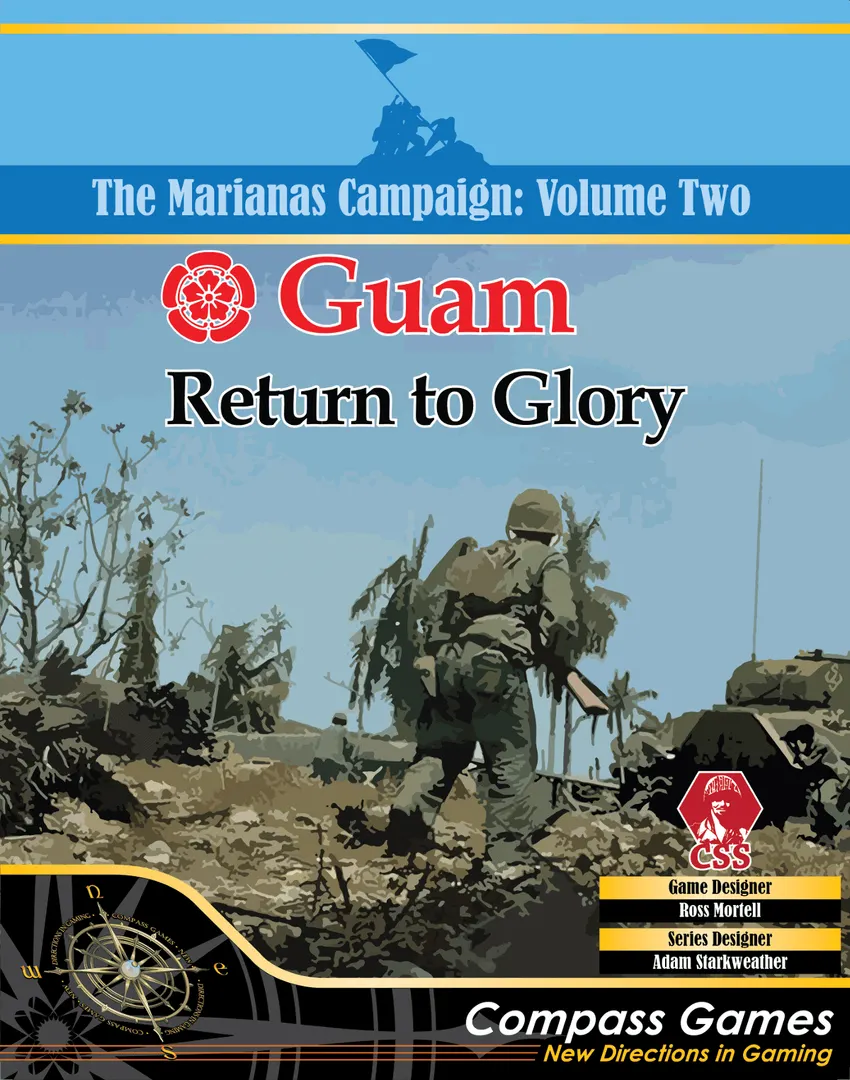
Ayuda con las reglas de Guam: Return to Glory
Explicaciones claras de turnos, efectos de cartas y situaciones dudosas, con referencias a fuentes oficiales e historial de preguntas guardado.
Para 1 jugador
¿Qué quieres saber?
Las respuestas salen del reglamento oficial, con la página para comprobarlo.
Guam: Return to Glory es un juego de mesa publicado en 2017 para 1–4 jugadores y con partidas de 120 a 2100 minutos. Fue diseñado por Adam Starkweather y Ross Mortell y sus mecánicas principales son Dice Rolling, Hexagon Grid y Chit-Pull System.

En inglés
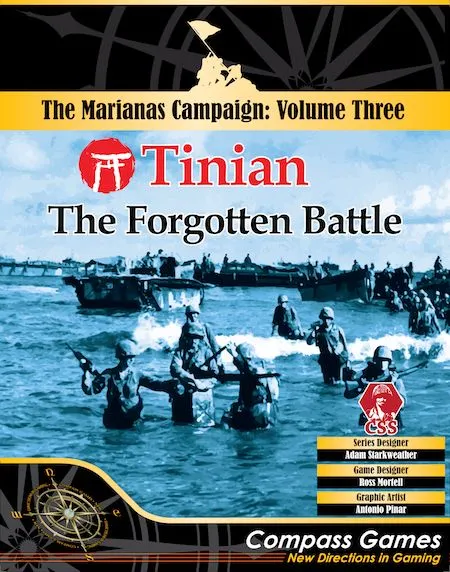
On the 8th December 1941 American soil was invaded for the first time in the war, the small American and Guananian garrison was overrun and 2 days later the Govenor surrendered the Island to the Japanese. On 21st July 1944 the Americans would return to retake the island and drive the Japanese invaders off; a day that is still celebrated as 'Liberation Day'. There were many reasons why the Americans decided to invade Guam not least of which was the fact that the station of the trans-Pacific cable and the naval radio station at Agana made it a focal point of the communication network in the Pacific. It also had the best anchorage in the Marianas, 2 airstrips and, of course, it was an American Protectorate. The only beaches suitable for an invasion are located on the south-western side of the island. The Japanese knew this as well and had prepared accordingly. Another thing unique to the planning was that the 2 landing beaches chosen would be 7 miles apart. It was unprecedented for two landing forces to land with such a wide separation. Guam – Return to Glory will be the second game to utilize the Company Scale System (CSS) by Adam Starkweather and will come on 4 maps. The game will come with 6 scenarios and 1 campaign game: W-Day – Fortune favors the bold – This is the first day of the Invasion on the northern beaches. 3rd Marine Division must land against Japanese defenders dug-in on a ridge overlooking the beaches. Single map and 8 turns long. W-Day – Send in the Fire Brigade – This is the first day of the Invasion on the southern beaches. The 1st Provisional Marine Brigade must land and fight their way north towards Orote Peninsular to join up the to beachheads. Single map and 8 turns long. W-DAY - This is the first day of the Invasion on the both beaches. The 1st Provisional Marine Brigade must land and fight their way north, whilst the 3rd Marines fight their way south and the two forces try to join up the two beachheads near Orote Peninsular. Two maps and 8 turns long. Orote Peninsular – The first 8 days of the fighting saw the Americans expand their beachheads and join up so as to cut off the Orote peninsular with it's important airfield. Once it was cut off, the Americans, then, had to force their way into the heaviest defended area on Guam not knowing that the Japanese were preparing a Sake fueled Banzai charge. Two maps and 72 turns long. Into the Jungle - This scenario covers 3rd Marine Division's drive north of the beachheads to take the town of Agana and the airfield at Tiyan. One map and 27 turns long. Santa Rosa - This scenario covers 77th Infantry Division's attack to isolate the area around Mount Santa Rosa . One map and 27 turns long. The Battle for Guam – The full historical campaign from 21st July- 10th August (188 Turns). This game covers the full fight for Guam in 1944, from the first invasion at Asan, in the north, and Agat, in the south through the vicious fighting in the thick vegetation at the south end of the island and the final Japanese stand in the north. Complexity: 6 Solitaire Suitability:8 Time Scale: 1 turn = 2 hours Map Scale: 1 hex = 500 meters Unit Scale: Companies and below Players: Best with 2 players but can be played with up to 4 players as well as solitaire Playing Time: 2-35 hours Series Designer: Adam Starkweather Game Designer: Ross Mortell Developer: Adam Starkweather Artist: Antonio Pinar Peña Components: 4 maps 6 countersheets 1 series Rulesbook 1 game specific rulesbook 7 player aids, charts, tables cards 2 ten-sided dice 1 Box and Lid set
Según el catálogo, Guam: Return to Glory admite de 1 a 4 jugadores. Este intervalo corresponde al número de jugadores indicado por la editorial, así que el juego puede prepararse para cualquier grupo dentro de ese margen. La preparación, algunas reglas y la puntuación pueden variar según el número de jugadores; consulta la configuración exacta en el reglamento de tu edición.
La duración indicada para Guam: Return to Glory es de 120 a 2100 minutos, la estimación de la editorial para una partida completa. El tiempo real depende del grupo, del número de jugadores y del conocimiento de las reglas: las primeras partidas suelen alargarse y los grupos con experiencia terminan antes. La preparación y la explicación de las reglas no están incluidas.
Guam: Return to Glory tiene una puntuación de complejidad de 3,7 sobre 5 según los jugadores de BoardGameGeek, lo que lo convierte en un juego de complejidad media. La puntuación refleja cuánto conocimiento de reglas, planificación y toma de decisiones exige una partida típica. Los juegos exigentes requieren una explicación inicial más larga, así que conviene usar una guía de preparación.
Guam: Return to Glory pertenece a estas categorías: Wargame y World War II. Sus mecánicas principales son Dice Rolling, Hexagon Grid y Chit-Pull System. Las categorías describen el tema y la ambientación de un juego, mientras que las mecánicas describen lo que los jugadores hacen realmente en su turno. Cada mecánica lleva a una página del catálogo con juegos similares.
Los autores acreditados de Guam: Return to Glory son: Adam Starkweather y Ross Mortell. Estos créditos proceden de los datos publicados del juego y nombran a las personas responsables de su diseño, no a ilustradores ni editoriales. Las páginas de autor de MeepleRules reúnen otros títulos de los mismos autores, algo útil cuando un juego te gusta y buscas otros parecidos.
El catálogo clasifica Guam: Return to Glory como juego base. Se juega por sí solo con los componentes de la caja y no requiere ningún otro título. Las expansiones, si existen, añaden contenido o reglas nuevas y aparecen por separado en el catálogo con un enlace a este juego base.