

- Puesto en BGG
- BGG #2655
- Puntuación BGG
- 7,3
Jekyll & Hyde vs Scotland Yard
- 2 jugadores
- 20 min
- Complejidad 2,2/5
- 2023
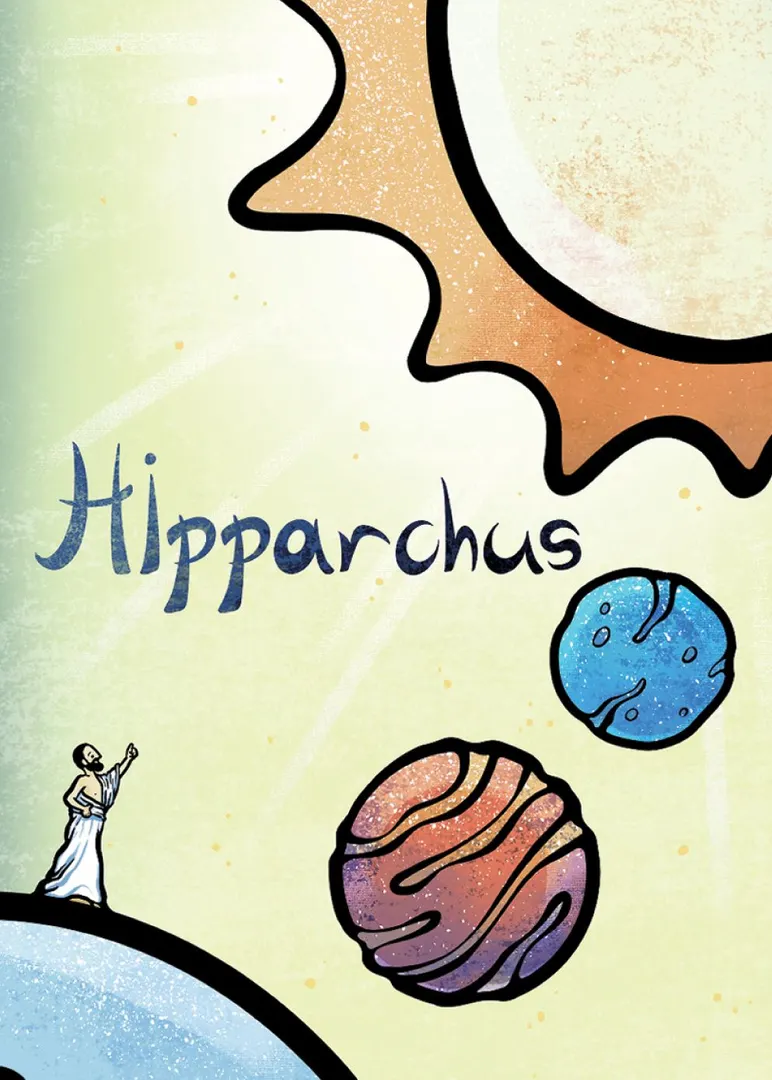
2023
Ayuda con las reglas de Hipparchus
Explicaciones claras de turnos, efectos de cartas y situaciones dudosas, con referencias a fuentes oficiales e historial de preguntas guardado.
Para 2 jugadores
¿Qué quieres saber?
Las respuestas salen del reglamento oficial, con la página para comprobarlo.
Hipparchus es un juego de mesa publicado en 2023 para 2 jugadores y con partidas de 10 a 20 minutos. Fue diseñado por Geonil y sus mecánicas principales son Hand Management y Trick-taking.


En inglés
Hipparchus was an ancient Greek astronomer who calculated the ecliptic and orbit of the Moon, and the paths of the sun and the moon, discovering in the process that the center of the universe was not Earth. Hipparchus is a two-player trick-taking game in which players become ancient Greek astronomers and present their findings on the Sun, the Moon, and the Earth to one another. You want to share the study of one celestial body with your colleague without monopolizing it, yet still gain more authority than them. In more detail, the game contains three suits of cards: Sun, Moon, and Earth, with ten copies of each. Each player gets a hand of fourteen cards and cannot rearrange them. The lead player plays 1-3 cards of a single suit, and when choosing something to play, you can't break up pairs or triplets in your hand. If you have three Earth cards in a row, you can play them only together as three Earths. The following player must play the same suit, if possible, but a different number of cards; if they can't do this, they can play 1-3 cards from either other suit. If both players play the same suit, the player who played more cards wins the trick, stacks the cards in their collection, then leads to the next trick. If players play different suits, then the player who has fewer cards of their played suit in their collection wins the trick. (In a tie, the following player wins.) When a player runs out of cards, the round ends. Each player tallies their score. If you have more cards in a suit than your opponent, you score points equal to the number of cards they have. Whoever has the highest score wins the round; the first player to win two rounds wins the game.
Según el catálogo, Hipparchus admite 2 jugadores. Es el número de jugadores indicado por la editorial, así que el juego está diseñado exactamente para esa cantidad de participantes. Las variantes para otros tamaños de grupo, si existen, se describen en el reglamento de tu edición; consúltalo antes de preparar otra configuración.
La duración indicada para Hipparchus es de 10 a 20 minutos, la estimación de la editorial para una partida completa. El tiempo real depende del grupo, del número de jugadores y del conocimiento de las reglas: las primeras partidas suelen alargarse y los grupos con experiencia terminan antes. La preparación y la explicación de las reglas no están incluidas.
Hipparchus tiene una puntuación de complejidad de 2,0 sobre 5 según los jugadores de BoardGameGeek, lo que lo convierte en un juego algo ligero. La puntuación refleja cuánto conocimiento de reglas, planificación y toma de decisiones exige una partida típica. Los juegos exigentes requieren una explicación inicial más larga, así que conviene usar una guía de preparación.
Hipparchus pertenece a estas categorías: Card Game. Sus mecánicas principales son Hand Management y Trick-taking. Las categorías describen el tema y la ambientación de un juego, mientras que las mecánicas describen lo que los jugadores hacen realmente en su turno. Cada mecánica lleva a una página del catálogo con juegos similares.
Los autores acreditados de Hipparchus son: Geonil. Estos créditos proceden de los datos publicados del juego y nombran a las personas responsables de su diseño, no a ilustradores ni editoriales. Las páginas de autor de MeepleRules reúnen otros títulos de los mismos autores, algo útil cuando un juego te gusta y buscas otros parecidos.
El catálogo clasifica Hipparchus como juego base. Se juega por sí solo con los componentes de la caja y no requiere ningún otro título. Las expansiones, si existen, añaden contenido o reglas nuevas y aparecen por separado en el catálogo con un enlace a este juego base.