
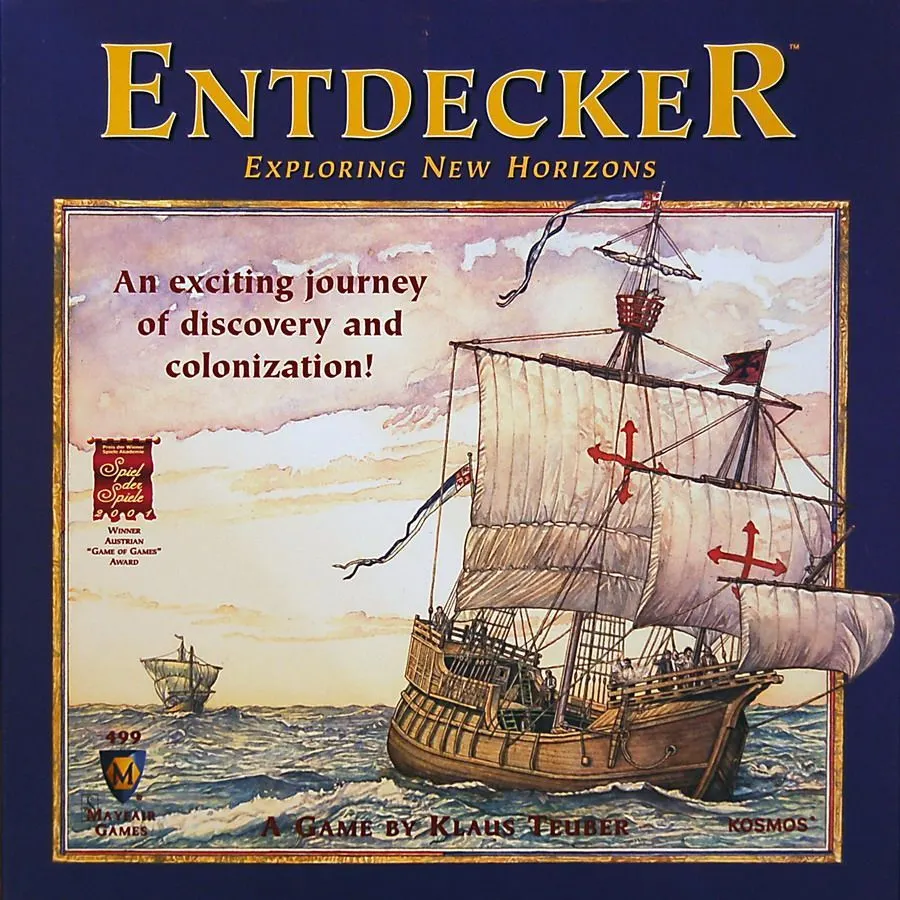
- Puesto en BGG
- BGG #3632
- Puntuación BGG
- 6,5
Entdecker: Exploring New Horizons
- 2–4 jugadores
- 90 min
- Complejidad 2,4/5
- 2001
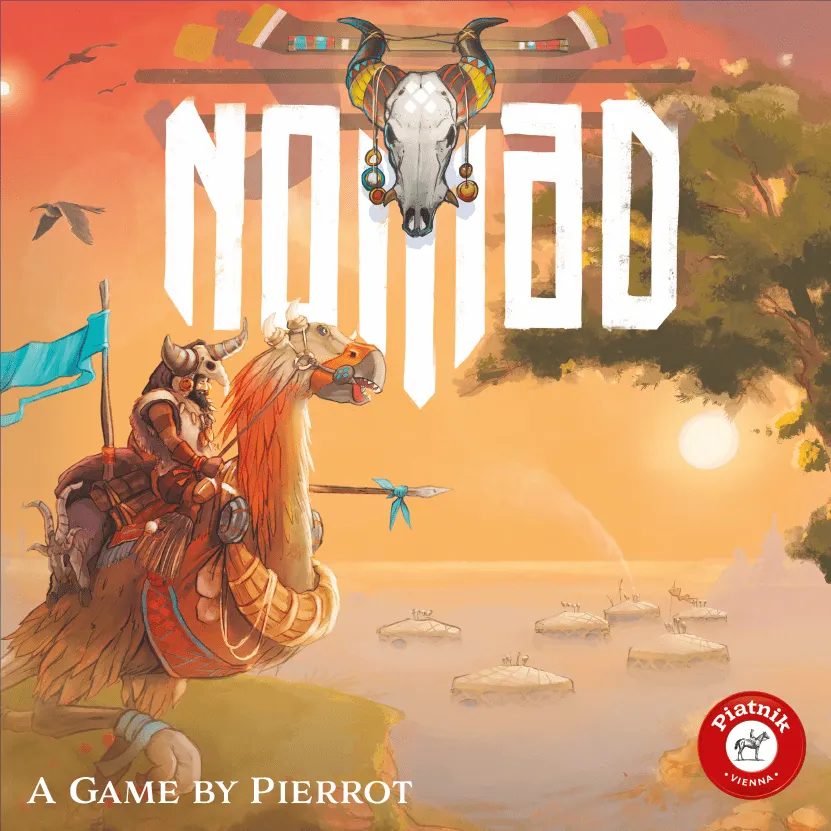
2023
Ayuda con las reglas de Nomad
Explicaciones claras de turnos, efectos de cartas y situaciones dudosas, con referencias a fuentes oficiales e historial de preguntas guardado.
¿Qué quieres saber?
Las respuestas salen del reglamento oficial, con la página para comprobarlo.
Nomad es un juego de mesa publicado en 2023 para 2–4 jugadores, con partidas de 60 minutos y a partir de 10 años. Fue diseñado por Pierrot y sus mecánicas principales son Tile Placement, End Game Bonuses y Grid Movement.




En inglés
Nomad is a family game for more experienced players. A nomadic tribe decides to move their camp to a remote but more suitable land. The chief hunter sets off to explore the unknown area and find the best route, and he will also acquire food for the tribe by hunting. However, the outcome of his actions will be largely determined by the prayers of the tribe’s shaman. The game is played in 12 rounds. Players have their own terrain boards where they advance their hunter and move their camp (a yurt) towards the desired location in the farthest corner of the board. At the beginning of each round, the shamans offer sacrifices to the Goddess of Nature on the shaman hill. This will determine the order of players, and therefore the outcome of the next, preparation phase. Finally, players execute their actions: exploration by placing terrain tiles on the board, hunting, or moving their camp further. When the game ends, players add up their scores received for the areas explored, the animals hunted and the distance they have reached with the camp. In addition, they can earn various bonuses for terrain tiles positioned in a smart way. Connected areas of the same terrain type on their board may also give multiple points, depending on size; some of these are easier, some more challenging to build. The player with the highest scores wins. In Nomad, everyone builds the landscape for themselves, but this is by no means a solitary experience. Although there is a good deal of interaction during the first two phases, players make decisions on their own. This game is ideal for 2-4 players, playing time is about 1 hour. —description from the publisher (translated) A Nomad családi játék, gyakorlottabb játékosok számára. Egy nomád törzs elhatározza, hogy átköltözteti a táborát egy távolabbi helyre. Az ismeretlen táj felfedezésére előre küldi a legjobb vadászát, aki megkeresi az optimális utat és élelmet is szerez. Akcióinak kimenetelét azonban nagyban befolyásolja, hogy mennyire eredményesen imádkozik a törzs sámánja a természet istennőjéhez. A játék 12 fordulóból áll. Minden játékos a saját tereptábláján halad előre a vadásszal, és ott mozgatja a tábort jelképező jurtát a leendő táborhely felé a tábla átellenes sarkában. A forduló azzal kezdődik, hogy a sámándombon a törzsek sámánjai áldozatot mutatnak be az istennőnek. Ekkor alakul ki a játékosok sorrendje, mely meghatározza a következő, felkészülő fázis menetét. Majd ezt követik az akciók: a terep felfedezése tereplapkák lehelyezésével, vadászat, vagy a tábor mozgatása. A játék végén a felfedezett területekért, az elejtett vadakért, valamint a táborral megtett távolságért pontokat kapnak a játékosok, sőt a tereplapkák ügyes illesztésével különféle bónuszokat is szerezhetnek. Sok pontot hozhatnak a táblán az összefüggő területek, amelyek közül némelyik könnyebb, másik jóval nehezebb módon építhető ki. Az győz, aki a legtöbb pontot szerzi. A Nomad játékban ugyan mindenki magának építi a tájat, de ez korántsem jelent szoliter élményt. Az első két fázis során épp elegendő interakcióba keverednek a játékosok, azonban a saját táblájuk felett a döntést csak egyedül gyakorolják. A játék 2-4 játékos számára ideális szórakozás, egy játszma kb. 1 órán át tart. —description from the publisher
Según el catálogo, Nomad admite de 2 a 4 jugadores. Este intervalo corresponde al número de jugadores indicado por la editorial, así que el juego puede prepararse para cualquier grupo dentro de ese margen. La preparación, algunas reglas y la puntuación pueden variar según el número de jugadores; consulta la configuración exacta en el reglamento de tu edición.
La duración indicada para Nomad es de 60 minutos, la estimación de la editorial para una partida completa. El tiempo real depende del grupo, del número de jugadores y del conocimiento de las reglas: las primeras partidas suelen alargarse y los grupos con experiencia terminan antes. La preparación y la explicación de las reglas no están incluidas.
El catálogo indica Nomad a partir de 10 años. Es la recomendación de la editorial y refleja la lectura necesaria, la complejidad de las reglas y las piezas pequeñas, no solo el tema. Los más pequeños a menudo pueden jugar con ayuda de un adulto: comprueba la edad recomendada en tu edición y la experiencia de tu grupo.
Nomad tiene una puntuación de complejidad de 2,3 sobre 5 según los jugadores de BoardGameGeek, lo que lo convierte en un juego algo ligero. La puntuación refleja cuánto conocimiento de reglas, planificación y toma de decisiones exige una partida típica. Los juegos exigentes requieren una explicación inicial más larga, así que conviene usar una guía de preparación.
Nomad pertenece a estas categorías: Exploration, Adventure y Prehistoric. Sus mecánicas principales son Tile Placement, End Game Bonuses y Grid Movement. Las categorías describen el tema y la ambientación de un juego, mientras que las mecánicas describen lo que los jugadores hacen realmente en su turno. Cada mecánica lleva a una página del catálogo con juegos similares.
Los autores acreditados de Nomad son: Pierrot. Estos créditos proceden de los datos publicados del juego y nombran a las personas responsables de su diseño, no a ilustradores ni editoriales. Las páginas de autor de MeepleRules reúnen otros títulos de los mismos autores, algo útil cuando un juego te gusta y buscas otros parecidos.
El catálogo clasifica Nomad como juego base. Se juega por sí solo con los componentes de la caja y no requiere ningún otro título. Las expansiones, si existen, añaden contenido o reglas nuevas y aparecen por separado en el catálogo con un enlace a este juego base.