
- Puesto en BGG
- BGG #21.882
- Puntuación BGG
- 6,6
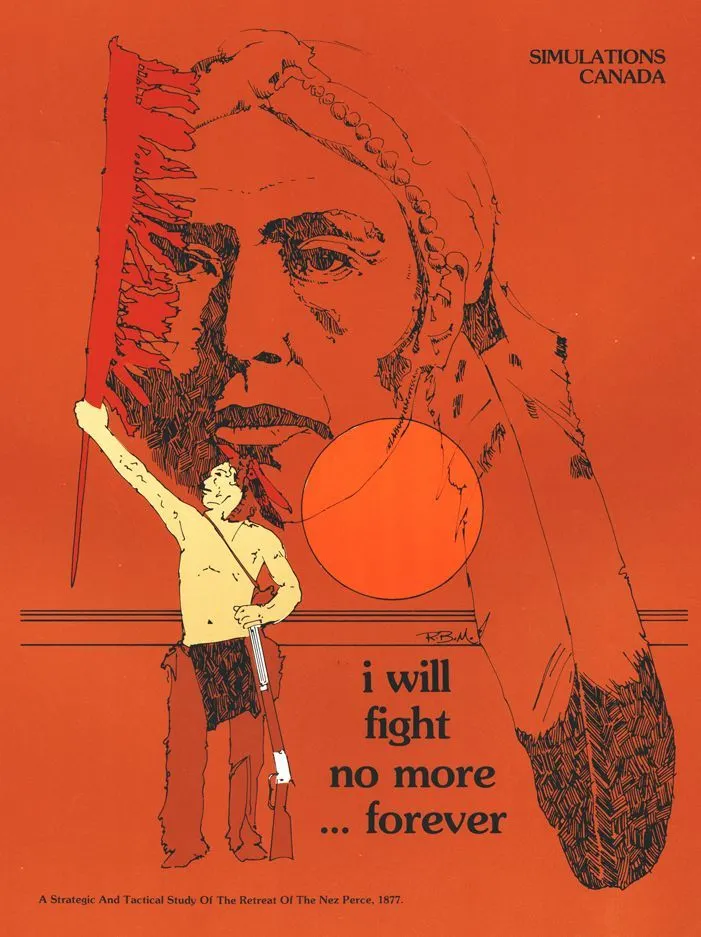
I Will Fight No More... Forever
- 2 jugadores
- 180 min
- Complejidad 2,7/5
- 1979

2019
Ayuda con las reglas de Once We Moved Like the Wind: The Apache Wars, 1861-1886
Explicaciones claras de turnos, efectos de cartas y situaciones dudosas, con referencias a fuentes oficiales e historial de preguntas guardado.
Para 2 jugadores
¿Qué quieres saber?
Las respuestas salen del reglamento oficial, con la página para comprobarlo.
Once We Moved Like the Wind: The Apache Wars, 1861-1886 es un juego de mesa publicado en 2019 para 2 jugadores. Fue diseñado por Stephen Newberg y sus mecánicas principales son Area Movement, Dice Rolling y Simulation.



En inglés
Their names are virtually synonymous with the long conflicts with the native indigenes of the American West. Cochise, Victoria, Chato, Geronimo. These great war band leaders all come from the various tribes of the Apache, and the Apache Wars dominated the attention of the US government in its westward development for the critical 25 years from the American Civil War to the final capitulation of the natives of the area. What the Game Looks Like: Once We Moved Like the Wind covers these central conflicts of the American South West. The game is played as a series of turns, each of which follows a sequence of play that begins with determining how bad a provocation results in conflict for the turn. The provocation level determines the forces each player will have for the turn and their general placement on the map. Next the Apache player moves the Apache forces and then the Army Player moves the US and Mexican forces. Combat may then occur between opposing player forces that share a location. After any combat is resolved, victory points are counted up and the player with the most for the turn earns one increase in victory level on the Victory Track. Play then repeats for the next turn to the end of the game when the player with the higher level on the Victory track is the winner. Central to the game is that the playing pieces are all wooden blocks with the information about each particular piece only on one side and hence hidden during play from the opposing player until action occurs which must reveal particular blocks. And not all of these blocks are actually opposing forces. For the Apache player in particular, many playing pieces each turn will represent rumors of Apache actions and forces which the Army player must chase down to determine if they are real or false. Similarly, for the Apache player, not knowing which Army pieces represent which forces means not knowing if an opposing group is small enough to attack and win, or is in reality a force big enough to hand out a devastating defeat. Once We Moved Like the Wind is played on a 22”x 22” mounted game board with a scale of about 14 kilometers per centimeter or 22 miles per inch. The terrain represented is divided by a number of features. Overall the area is divided into 4 large Territories: the Arizona Territory & the New Mexico Territory in the US and the Sonora Territory & the Chihuahua Territory in Mexico. Dividing up all of the Territories, and often crossing their borders, are the Areas. These represent sections of land of differing types between which the players move their forces. Product Information: • Complexity: 3 out of 10 • Solitaire Suitability: 5 out of 10 • Time Scale: 3-4 years per turn • Map Scale: Areas covering parts of Arizona, New Mexico, Texas, Sonora and Chihuahua • Unit Scale: A wooden block represents an Army Troop or Apache War Band • Average Time to Play: <2 Hours —description from the publisher
Según el catálogo, Once We Moved Like the Wind: The Apache Wars, 1861-1886 admite 2 jugadores. Es el número de jugadores indicado por la editorial, así que el juego está diseñado exactamente para esa cantidad de participantes. Las variantes para otros tamaños de grupo, si existen, se describen en el reglamento de tu edición; consúltalo antes de preparar otra configuración.
Once We Moved Like the Wind: The Apache Wars, 1861-1886 tiene una puntuación de complejidad de 2,0 sobre 5 según los jugadores de BoardGameGeek, lo que lo convierte en un juego algo ligero. La puntuación refleja cuánto conocimiento de reglas, planificación y toma de decisiones exige una partida típica. Los juegos exigentes requieren una explicación inicial más larga, así que conviene usar una guía de preparación.
Once We Moved Like the Wind: The Apache Wars, 1861-1886 pertenece a estas categorías: Wargame, American West y Post-Napoleonic. Sus mecánicas principales son Area Movement, Dice Rolling y Simulation. Las categorías describen el tema y la ambientación de un juego, mientras que las mecánicas describen lo que los jugadores hacen realmente en su turno. Cada mecánica lleva a una página del catálogo con juegos similares.
Los autores acreditados de Once We Moved Like the Wind: The Apache Wars, 1861-1886 son: Stephen Newberg. Estos créditos proceden de los datos publicados del juego y nombran a las personas responsables de su diseño, no a ilustradores ni editoriales. Las páginas de autor de MeepleRules reúnen otros títulos de los mismos autores, algo útil cuando un juego te gusta y buscas otros parecidos.
El catálogo clasifica Once We Moved Like the Wind: The Apache Wars, 1861-1886 como juego base. Se juega por sí solo con los componentes de la caja y no requiere ningún otro título. Las expansiones, si existen, añaden contenido o reglas nuevas y aparecen por separado en el catálogo con un enlace a este juego base.