
- Puntuación BGG
- 6,5
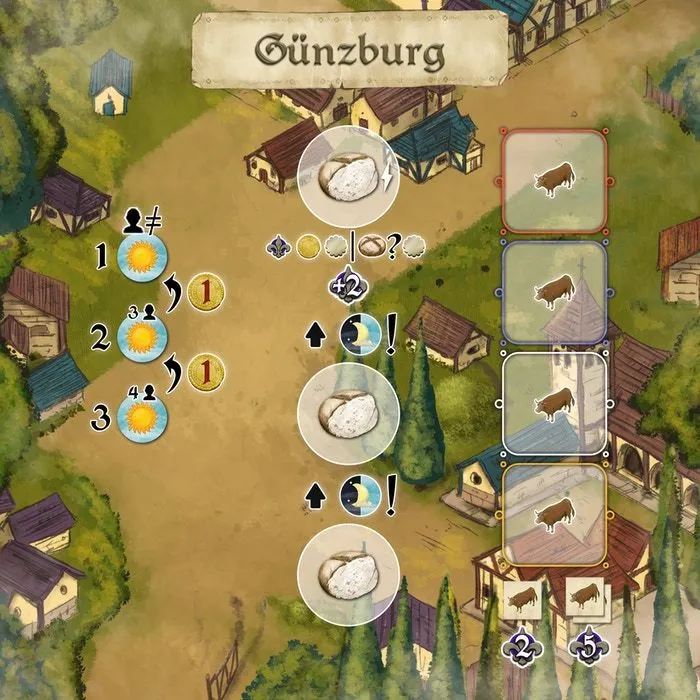
Pandemain: Traditional Farmers' Bread: Günzburg
- 1–4 jugadores
- 60–120 min
- 2021
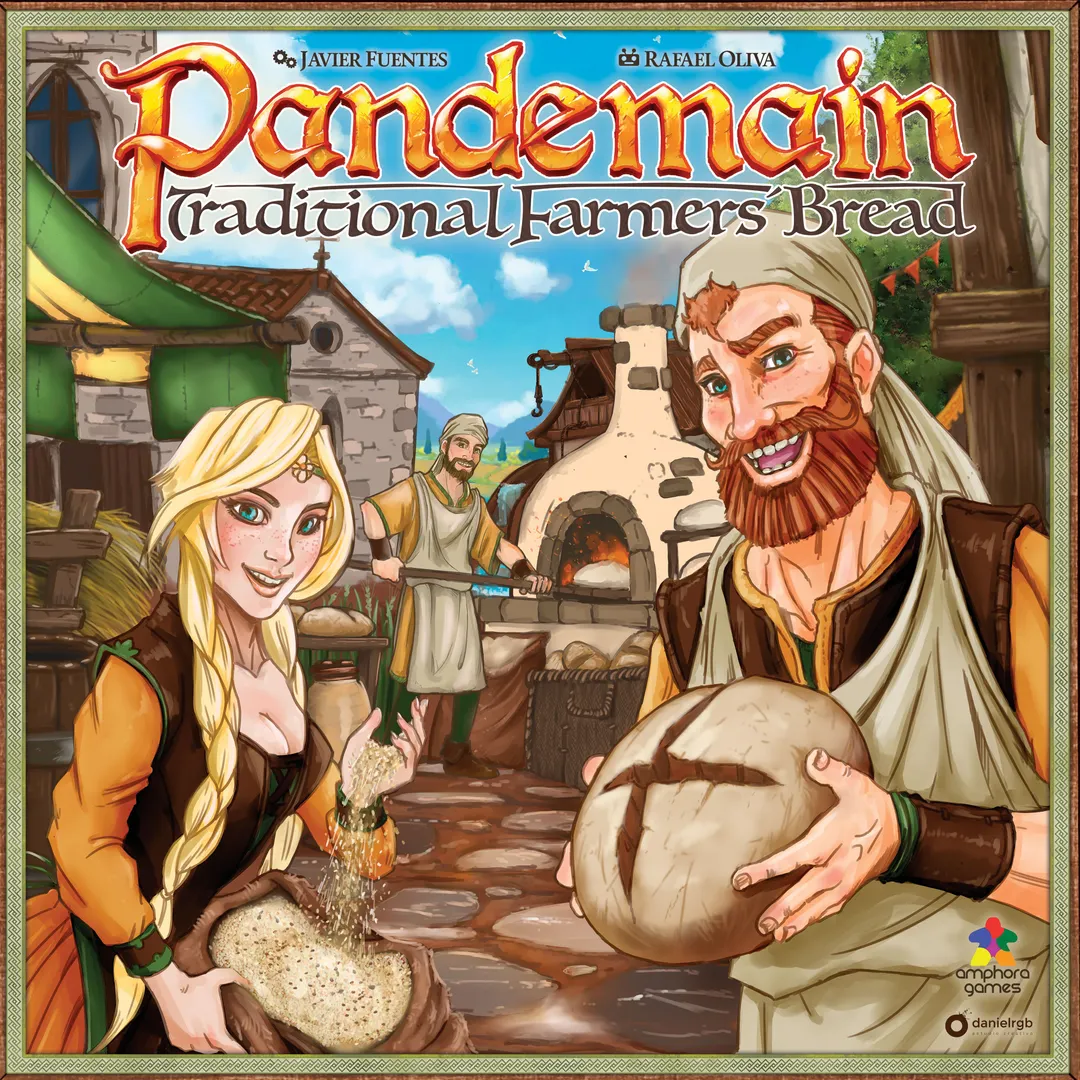
2021
Ayuda con las reglas de Pandemain: Traditional Farmers' Bread
Explicaciones claras de turnos, efectos de cartas y situaciones dudosas, con referencias a fuentes oficiales e historial de preguntas guardado.
Para 1 jugador
¿Qué quieres saber?
Las respuestas salen del reglamento oficial, con la página para comprobarlo.
Pandemain: Traditional Farmers' Bread es un juego de mesa publicado en 2021 para 1–4 jugadores, con partidas de 60 a 120 minutos y a partir de 12 años. Fue diseñado por Javier Fuentes y Rafael Oliva y sus mecánicas principales son Set Collection, Simulation y Worker Placement.


En inglés
Pandemain: Traditional Farmers' Bread is a worker placement and bread making game for 1 to 4 players, where you must run a small bakery business located in the village of Nördlingen, during the fascinating period of the Middle Ages. Buy ingredients in the market, get flour by visiting the mill, bake your bread in the Feudal Lord’s oven and try to sell it in nearby villages. Satisfy the demand with high quality bread and improve your reputation to prosper and emerge victorious. Face the difficulties of the harsh medieval life, in which only a few peasants escaped the servile dependence of the Feudal Lord. The game takes place in the medieval region of the Duchy of Schwaben during the year 1276, in the domains of Emperor Rudolf I of Habsburg and under the watchful eye of the Inquisition. The historical base of the game has been verified in ancient documents and history books, and its mechanics are based on readings from original literature of that time. Explore this enigmatic period hidden under layers of mud and ash, and discover the real day to day of the period’s peasants. Pandemain: Traditional Farmers' Bread is played in turns. Each player starts with four workers and they can get another one if certain conditions are met. There are 5 game rounds divided in 4 phases each, with a variable element at the end of the game. In the game, some actions that are chosen by the players (worker placement), and all actions will lead to the selling of the bread they bake in the nearest villages or to the Feudal Lord, which additionally gives you favors (set collection). Each type of bread is sold at a different price and have different point values. The players must collect the correct ingredients for each recipe, bake high quality or low quality bread and sell it, for which they will receive the gratitude from the villages (set collection), allowing them to make extra actions and receive extra points. The players can hire and improve their master bakers (set collection), which allows them to bake the highest quality bread, provide benefits, and increase their reputation. Cows, oxen and wagons add some variability when the players go to acquire the ingredients. The Inquisition is also relevant: the players will make donations to the church, which gives them influence to avoid losing points each round and, in return they will give some benefits and points. And not only that, the church also controls the turn order. What changes every round? - Bread demand in each village - Flour available in the market - Feudal Lord's servant position - Inquisition advance What changes every game? - Available master bakers - Villagers in the villages - Feudal Lord's favors - Benefits when donating to the church -description from designer
Según el catálogo, Pandemain: Traditional Farmers' Bread admite de 1 a 4 jugadores. Este intervalo corresponde al número de jugadores indicado por la editorial, así que el juego puede prepararse para cualquier grupo dentro de ese margen. La preparación, algunas reglas y la puntuación pueden variar según el número de jugadores; consulta la configuración exacta en el reglamento de tu edición.
La duración indicada para Pandemain: Traditional Farmers' Bread es de 60 a 120 minutos, la estimación de la editorial para una partida completa. El tiempo real depende del grupo, del número de jugadores y del conocimiento de las reglas: las primeras partidas suelen alargarse y los grupos con experiencia terminan antes. La preparación y la explicación de las reglas no están incluidas.
El catálogo indica Pandemain: Traditional Farmers' Bread a partir de 12 años. Es la recomendación de la editorial y refleja la lectura necesaria, la complejidad de las reglas y las piezas pequeñas, no solo el tema. Los más pequeños a menudo pueden jugar con ayuda de un adulto: comprueba la edad recomendada en tu edición y la experiencia de tu grupo.
Pandemain: Traditional Farmers' Bread tiene una puntuación de complejidad de 3,6 sobre 5 según los jugadores de BoardGameGeek, lo que lo convierte en un juego de complejidad media. La puntuación refleja cuánto conocimiento de reglas, planificación y toma de decisiones exige una partida típica. Los juegos exigentes requieren una explicación inicial más larga, así que conviene usar una guía de preparación.
Pandemain: Traditional Farmers' Bread pertenece a estas categorías: Medieval, Farming e Industry / Manufacturing. Sus mecánicas principales son Set Collection, Simulation y Worker Placement. Las categorías describen el tema y la ambientación de un juego, mientras que las mecánicas describen lo que los jugadores hacen realmente en su turno. Cada mecánica lleva a una página del catálogo con juegos similares.
Los autores acreditados de Pandemain: Traditional Farmers' Bread son: Javier Fuentes y Rafael Oliva. Estos créditos proceden de los datos publicados del juego y nombran a las personas responsables de su diseño, no a ilustradores ni editoriales. Las páginas de autor de MeepleRules reúnen otros títulos de los mismos autores, algo útil cuando un juego te gusta y buscas otros parecidos.
El catálogo clasifica Pandemain: Traditional Farmers' Bread como juego base. Se juega por sí solo con los componentes de la caja y no requiere ningún otro título. Las expansiones, si existen, añaden contenido o reglas nuevas y aparecen por separado en el catálogo con un enlace a este juego base.