

- Puesto en BGG
- BGG #23.561
- Puntuación BGG
- 6,2
Dragonstar Rising
- 1–6 jugadores
- 120 min
- Complejidad 3,7/5
- 1987
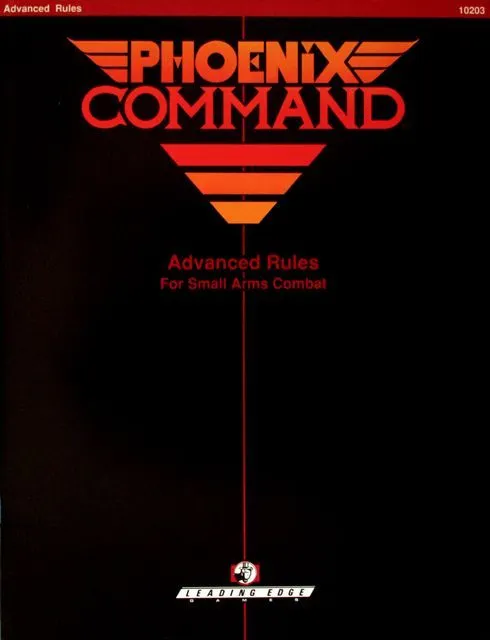
Ayuda con las reglas de Phoenix Command: Advanced Rules for Small Arms Combat
Explicaciones claras de turnos, efectos de cartas y situaciones dudosas, con referencias a fuentes oficiales e historial de preguntas guardado.
¿Qué quieres saber?
Las respuestas salen del reglamento oficial, con la página para comprobarlo.
Phoenix Command: Advanced Rules for Small Arms Combat es una expansión de Phoenix Command publicada en 1986 para 2–12 jugadores. Fue diseñado por David MacKenzie (I) y Barry Nakazono.







En inglés
While primarily thought of as a combat system for Leading Edge's Rhand Morningstar Missions RPG, the original Phoenix Command rules were also intended to be used for man-toman skirmish wargaming, either on the tabletop or a hex map. The Advanced Phoenix Command Supplement expands on the rules provided in the Phoenix Command Combat System, allowing players to handle a wide variety of special situations. Each section is modular, making it easy for players to use the appropriate rules, and to select the exact level of game detail desired. More than 20 different sections are included, among them:Blunt Trauma: When Body Armor stops a bullet, it only stops the penetration; it does not necessarily stop the severe bruising and possible broken bones which may result from the bullet's impact. The wounds caused by non-penetrating rounds, called Blunt Trauma, are fully discussed. Smoke: A common factor on many battlefields, Smoke provides vital protection from the enemy during dashes across streets and open areas, towards hostile positions, and during retreats. The full effects of Smoke are explained including the duration of Smoke clouds generated by Smoke Grenades, the effects of wind on the cloud, and the partial visibility possible while the smoke clears. Blind Fire: The standard response to enemy Smoke screens, Blind Fire (firing without being able to see the target) can also be vital in house-to-house fighting, when pinned by enemy fire, or providing harassing fire against unseen opponents. Among the other sections included are: Ballistic Accuracy; Weapon Reliability and Weapon Damage; the Three Round Burst; Explosive Ammunition; Permanent Disabling Injuries; Effective Minimum Arc; Optical Scopes; Spotting; Cover Generation; Large Scale Battlefields; Leadership; Ground Burst Explosions; Mines and Traps; Time of Flight; Evasive Action; Recoil Recovery; Off Hand Fire; Free Actions; Skills; Training; and Experience. -from the back of the book
Según el catálogo, Phoenix Command: Advanced Rules for Small Arms Combat admite de 2 a 12 jugadores. Este intervalo corresponde al número de jugadores indicado por la editorial, así que el juego puede prepararse para cualquier grupo dentro de ese margen. La preparación, algunas reglas y la puntuación pueden variar según el número de jugadores; consulta la configuración exacta en el reglamento de tu edición.
Phoenix Command: Advanced Rules for Small Arms Combat pertenece a estas categorías: Wargame, Miniatures y Expansion for Base-game. Las categorías describen el tema, la ambientación y el estilo de un juego, no sus reglas. Filtra el catálogo por la misma categoría para encontrar juegos similares si te gustó Phoenix Command: Advanced Rules for Small Arms Combat y buscas algo parecido para tu próxima noche de juegos.
Los autores acreditados de Phoenix Command: Advanced Rules for Small Arms Combat son: David MacKenzie (I) y Barry Nakazono. Estos créditos proceden de los datos publicados del juego y nombran a las personas responsables de su diseño, no a ilustradores ni editoriales. Las páginas de autor de MeepleRules reúnen otros títulos de los mismos autores, algo útil cuando un juego te gusta y buscas otros parecidos.
El catálogo clasifica Phoenix Command: Advanced Rules for Small Arms Combat como expansión de Phoenix Command. Las expansiones añaden contenido, reglas o escenarios al juego base y normalmente no se pueden jugar solas, así que necesitas Phoenix Command para usarla. Comprueba que tu edición de Phoenix Command sea compatible, porque algunas expansiones se revisaron entre ediciones.