
- Puesto en BGG
- BGG #12.366
- Puntuación BGG
- 7,7
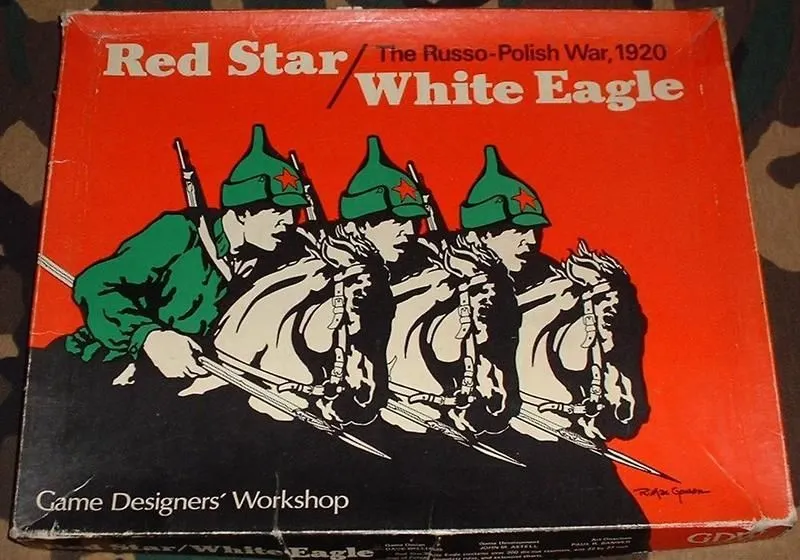
Red Star/White Eagle: The Russo-Polish War, 1920
- 2 jugadores
- 180–480 min
- Complejidad 2,9/5
- 1979
2018
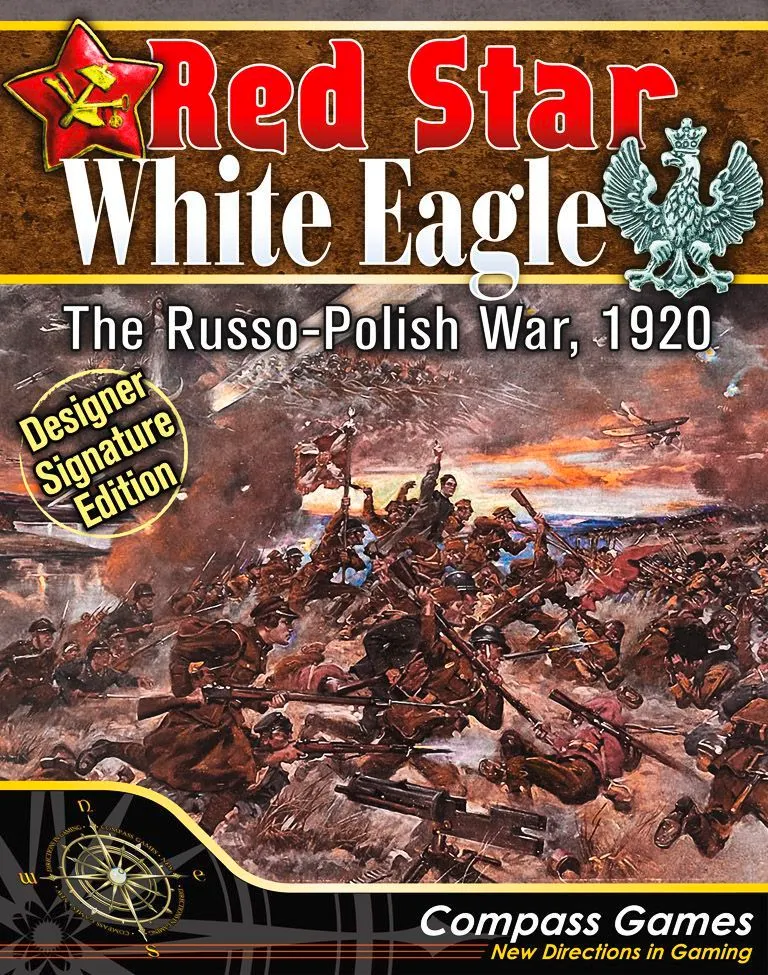
Ayuda con las reglas de Red Star/White Eagle: The Russo-Polish War, 1920 – Designer Signature Edition
Explicaciones claras de turnos, efectos de cartas y situaciones dudosas, con referencias a fuentes oficiales e historial de preguntas guardado.
¿Qué quieres saber?
Las respuestas salen del reglamento oficial, con la página para comprobarlo.
Red Star/White Eagle: The Russo-Polish War, 1920 – Designer Signature Edition es un juego de mesa publicado en 2018 para 1–3 jugadores, con partidas de 180 a 480 minutos y a partir de 12 años. Fue diseñado por David Williams (I) y sus mecánicas principales son Dice Rolling, Hexagon Grid y Simulation.


En inglés
Red Star/White Eagle: The Russo-Polish War, 1920, Designer Signature Edition, marks the return of a true wargaming classic by David Williams, remastered and updated with this all-new edition. Celebrated by many as one of the finest and often sought-after game titles ever produced by Game Designers’ Workshop (GDW, 1979) on a fascinating, almost forgotten conflict that would determine the course of European history for the next twenty years or more. To the West, the First World War was “the war to end all wars”. To the submerged nationalities of Eastern Europe, this war removed the obstacles to their political aspirations– Tsarist Russia collapsed in 1917; Germany and Austria-Hungary were defeated in 1918. The disintegration of these empires sparked a chaotic period of struggles in Eastern Europe, as proponents of the old order, nationalists, and revolutionary socialists fought for supremacy. The conflict between the Poles and the Bolsheviks was the most important campaign in determining the borders of Eastern Europe. Red Star/White Eagle is an operational level simulation that faithfully recreates the 1920 conflict over the border areas of Eastern Europe. Game play is not for the faint of heart with open maneuvering creating a fast and fluid situation as both sides seek the opportunity to outflank and attack. Nearly any defensive line can be bypassed in the wide-open expanse of West Russia, forcing players to probe for vulnerabilities and seize the initiative. An exhaustive Order of Battle helps capture the key historically facets of the campaign including supply, cavalry charges, armored trains, loss of command, inter-front cooperation, rail nets, railroad reserve, flotillas and marines, border garrisons, numerous specialized units, and more. This Designer Signature Edition provides a fully updated treatment to the GDW 1979 release that honors the original game design. All aspects of the game are being enhanced, based on years of player experience and feedback. One example is adding initial set-up and reinforcement entry codes to all units to ease set-up and play. Play time can vary with three scenarios provided and the Campaign Game. While suitable for solitaire play and designed as a two-player game, the Campaign game is credited as allowing for up to three players (with two playing the Russian side). This edition serves as the ultimate treatment in paying homage and celebrating the original classic design by David Williams. All components are upgraded to include a larger playing surface () and to deliver an optimal play experience that can be completed in a single sitting. Components: two maps two countersheets (344 5/8” counters) five player aid cards one small deployment map one rule book (28 pages) (from the publisher and back of the box)
Según el catálogo, Red Star/White Eagle: The Russo-Polish War, 1920 – Designer Signature Edition admite de 1 a 3 jugadores. Este intervalo corresponde al número de jugadores indicado por la editorial, así que el juego puede prepararse para cualquier grupo dentro de ese margen. La preparación, algunas reglas y la puntuación pueden variar según el número de jugadores; consulta la configuración exacta en el reglamento de tu edición.
La duración indicada para Red Star/White Eagle: The Russo-Polish War, 1920 – Designer Signature Edition es de 180 a 480 minutos, la estimación de la editorial para una partida completa. El tiempo real depende del grupo, del número de jugadores y del conocimiento de las reglas: las primeras partidas suelen alargarse y los grupos con experiencia terminan antes. La preparación y la explicación de las reglas no están incluidas.
El catálogo indica Red Star/White Eagle: The Russo-Polish War, 1920 – Designer Signature Edition a partir de 12 años. Es la recomendación de la editorial y refleja la lectura necesaria, la complejidad de las reglas y las piezas pequeñas, no solo el tema. Los más pequeños a menudo pueden jugar con ayuda de un adulto: comprueba la edad recomendada en tu edición y la experiencia de tu grupo.
Red Star/White Eagle: The Russo-Polish War, 1920 – Designer Signature Edition tiene una puntuación de complejidad de 2,7 sobre 5 según los jugadores de BoardGameGeek, lo que lo convierte en un juego algo ligero. La puntuación refleja cuánto conocimiento de reglas, planificación y toma de decisiones exige una partida típica. Los juegos exigentes requieren una explicación inicial más larga, así que conviene usar una guía de preparación.
Red Star/White Eagle: The Russo-Polish War, 1920 – Designer Signature Edition pertenece a estas categorías: Wargame. Sus mecánicas principales son Dice Rolling, Hexagon Grid y Simulation. Las categorías describen el tema y la ambientación de un juego, mientras que las mecánicas describen lo que los jugadores hacen realmente en su turno. Cada mecánica lleva a una página del catálogo con juegos similares.
Los autores acreditados de Red Star/White Eagle: The Russo-Polish War, 1920 – Designer Signature Edition son: David Williams (I). Estos créditos proceden de los datos publicados del juego y nombran a las personas responsables de su diseño, no a ilustradores ni editoriales. Las páginas de autor de MeepleRules reúnen otros títulos de los mismos autores, algo útil cuando un juego te gusta y buscas otros parecidos.
El catálogo clasifica Red Star/White Eagle: The Russo-Polish War, 1920 – Designer Signature Edition como juego base. Se juega por sí solo con los componentes de la caja y no requiere ningún otro título. Las expansiones, si existen, añaden contenido o reglas nuevas y aparecen por separado en el catálogo con un enlace a este juego base.