

- Puntuación BGG
- 8,7
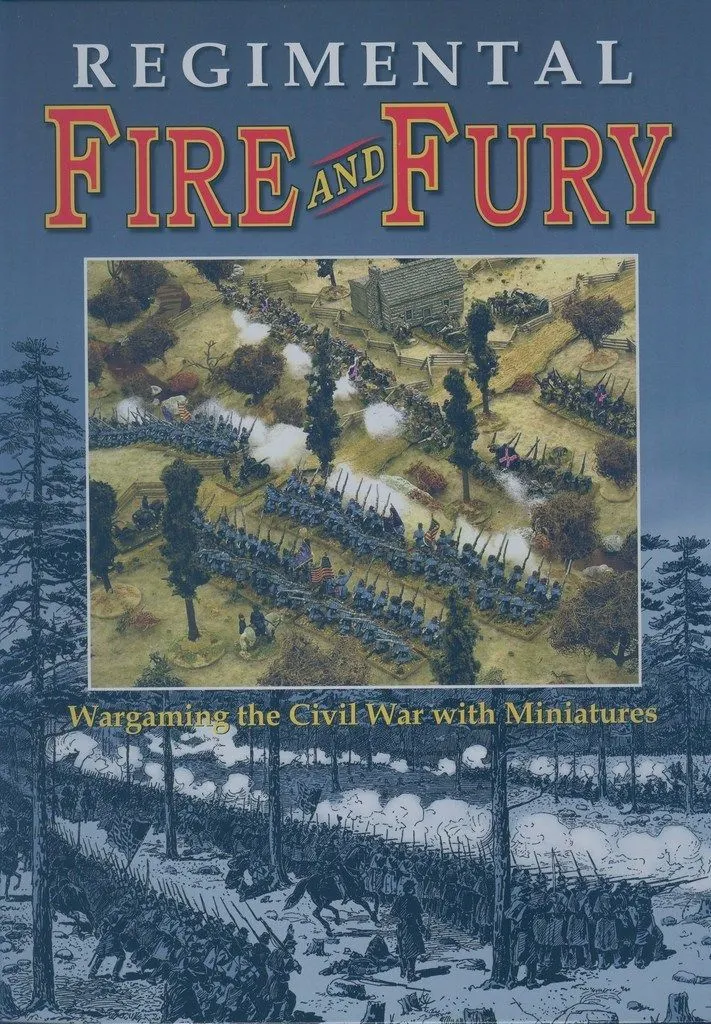
Regimental Fire and Fury: Civil War Battle Scenarios Volume 1 – 1861-1862
- 2 jugadores
- 180 min
- 2012
2010
Ayuda con las reglas de Regimental Fire and Fury
Explicaciones claras de turnos, efectos de cartas y situaciones dudosas, con referencias a fuentes oficiales e historial de preguntas guardado.
Para 2 jugadores
¿Qué quieres saber?
Las respuestas salen del reglamento oficial, con la página para comprobarlo.
Regimental Fire and Fury es un juego de mesa publicado en 2010 para 2 jugadores, con partidas de 180 minutos y a partir de 14 años. Fue diseñado por Rich Hasenauer y sus mecánicas principales son Dice Rolling.





En inglés
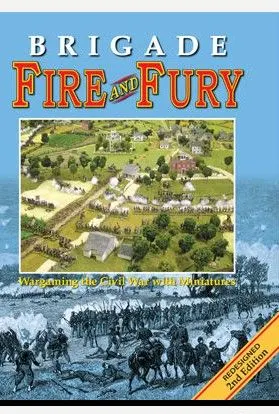
From the publisher's website (fireandfury.com): Regimental Fire and Fury: Wargaming the Civil War with Miniatures By Rich Hasenauer Fire and Fury is one of the most popular historical military miniatures wargames in the hobby. This new regimental edition provides players a more in-depth look at American Civil War combat. The smaller scale allows you to take command of individual regiments and batteries and refight in greater detail many of the war's smaller engagements, as well as critical actions of the conflict's famous battles. For the new player it is an easy game to learn and enjoy. The veteran Fire and Fury gamer will find much that is familiar, like the play sequence, maneuver table, and combat system, while discovering a game taken to a new level of sophistication. Refined game mechanics strike a balance between playability and historical accuracy that draw upon twenty years of the Fire and Fury gaming experience. Brief Description Scope. A set of wargame rules using military miniatures, that allows players to recreate the small engagements and portions of larger battles of the American Civil War, 1861-1864. Scale. Tactical. 10-15 minutes per turn. 1" = 25 yards. Units are regiments of infantry or cavalry and gun sections grouped into batteries for artillery. Intended for 15mm figures, other scale figures can be used by increasing or decreasing the basing and ground scales as described in the rules. Basing. Each 1" x 3/4" stand with 3 infantry figures, and 1" x 1" with 2 cavalry figures, represents 40 men. Each 1" x 1-1/2" stand with a gun model and 2 or 3 figure crew represents a 2-gun section. Unit size can range from 3 to 20 troop stands per regiment, with the average of 8-12 stands per unit. Batteries are represented by 2 to 3 gun stands. Game Turn Sequence. A game turn is divided into an alternating Union player turn and Confederate player turn. Players must follow the Player Turn Sequence. Each player turn consists of three phases. One phase must be completed before moving to the next. Some activities in a phase are performed by the opposing player or jointly by both players. Maneuver Phase - In the first phase of a player turn the player must resolve a maneuver check for each unit which he controls on the game table. A maneuver check involves either one or more units under the command of a single leader, or a single unit that is out of command. The maneuver check combines the elements in warfare of morale, command and control into a single die roll procedure using the Maneuver Table. The effects from the table describe the movement and other maneuvers that each unit is allowed or required to perform in this phase. Musketry and Cannonade Phase - There are two kinds of combat in the game: fire combat and charge combat. All fire combat is resolved in the second phase of the player turn. Both Union and Confederate units may fire during this phase. The phase consists of two rounds of fire combat. It begins with a round of defensive fire followed by a round of offensive fire. In the Confederate player turn only Union units may defensive fire, and only Confederate units may offensive fire. During the Union player turn the order is reversed with Confederate defensive fire followed by Union offensive fire. All fire combat is resolved using the Musketry & Cannonade Table to determine casualties and other combat effects. Charge Phase - In the third and final phase of a player turn a charge combat must be resolved wherever a charging unit made contact with the enemy. The relative position between attacking and defending units will determine which combats need to be divided into less complex combat situations. Both sides then follow a joint die roll procedure to resolve a round of charge combat. The Charge Table is used to determine casualties and other combat effects. Depending on the results of the first round of combat, a second round of breakthrough charge combat may follow after all first round charge combats are resolved. After all charge combat is resolved, the current player turn ends and the next player turn begins. Battle Scenarios. The book provides guidelines for designing your own scenarios and six historical scenarios covering different periods and theaters of the war: 1.The Battle of Ball's Bluff, October 21, 1861. 2.Bloody Hill, The Battle of Wilson's Creek, August 10, 1861. 3.Casey's Redoubt, The Battle of Seven Pines, May 31, 1862. 4.The Battle Comes to Sheridan, The Battle of Stones River, December 31, 1862. 5.Little Round Top, The Battle of Gettysburg, July 2, 1863. 6.The Battle of Olustee, February 20, 1864.
Según el catálogo, Regimental Fire and Fury admite 2 jugadores. Es el número de jugadores indicado por la editorial, así que el juego está diseñado exactamente para esa cantidad de participantes. Las variantes para otros tamaños de grupo, si existen, se describen en el reglamento de tu edición; consúltalo antes de preparar otra configuración.
La duración indicada para Regimental Fire and Fury es de 180 minutos, la estimación de la editorial para una partida completa. El tiempo real depende del grupo, del número de jugadores y del conocimiento de las reglas: las primeras partidas suelen alargarse y los grupos con experiencia terminan antes. La preparación y la explicación de las reglas no están incluidas.
El catálogo indica Regimental Fire and Fury a partir de 14 años. Es la recomendación de la editorial y refleja la lectura necesaria, la complejidad de las reglas y las piezas pequeñas, no solo el tema. Los más pequeños a menudo pueden jugar con ayuda de un adulto: comprueba la edad recomendada en tu edición y la experiencia de tu grupo.
Regimental Fire and Fury tiene una puntuación de complejidad de 2,9 sobre 5 según los jugadores de BoardGameGeek, lo que lo convierte en un juego algo ligero. La puntuación refleja cuánto conocimiento de reglas, planificación y toma de decisiones exige una partida típica. Los juegos exigentes requieren una explicación inicial más larga, así que conviene usar una guía de preparación.
Regimental Fire and Fury pertenece a estas categorías: Wargame, Miniatures y American Civil War. Sus mecánicas principales son Dice Rolling. Las categorías describen el tema y la ambientación de un juego, mientras que las mecánicas describen lo que los jugadores hacen realmente en su turno. Cada mecánica lleva a una página del catálogo con juegos similares.
Los autores acreditados de Regimental Fire and Fury son: Rich Hasenauer. Estos créditos proceden de los datos publicados del juego y nombran a las personas responsables de su diseño, no a ilustradores ni editoriales. Las páginas de autor de MeepleRules reúnen otros títulos de los mismos autores, algo útil cuando un juego te gusta y buscas otros parecidos.
El catálogo clasifica Regimental Fire and Fury como juego base. Se juega por sí solo con los componentes de la caja y no requiere ningún otro título. Las expansiones, si existen, añaden contenido o reglas nuevas y aparecen por separado en el catálogo con un enlace a este juego base.