

- Puntuación BGG
- 6,5
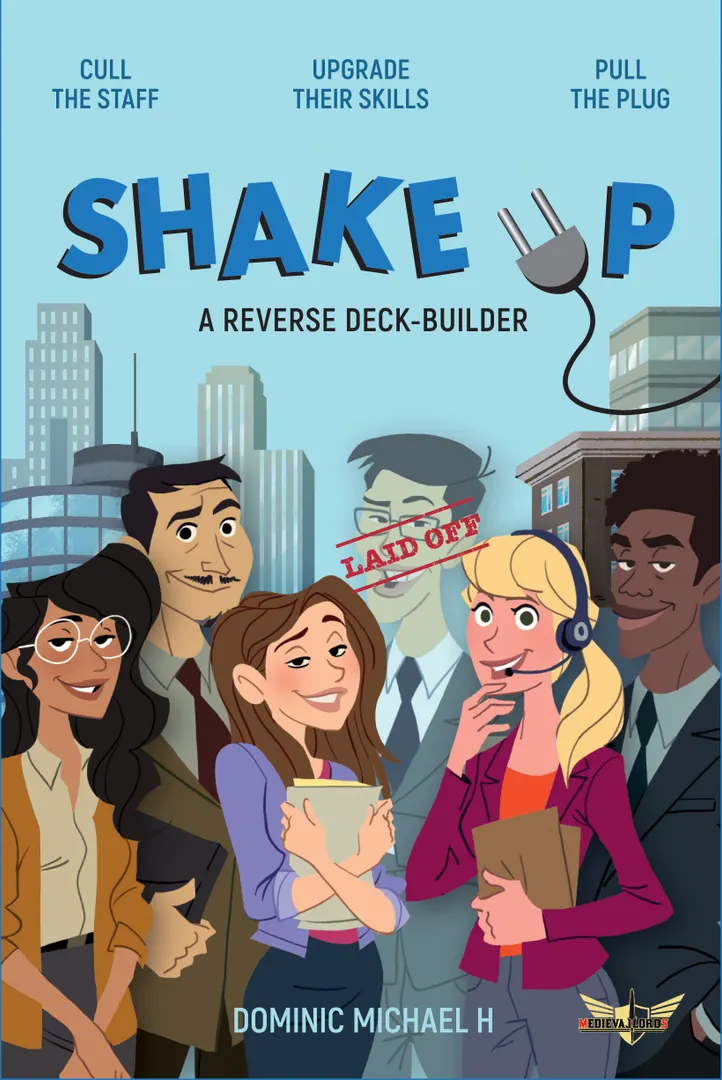
Shake Up: Where Did All The Tech In An IT Firm Go!?
- 1–2 jugadores
- 15–25 min
- Complejidad 2,0/5
- 2019
2019
Ayuda con las reglas de Shake Up
Explicaciones claras de turnos, efectos de cartas y situaciones dudosas, con referencias a fuentes oficiales e historial de preguntas guardado.
Para 1 jugador
¿Qué quieres saber?
Las respuestas salen del reglamento oficial, con la página para comprobarlo.
Shake Up es un juego de mesa publicado en 2019 para 1–2 jugadores, con partidas de 15 a 25 minutos y a partir de 10 años. Fue diseñado por Dominic Michael Huang y sus mecánicas principales son Hand Management, Take That y Simulation.



En inglés
The IT company is staring Chapter 11 in the face. Its cost of operations is too high, its revenue too low. In a last ditch attempt, it is looking to hire a top tier business consultant to turn this around. Alas, there are many such persons claiming to be the best. To filter mere noise from the elite, the company has called upon the consultants with the most potential to share their business proposals - You are one such. Shake Up sits in a very rare tabletop genre: reverse deck-building or also known as a deck destruction game. Players each have their own deck of cards, which are completely identical decks since they represent the same employees of the same IT company. How each player handles the company will be different though, and that is where the better consultant will stand out. The first consultant to put the company into the green wins! Every turn players draw 4 cards from their own deck, and determine how to utilize those cards' abilities. Players are also allowed to perform a 'Lay Off' action, permanently removing an employee from the deck. While this may seem bad, it makes their deck more efficient in the style they want to build towards. They also save on that employee's salary, especially if it is a highly paid executive! Note however, that the higher ups usually have greater experience and better abilities. Starting off the game with some debt, players will slowly clear them away as well as make some profit through new business projects. How then do consultants interact in the game? Their sales folks can try to hustle the other team, messing up their rivals' business proposals! Of course, those same rivals will likely also have their own purchasing and accounting departments to protect themselves from red herring purchases. When does the game end? Each time a player's draw deck is emptied and recycled from its discard pile, she has a chance to call an Audit. When an Audit is called, that player counts her total revenue earned, then reduce it by the salary of all existing employees in her deck, as well as any unpaid loans. If it is still positive, she wins the game right away! Dare you call an Audit before your rival? Doing so is risky, since you either win the game right away or you gain more debt because you have to pay for wasting the auditors' time, putting you further from victory. Deck-builders are a common genre and folks try to add more powerful and advanced cards into their deck, which is typically comprised of basic cards. In reverse deck-building however, players begin with fully powered-up decks. The problem is one where veteran deck-builders will be familiar with - having too thick a deck will make it inefficient. Throughout the game, players will try to cull cards that are not part of their chosen strategy.
Según el catálogo, Shake Up admite de 1 a 2 jugadores. Este intervalo corresponde al número de jugadores indicado por la editorial, así que el juego puede prepararse para cualquier grupo dentro de ese margen. La preparación, algunas reglas y la puntuación pueden variar según el número de jugadores; consulta la configuración exacta en el reglamento de tu edición.
La duración indicada para Shake Up es de 15 a 25 minutos, la estimación de la editorial para una partida completa. El tiempo real depende del grupo, del número de jugadores y del conocimiento de las reglas: las primeras partidas suelen alargarse y los grupos con experiencia terminan antes. La preparación y la explicación de las reglas no están incluidas.
El catálogo indica Shake Up a partir de 10 años. Es la recomendación de la editorial y refleja la lectura necesaria, la complejidad de las reglas y las piezas pequeñas, no solo el tema. Los más pequeños a menudo pueden jugar con ayuda de un adulto: comprueba la edad recomendada en tu edición y la experiencia de tu grupo.
Shake Up tiene una puntuación de complejidad de 2,2 sobre 5 según los jugadores de BoardGameGeek, lo que lo convierte en un juego algo ligero. La puntuación refleja cuánto conocimiento de reglas, planificación y toma de decisiones exige una partida típica. Los juegos exigentes requieren una explicación inicial más larga, así que conviene usar una guía de preparación.
Shake Up pertenece a estas categorías: Card Game y Economic. Sus mecánicas principales son Hand Management, Take That y Simulation. Las categorías describen el tema y la ambientación de un juego, mientras que las mecánicas describen lo que los jugadores hacen realmente en su turno. Cada mecánica lleva a una página del catálogo con juegos similares.
Los autores acreditados de Shake Up son: Dominic Michael Huang. Estos créditos proceden de los datos publicados del juego y nombran a las personas responsables de su diseño, no a ilustradores ni editoriales. Las páginas de autor de MeepleRules reúnen otros títulos de los mismos autores, algo útil cuando un juego te gusta y buscas otros parecidos.
El catálogo clasifica Shake Up como juego base. Se juega por sí solo con los componentes de la caja y no requiere ningún otro título. Las expansiones, si existen, añaden contenido o reglas nuevas y aparecen por separado en el catálogo con un enlace a este juego base.