
- Puesto en BGG
- BGG #6090
- Puntuación BGG
- 8,4
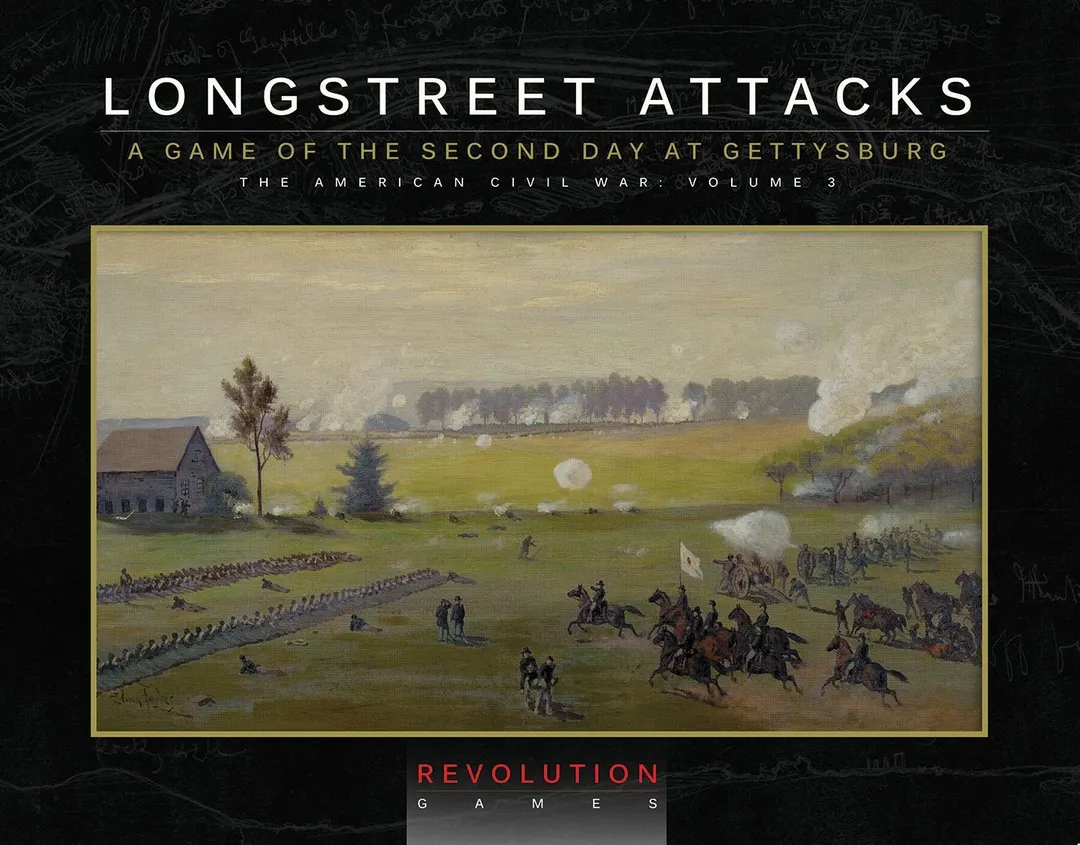
Longstreet Attacks: The Second Day at Gettysburg
- 1–4 jugadores
- 90–720 min
- Complejidad 3,5/5
- 2018
2019
Ayuda con las reglas de The Devil's to Pay!: The First Day at Gettysburg
Explicaciones claras de turnos, efectos de cartas y situaciones dudosas, con referencias a fuentes oficiales e historial de preguntas guardado.
Para 1 jugador
¿Qué quieres saber?
Las respuestas salen del reglamento oficial, con la página para comprobarlo.
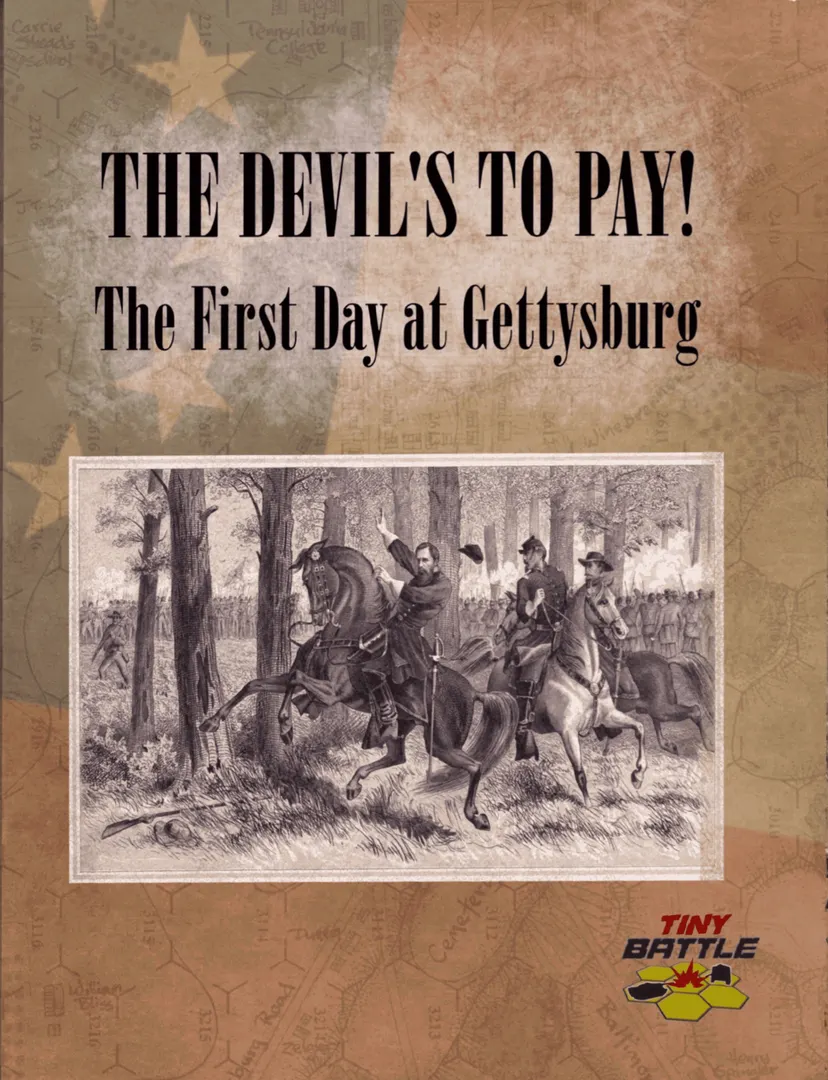
The Devil's to Pay!: The First Day at Gettysburg es un juego de mesa publicado en 2019 para 1–2 jugadores, con partidas de 120 a 240 minutos y a partir de 9 años. Fue diseñado por Hermann Luttmann y sus mecánicas principales son Dice Rolling, Hexagon Grid y Simulation.




En inglés
On the morning of July 1st, 1863 a column of Rebel soldiers from Brig. Gen. James Archer’s brigade of the Army of Northern Virginia headed down the Chambersburg Pike from Cashtown, PA towards the town of Gettysburg in search of provisions. Since JEB Stuart’s cavalry was nowhere to be found, the Confederate column was actually being led by the cannons of Pegram’s Artillery Brigade in a rare 19th century deployment of “recon by fire”. Archer’s Division commander, Maj. Gen. Henry Heth, was not worried however – he had it on firm authority that only militia was in the area and that “they would run as soon as we appeared”. Upon their approach up to Herr’s Ridge to the west of Gettysburg, the dismounted Union cavalry pickets of Buford’s 1st Cavalry Division began harassing the approaching butternut columns. As they were driven off and the Rebs crested the ridge, they were confronted with a far larger cavalry force than they had anticipated and they were now hotly engaged in an unexpected encounter. Archer’s men, along with the quick-marching soldiers of Brig. Gen. Robert Davis’ brigade, began a coordinated advance on Buford’s horse soldiers. The blue-clad troopers were hard pressed but their carbines allowed them to fire rapidly and from cover. Relief finally appeared at about 9:30 am when Maj. Gen. John Reynolds of Ist Corps rode up to Buford at the Lutheran Seminary. He then famously asked Buford, “What’s the matter, John?” Buford’s reply was “The Devil’s to pay!” And from such inauspicious beginnings started one of the greatest battles of history. This first day was to set the tone of the entire three-day Battle of Gettysburg …. a first day in which ultimate victory or defeat for either side could be traced to the decisions, maneuverings and fighting performances of each army’s soldiers and leaders during these initial critical hours. The Devil’s to Pay! is a game depicting not only the actual events of July 1st at the Battle of Gettysburg, but also what could have happened on that fateful first day. Two players will each command either the Confederate forces of Lt. Gen A.P. Hill and Lt. Gen. Richard Ewell or the Union forces of Maj. Gen. John Reynolds and Maj. Gen. Oliver Howard. The game is played on a gorgeous map of the battle area designed and drawn by Rick Barber, with each hex equaling 250 yards. Formations are multi-counter brigades, with each Strength Point representing about 100 men, with each unit counter representing a group of regiments, apportioned as they were deployed at the battle. The system is a new version of the Blind Swords system, with this implementation emphasizing ease-of-play and accessibility while maintaining the popular spirit of “historical chaos” represented by the other games in the Blind Swords family. The system utilizes a unique chit-pull mechanic that will keep players on their toes and engaged throughout the entire game. —description from designer
Según el catálogo, The Devil's to Pay!: The First Day at Gettysburg admite de 1 a 2 jugadores. Este intervalo corresponde al número de jugadores indicado por la editorial, así que el juego puede prepararse para cualquier grupo dentro de ese margen. La preparación, algunas reglas y la puntuación pueden variar según el número de jugadores; consulta la configuración exacta en el reglamento de tu edición.
La duración indicada para The Devil's to Pay!: The First Day at Gettysburg es de 120 a 240 minutos, la estimación de la editorial para una partida completa. El tiempo real depende del grupo, del número de jugadores y del conocimiento de las reglas: las primeras partidas suelen alargarse y los grupos con experiencia terminan antes. La preparación y la explicación de las reglas no están incluidas.
El catálogo indica The Devil's to Pay!: The First Day at Gettysburg a partir de 9 años. Es la recomendación de la editorial y refleja la lectura necesaria, la complejidad de las reglas y las piezas pequeñas, no solo el tema. Los más pequeños a menudo pueden jugar con ayuda de un adulto: comprueba la edad recomendada en tu edición y la experiencia de tu grupo.
The Devil's to Pay!: The First Day at Gettysburg tiene una puntuación de complejidad de 2,6 sobre 5 según los jugadores de BoardGameGeek, lo que lo convierte en un juego algo ligero. La puntuación refleja cuánto conocimiento de reglas, planificación y toma de decisiones exige una partida típica. Los juegos exigentes requieren una explicación inicial más larga, así que conviene usar una guía de preparación.
The Devil's to Pay!: The First Day at Gettysburg pertenece a estas categorías: Wargame, Civil War y Post-Napoleonic. Sus mecánicas principales son Dice Rolling, Hexagon Grid y Simulation. Las categorías describen el tema y la ambientación de un juego, mientras que las mecánicas describen lo que los jugadores hacen realmente en su turno. Cada mecánica lleva a una página del catálogo con juegos similares.
Los autores acreditados de The Devil's to Pay!: The First Day at Gettysburg son: Hermann Luttmann. Estos créditos proceden de los datos publicados del juego y nombran a las personas responsables de su diseño, no a ilustradores ni editoriales. Las páginas de autor de MeepleRules reúnen otros títulos de los mismos autores, algo útil cuando un juego te gusta y buscas otros parecidos.
El catálogo clasifica The Devil's to Pay!: The First Day at Gettysburg como juego base. Se juega por sí solo con los componentes de la caja y no requiere ningún otro título. Las expansiones, si existen, añaden contenido o reglas nuevas y aparecen por separado en el catálogo con un enlace a este juego base.