
- Puesto en BGG
- BGG #3886
- Puntuación BGG
- 6,5
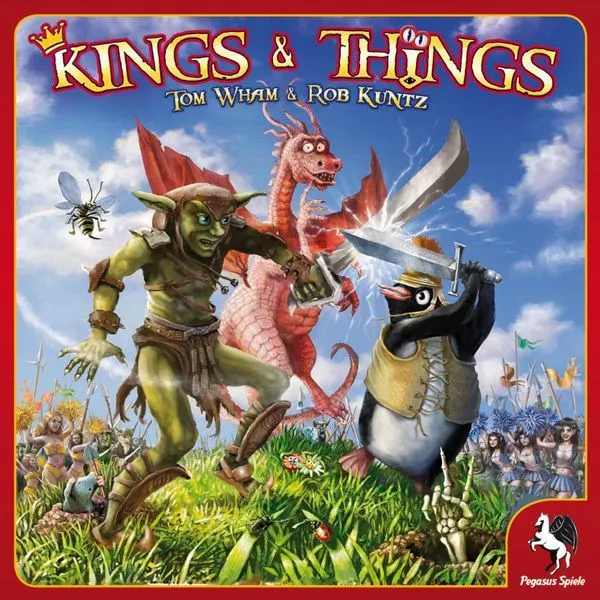
Kings & Things
- 2–4 jugadores
- 60–180 min
- Complejidad 2,6/5
- 1986
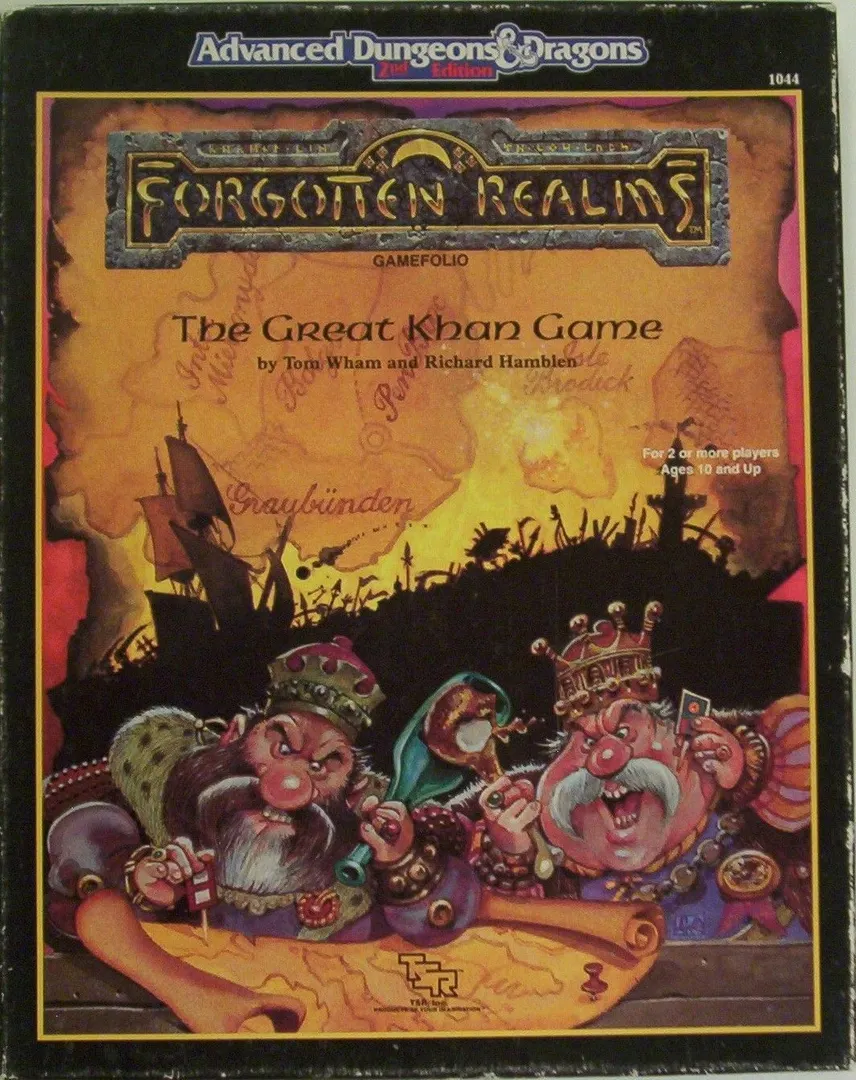
1989
Ayuda con las reglas de The Great Khan Game
Explicaciones claras de turnos, efectos de cartas y situaciones dudosas, con referencias a fuentes oficiales e historial de preguntas guardado.
Para 2 jugadores
¿Qué quieres saber?
Las respuestas salen del reglamento oficial, con la página para comprobarlo.
The Great Khan Game es un juego de mesa publicado en 1989 para 2–6 jugadores, con partidas de 90 minutos y a partir de 10 años. Fue diseñado por Tom Wham y Richard Hamblen y sus mecánicas principales son Area Movement, Melding and Splaying y Campaign / Battle Card Driven.
En inglés
The Great Khan Game includes one 32-page rule book, one 11" x 17" full-color map of the Whamite Isles, 120 die-cut cardboard playing pieces, 162 playing cards, and one plastic storage bag. This is a card/strategy board game for 2 or more players. The game is set in the Whamite Islands. It is a very fun game, which usually lasts an hour or so depending on the number players and chance. The idea of the game is to make as much gold as possible by controlling countries within your own little empire from the dozen or so provinces available. The game uses a card system with a lot of clever design tricks added on to provide depth. The game play within your turn is easy to pick up, but requires much thought to get right. You are dealt six cards initially, which will usually give you weak control of a couple of countries. These can be added to each turn by drawing two free cards or taking the top card from the discard pile. Additionally, you can buy extra cards every turn. Having checked the cards for events and acted on those immediately, you can make 'melds,' war and political manoeuvres before compulsorily discarding one card. The heart of the game is the 'meld.' A meld is simply the act of laying one or more cards from your hand in front of you, thus activating their powers. By having the most powerful political meld on the table (determined by the total number of flags on the melded cards), you control that country until toppled by better politics or combat. Each country normally has a couple of leaders, often with low numbers, and a varying number of higher-numbered followers who might be loyal to any leader card or just one. Power can be stolen in two ways: political coups where you lay more flag cards than are currently melded (you take over those cards as well - those willing rally to your cause), or by the time-honoured invasion force. Combat is simple enough, but can prove a little fiddly at times. Once battle is joined, a d6 is rolled to see how many rounds the battle will last. Rolling a one when there are two large armies will virtually guarantee a non-result, whereas a six will give both sides a good chance of a win. Swords kill simply on a roll of five or six, castles get to 'fight' in defence, and defending ships must be beaten first. The game has an excellent basic structure. The key to the game is the balance of military, political power, and wealth. It really works well. But, as always, there are improvements to be made and rules that can be changed to improve or change the flavor of the game. But, the reason why the game works well is that there is an excellent structure underlying the few contested rules. It's worth adding that a lot of the fun comes from the irreverent humour on the cards--just in case you thought you were playing a serious strategy game. Names are satirical, silly, or obtuse references to real world people, places or events. For example, there's a castle named "Ratlarbig" (look at it closely), a character called the "Sorcerer's Apprentice" and a group of soldiers called "The Bloody Buggers". It's a hoot whether you're winning or losing.
Según el catálogo, The Great Khan Game admite de 2 a 6 jugadores. Este intervalo corresponde al número de jugadores indicado por la editorial, así que el juego puede prepararse para cualquier grupo dentro de ese margen. La preparación, algunas reglas y la puntuación pueden variar según el número de jugadores; consulta la configuración exacta en el reglamento de tu edición.
La duración indicada para The Great Khan Game es de 90 minutos, la estimación de la editorial para una partida completa. El tiempo real depende del grupo, del número de jugadores y del conocimiento de las reglas: las primeras partidas suelen alargarse y los grupos con experiencia terminan antes. La preparación y la explicación de las reglas no están incluidas.
El catálogo indica The Great Khan Game a partir de 10 años. Es la recomendación de la editorial y refleja la lectura necesaria, la complejidad de las reglas y las piezas pequeñas, no solo el tema. Los más pequeños a menudo pueden jugar con ayuda de un adulto: comprueba la edad recomendada en tu edición y la experiencia de tu grupo.
The Great Khan Game tiene una puntuación de complejidad de 2,1 sobre 5 según los jugadores de BoardGameGeek, lo que lo convierte en un juego algo ligero. La puntuación refleja cuánto conocimiento de reglas, planificación y toma de decisiones exige una partida típica. Los juegos exigentes requieren una explicación inicial más larga, así que conviene usar una guía de preparación.
The Great Khan Game pertenece a estas categorías: Card Game, Fantasy y Humor. Sus mecánicas principales son Area Movement, Melding and Splaying y Campaign / Battle Card Driven. Las categorías describen el tema y la ambientación de un juego, mientras que las mecánicas describen lo que los jugadores hacen realmente en su turno. Cada mecánica lleva a una página del catálogo con juegos similares.
Los autores acreditados de The Great Khan Game son: Tom Wham y Richard Hamblen. Estos créditos proceden de los datos publicados del juego y nombran a las personas responsables de su diseño, no a ilustradores ni editoriales. Las páginas de autor de MeepleRules reúnen otros títulos de los mismos autores, algo útil cuando un juego te gusta y buscas otros parecidos.
El catálogo clasifica The Great Khan Game como juego base. Se juega por sí solo con los componentes de la caja y no requiere ningún otro título. Las expansiones, si existen, añaden contenido o reglas nuevas y aparecen por separado en el catálogo con un enlace a este juego base.