
- Puesto en BGG
- BGG #3940
- Puntuación BGG
- 6,8
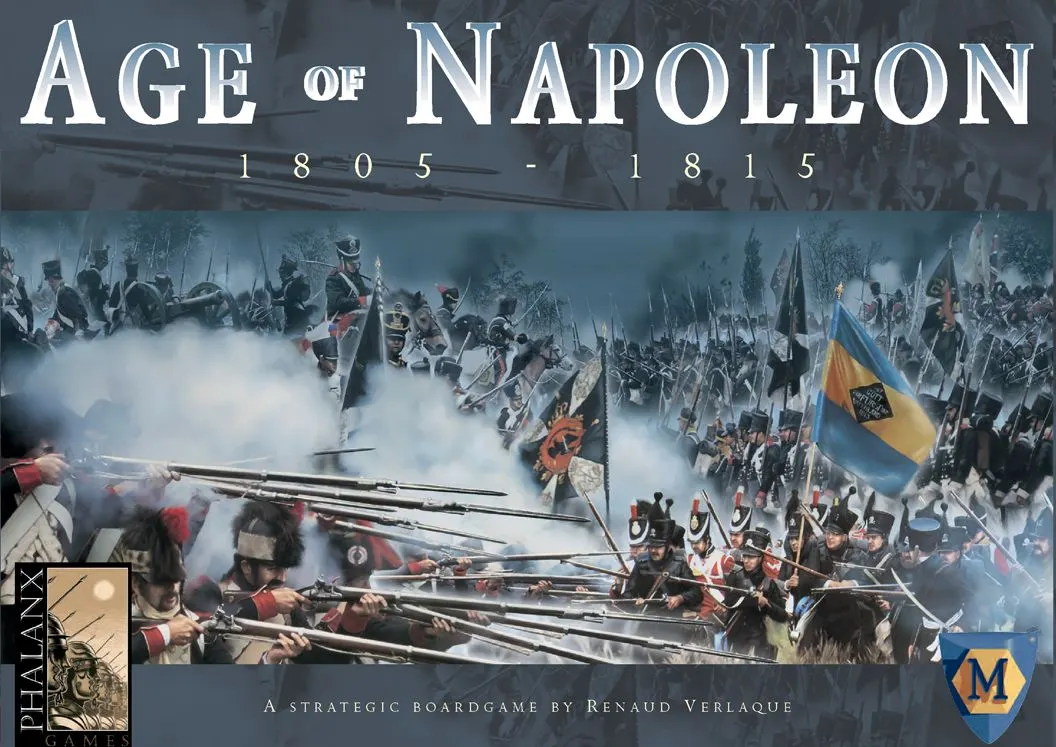
Age of Napoleon
- 2 jugadores
- 60 min
- Complejidad 3,2/5
- 2003
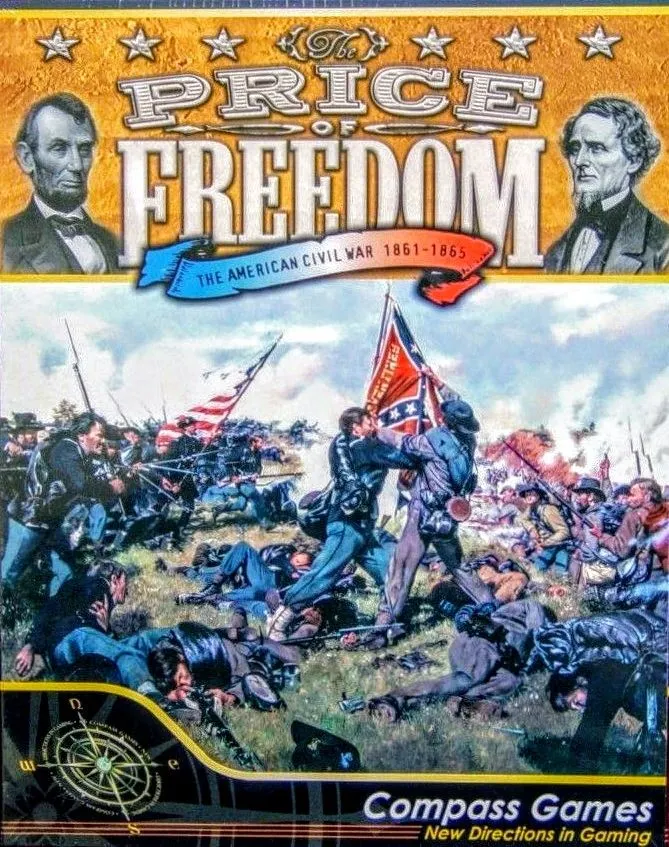
2008
Ayuda con las reglas de The Price of Freedom: The American Civil War 1861-1865
Explicaciones claras de turnos, efectos de cartas y situaciones dudosas, con referencias a fuentes oficiales e historial de preguntas guardado.
Para 2 jugadores
¿Qué quieres saber?
Las respuestas salen del reglamento oficial, con la página para comprobarlo.
The Price of Freedom: The American Civil War 1861-1865 es un juego de mesa publicado en 2008 para 2 jugadores, con partidas de 180 minutos y a partir de 12 años. Fue diseñado por Renaud Verlaque y sus mecánicas principales son Dice Rolling, Point to Point Movement y Simulation.
En inglés
(from the designer:) The Price of Freedom: The American Civil War, 1861-65 is Renaud Verlaque's second published design after Age of Napoleon, winner of 2003 Best Pre-WW2 Historical Boardgame CSR award. The Price of Freedom is a true grand-strategic-level look at the American Civil War. Using an original card-driven system, it provides strong historical flavor in a simple game that can consistently be played in three hours. This makes The Price of Freedom an ideal game for today's gamer's busy lifestyle, as well as for tournaments. As you might expect from a quick-playing game, counter density in The Price of Freedom is purposefully low and is also constrained by each side’s War Effort level, an aggregate measure of economic, political and diplomatic support for the war. Each military game piece represents a "corps" of 20-30,000 men. Corps must organized into armies led by the colorful commanders that every American Civil War aficionado has come to love or hate. Twenty-five historical army commanders are available for theater or field command, from Ben "Spoons" Butler to "Massa" Robert E. Lee, with each commander rated -1, 0 or +1 for offense, defense and movement. Armies move and fight on a functional and yet very attractive point-to-point representation of the Eastern and Western theaters, vying to capture or defend critical territory or simply to beat each other out. The card-driven engine ensures that no game of The Price of Freedom is ever the same as another and that there are plenty of hard choices to make in each campaign impulse. The game uses a well-balanced deck of 55 cards that are all playable by both sides. Each card has two uses that are generally mutually exclusive: either it can be used by spending its operational value (ranging 1-3) on various actions (moving, reorganizing or reinforcing armies) or it can be used to implement the event described on the card. Events can affect army leadership (Commander-in-Chief, Clash of Egos, Shot from the Saddle) or battle resolution (Blundering Fool; Seeing the Elephant; Bickering Generals; etc.), help gain operational advantage (Strategic Transfer; Turning Movement; Interior Lines), or simulate major political, economic or diplomatic events (Draft; Kentucky; Blockade; etc.). Like overall army size, hand size is dictated by each side's War Effort level. The Union player can win by driving down the Confederate War Effort level low enough or by vastly outnumbering Confederate troops. The Confederate player can win in similar fashion or by hanging long and well enough to cause Lincoln to lose the 1864 elections or prevent the Union player from achieving the historical outcome. So convene your cabinet, call up your generals, muster your troops, it is time to fight and find out what is the true Price of Freedom! (from Compass Games website:)Components: 1 25"x19" cardstock map 132 counters 1 deck of 55 playing cards 2 player-aid cards 1 rules booklet 2 6-sided dice 1 full color box and lid
Según el catálogo, The Price of Freedom: The American Civil War 1861-1865 admite 2 jugadores. Es el número de jugadores indicado por la editorial, así que el juego está diseñado exactamente para esa cantidad de participantes. Las variantes para otros tamaños de grupo, si existen, se describen en el reglamento de tu edición; consúltalo antes de preparar otra configuración.
La duración indicada para The Price of Freedom: The American Civil War 1861-1865 es de 180 minutos, la estimación de la editorial para una partida completa. El tiempo real depende del grupo, del número de jugadores y del conocimiento de las reglas: las primeras partidas suelen alargarse y los grupos con experiencia terminan antes. La preparación y la explicación de las reglas no están incluidas.
El catálogo indica The Price of Freedom: The American Civil War 1861-1865 a partir de 12 años. Es la recomendación de la editorial y refleja la lectura necesaria, la complejidad de las reglas y las piezas pequeñas, no solo el tema. Los más pequeños a menudo pueden jugar con ayuda de un adulto: comprueba la edad recomendada en tu edición y la experiencia de tu grupo.
The Price of Freedom: The American Civil War 1861-1865 tiene una puntuación de complejidad de 2,9 sobre 5 según los jugadores de BoardGameGeek, lo que lo convierte en un juego algo ligero. La puntuación refleja cuánto conocimiento de reglas, planificación y toma de decisiones exige una partida típica. Los juegos exigentes requieren una explicación inicial más larga, así que conviene usar una guía de preparación.
The Price of Freedom: The American Civil War 1861-1865 pertenece a estas categorías: Wargame, Post-Napoleonic y American Civil War. Sus mecánicas principales son Dice Rolling, Point to Point Movement y Simulation. Las categorías describen el tema y la ambientación de un juego, mientras que las mecánicas describen lo que los jugadores hacen realmente en su turno. Cada mecánica lleva a una página del catálogo con juegos similares.
Los autores acreditados de The Price of Freedom: The American Civil War 1861-1865 son: Renaud Verlaque. Estos créditos proceden de los datos publicados del juego y nombran a las personas responsables de su diseño, no a ilustradores ni editoriales. Las páginas de autor de MeepleRules reúnen otros títulos de los mismos autores, algo útil cuando un juego te gusta y buscas otros parecidos.
El catálogo clasifica The Price of Freedom: The American Civil War 1861-1865 como juego base. Se juega por sí solo con los componentes de la caja y no requiere ningún otro título. Las expansiones, si existen, añaden contenido o reglas nuevas y aparecen por separado en el catálogo con un enlace a este juego base.