
- Puesto en BGG
- BGG #13.995
- Puntuación BGG
- 8,3
Burnside Takes Command
- 2 jugadores
- 120 min
- Complejidad 3,2/5
- 2003
2012
Ayuda con las reglas de The Wolfenbüttel War
Explicaciones claras de turnos, efectos de cartas y situaciones dudosas, con historial de preguntas guardado.
¿Qué quieres saber?
Las respuestas salen del reglamento oficial, con la página para comprobarlo.
The Wolfenbüttel War es una expansión de juego de mesa publicada en 2012 para 2 jugadores y a partir de 12 años. Fue diseñado por Charles S. Grant (II) y sus mecánicas principales son Simulation y Scenario / Mission / Campaign Game.




En inglés
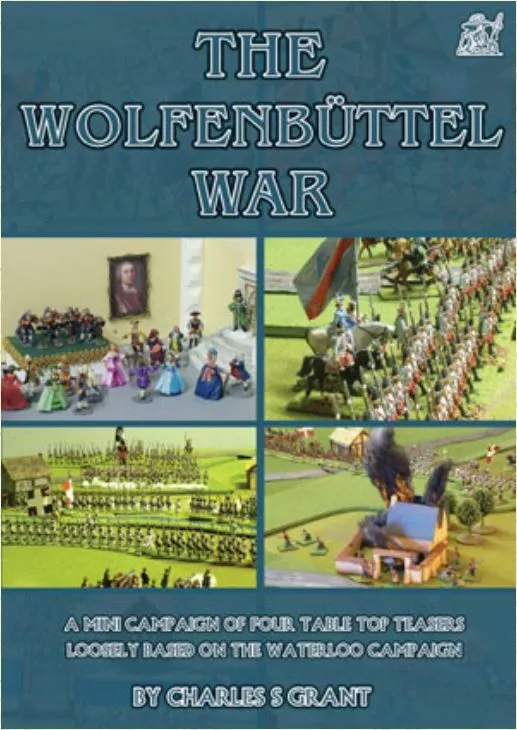
The Wolfenbüttel War concerns the hostilities of Charles’ two fictitious mid-eighteenth century combatants, the Grand Duchy of Lorraine and the Vereinigte Freie Städte (VFS). The scenarios are applicable to any horse and musket period with little modification. Where this mini-campaign differs from its predecessors (Raid on St.Michel, The Annexation of Chiraz) is that it is loosely based on a real campaign – that of the Hundred Days, culminating at Waterloo. The four scenarios and the movements between them are drawn from the battles of Quatre Bras, Ligny, Wavre and Waterloo. However, while the campaign sequence is followed the outcome is far from certain. The book provides the fictitious background to the war, planning details including the selection of forces, the instructions for each army, table top maps and orders for each side. There are instructions for the game organiser and options for forces in each battle if fought as a stand alone wargame. The book is illustrated with photographs of each battle as it was fought with Charles’ armies. Newspapers and a Who’s Who, not to mention the Ballroom scene, add colour to the story of the Wolfenbüttel War. —description from the publisher's website
Según el catálogo, The Wolfenbüttel War admite 2 jugadores. Es el número de jugadores indicado por la editorial, así que el juego está diseñado exactamente para esa cantidad de participantes. Las variantes para otros tamaños de grupo, si existen, se describen en el reglamento de tu edición; consúltalo antes de preparar otra configuración.
El catálogo indica The Wolfenbüttel War a partir de 12 años. Es la recomendación de la editorial y refleja la lectura necesaria, la complejidad de las reglas y las piezas pequeñas, no solo el tema. Los más pequeños a menudo pueden jugar con ayuda de un adulto: comprueba la edad recomendada en tu edición y la experiencia de tu grupo.
The Wolfenbüttel War pertenece a estas categorías: Wargame y Expansion for Base-game. Sus mecánicas principales son Simulation y Scenario / Mission / Campaign Game. Las categorías describen el tema y la ambientación de un juego, mientras que las mecánicas describen lo que los jugadores hacen realmente en su turno. Cada mecánica lleva a una página del catálogo con juegos similares.
Los autores acreditados de The Wolfenbüttel War son: Charles S. Grant (II). Estos créditos proceden de los datos publicados del juego y nombran a las personas responsables de su diseño, no a ilustradores ni editoriales. Las páginas de autor de MeepleRules reúnen otros títulos de los mismos autores, algo útil cuando un juego te gusta y buscas otros parecidos.
El catálogo clasifica The Wolfenbüttel War como expansión. Las expansiones añaden contenido, reglas o escenarios a un juego base existente y normalmente no se pueden jugar solas. Comprueba en la caja o en la descripción de la editorial qué juego base se necesita y asegúrate de que tu edición de ese juego sea compatible con esta expansión.
