

- Puesto en BGG
- BGG #11.796
- Puntuación BGG
- 8,4
SEEKRIEG 5
- 2–10 jugadores
- 120 min
- Complejidad 4,1/5
- 2004
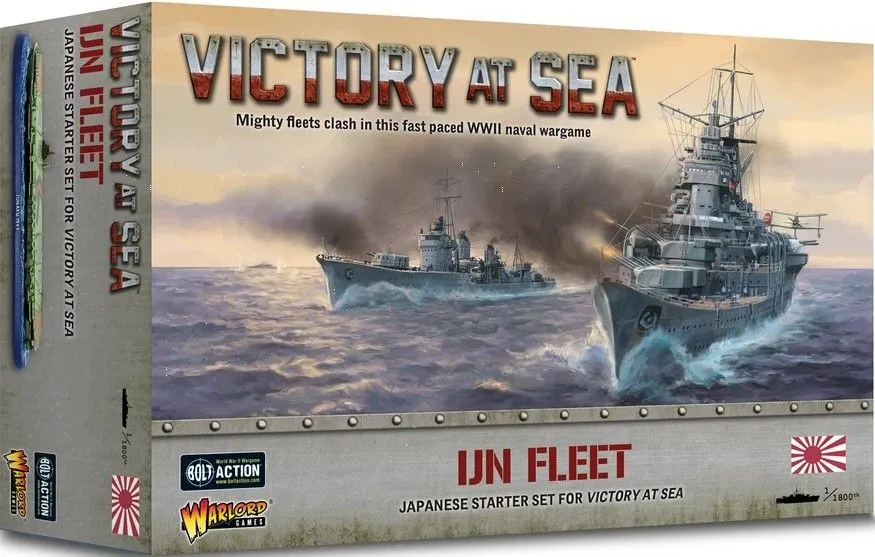
Ayuda con las reglas de Victory at Sea: IJN fleet
Explicaciones claras de turnos, efectos de cartas y situaciones dudosas, con referencias a fuentes oficiales e historial de preguntas guardado.
¿Qué quieres saber?
Las respuestas salen del reglamento oficial, con la página para comprobarlo.
Victory at Sea: IJN fleet es una expansión de Victory at Sea: Battle for the Pacific publicada en 2020 para 2 jugadores y a partir de 10 años. Sus mecánicas principales son Dice Rolling, Simulation y Measurement Movement.



En inglés
For centuries, Japan's policy of seclusion (sakoku) saw it concentrate on coastal defences in order to repel foreign vessels. However, with the advances other maritime nations were making, it eventually became obvious that no longer would Japan be able to ignore the rest of the world. As an island power, it needed a modern navy. Turning to Britain for assistance, Japan quickly created a powerful modern fleet. It was this capable and confident navy that came out to fight the American Pacific Fleet. The Japanese understood the potential of air power early and created an effective carrier arm. In addition to the carriers, the Imperial Japanese Navy possessed a powerful battleship force, which included the largest and most powerful battleships in the world, the Yamato and the Musashi. The Imperial Japanese Navy's potential was demonstrated in the attack on Pearl Harbor in 1941. Using armour-piercing bombs and torpedoes, Japanese aircraft inflicted tremendous damage on the American Pacific fleet as it lay at anchor. Midway was the turning point of naval war in the Pacific and, from then on, the Imperial Japanese Navy was unable to make any headway against the increasing carrier strength of the US Navy. With the victorious Allies pushing towards the Japanese islands, the Imperial Japanese Navy fought desperately to keep them at bay. Kamikaze aircraft and other suicide weapons were deployed, and eventually warships of the Imperial Japanese Navy made death-rides against US forces. Contents: 8 Model Ships ‣ 1 Kongō 1941 ‣ 1 Zuikaku 1944 ‣ 1 Suzuya 1944 ‣ 1 Mikuma 1942 ‣ 1 Yahagi 1943 ‣ 3 Kagerō-class Destroyers 4 Mitsubishi A6M2 Zero Flights Ship Cards Damage Sliders —description from the publisher
Según el catálogo, Victory at Sea: IJN fleet admite 2 jugadores. Es el número de jugadores indicado por la editorial, así que el juego está diseñado exactamente para esa cantidad de participantes. Las variantes para otros tamaños de grupo, si existen, se describen en el reglamento de tu edición; consúltalo antes de preparar otra configuración.
El catálogo indica Victory at Sea: IJN fleet a partir de 10 años. Es la recomendación de la editorial y refleja la lectura necesaria, la complejidad de las reglas y las piezas pequeñas, no solo el tema. Los más pequeños a menudo pueden jugar con ayuda de un adulto: comprueba la edad recomendada en tu edición y la experiencia de tu grupo.
Victory at Sea: IJN fleet pertenece a estas categorías: Wargame, Miniatures y Nautical. Sus mecánicas principales son Dice Rolling, Simulation y Measurement Movement. Las categorías describen el tema y la ambientación de un juego, mientras que las mecánicas describen lo que los jugadores hacen realmente en su turno. Cada mecánica lleva a una página del catálogo con juegos similares.
El catálogo clasifica Victory at Sea: IJN fleet como expansión de Victory at Sea: Battle for the Pacific. Las expansiones añaden contenido, reglas o escenarios al juego base y normalmente no se pueden jugar solas, así que necesitas Victory at Sea: Battle for the Pacific para usarla. Comprueba que tu edición de Victory at Sea: Battle for the Pacific sea compatible, porque algunas expansiones se revisaron entre ediciones.