

- Puesto en BGG
- BGG #3644
- Puntuación BGG
- 6,7
PanzerBlitz
- 2 jugadores
- 90 min
- Complejidad 3,1/5
- 1970
1999
Ayuda con las reglas de War in Europe (Second Edition)
Explicaciones claras de turnos, efectos de cartas y situaciones dudosas, con referencias a fuentes oficiales e historial de preguntas guardado.
¿Qué quieres saber?
Las respuestas salen del reglamento oficial, con la página para comprobarlo.
War in Europe (Second Edition) es un juego de mesa publicado en 1999 para 1–3 jugadores, con partidas de 360 minutos y a partir de 12 años. Fue diseñado por Jim Dunnigan y sus mecánicas principales son Dice Rolling, Hexagon Grid y Simulation.



En inglés
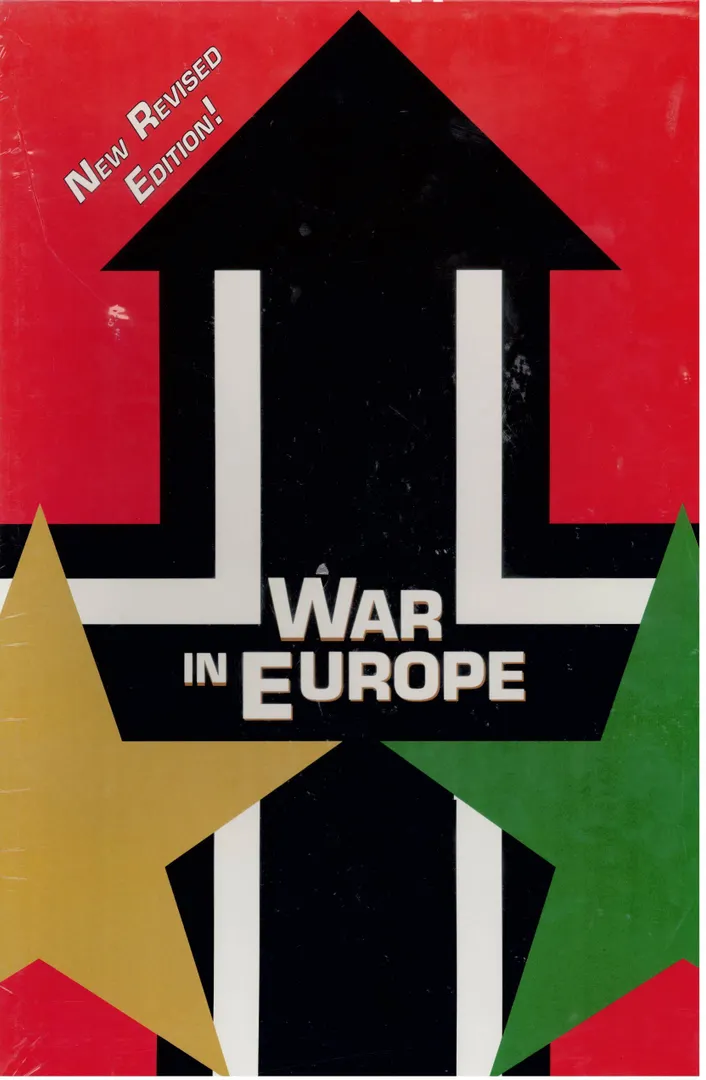
(from the back of the box:) War in Europe is the largest single strategy game ever professionally published. This update of the revered SPI "monster" game is a simulation of World War II at the division/corps level. There are nine 22" x 34" map sections covering an area from the North Cape of Norway to the deserts of Libya and the Middle East and from the British Isles to the city of Stalingrad. Each hex represents 33 kilometers of ground and each Game Turn represents one week of actual time. War in Europe's most striking feature is the map. Over 25 countries are delineated with their industrial and resource centers, major and minor ports, significant cities, rivers and other fascinating geographic features. All of this has been beautifully rendered using satellite photography and state of the art graphic design techniques. The rules have been painstakingly updated and many new optional rules and variants are featured along with carefully revised charts and tables. In addition to War in Europe's original 3600 die-cut counters, representing the armed forces of over 20 nations, there are 480 new counters in this updated edition (optional units that might have been assembled to allow exploration of some historical "what ifs?") . You'll be campaigning with artillery units for all sides, German motorized units, U.S. Marines, additional Soviet Guard Tank and Mechanized units, and more French armored should you decide to build them using the game's fascinating production system. All sides must manage their own war economies. Players must make choices within certain broad limits what combat units to build. For example, you must choose whether to build relatively expensive strategic units such as Air Points, Airborne capability, U-boats, Strategic Bombers, Naval units, or the more common ground combat units like infantry and armor. The routine of production is executed every four Game Turns (weeks) during a "Strategic Cycle" that also features Reinforcement, the U-boat War, and Strategic Bombing. Although War in Europe is a big game, its complexity is not high. It can easily be played solitaire, but is most enjoyable with two or three players or teams. Players represent the leadership of the Western Allies (Commonwealth and USA), the German-dominated Axis, or the Soviet Union. Play moves back and forth over the map for nearly six years in the full Campaign Game (or for less time in the numerous scenarios provided), as the fortunes of the Axis Player rise and fall in the face of the increasing Allied and Soviet strength. War in Europe also features numerous Campaign Scenarios that pick up play at historic watersheds like D-Day or the start of Barbarossa. There are even more abbreviated games in the form of limited historical scenarios using just one to four maps. These dispense with the Strategic cycle in its entirety and simulate the major events of the war, such as the Fall of France, the Invasion of Italy, or the Stalingrad Campaign. Physically, they are much easier to play than a full campaign and are complete games within themselves. Players may also focus on just the Eastern or Western Front for individual scenarios as well as the whole war. A three-cornered diplomatic situation also arises from the strategic situation. While early on the Allies and Soviets share the common goal of defeating the Axis, as Germany's defeat becomes more certain there is less ground for cooperation and more chance of their alliances falling apart. Victory is determined by the relative territorial stance of the Players at game's end so, ultimately, it's an every-man-for-himself game. So, it's back, and better than ever. War in Europe is not just for collectors anymore. This second edition version is for you, the strategy game lover who wants to fight "The Big One" with The Big One of gaming. War in Europe: it's not just for collectors anymore. Contents: 4080 backprinted, full color die cut counters 3 Production Displays 3 Reinforcement & Air Displays 3 Player Aid Charts & Tables 2 48 page Rulebook 9 34" x 22" full color maps 2 dice & Storage bags
Según el catálogo, War in Europe (Second Edition) admite de 1 a 3 jugadores. Este intervalo corresponde al número de jugadores indicado por la editorial, así que el juego puede prepararse para cualquier grupo dentro de ese margen. La preparación, algunas reglas y la puntuación pueden variar según el número de jugadores; consulta la configuración exacta en el reglamento de tu edición.
La duración indicada para War in Europe (Second Edition) es de 360 minutos, la estimación de la editorial para una partida completa. El tiempo real depende del grupo, del número de jugadores y del conocimiento de las reglas: las primeras partidas suelen alargarse y los grupos con experiencia terminan antes. La preparación y la explicación de las reglas no están incluidas.
El catálogo indica War in Europe (Second Edition) a partir de 12 años. Es la recomendación de la editorial y refleja la lectura necesaria, la complejidad de las reglas y las piezas pequeñas, no solo el tema. Los más pequeños a menudo pueden jugar con ayuda de un adulto: comprueba la edad recomendada en tu edición y la experiencia de tu grupo.
War in Europe (Second Edition) tiene una puntuación de complejidad de 4,0 sobre 5 según los jugadores de BoardGameGeek, lo que lo convierte en un juego exigente. La puntuación refleja cuánto conocimiento de reglas, planificación y toma de decisiones exige una partida típica. Los juegos exigentes requieren una explicación inicial más larga, así que conviene usar una guía de preparación.
War in Europe (Second Edition) pertenece a estas categorías: Wargame y World War II. Sus mecánicas principales son Dice Rolling, Hexagon Grid y Simulation. Las categorías describen el tema y la ambientación de un juego, mientras que las mecánicas describen lo que los jugadores hacen realmente en su turno. Cada mecánica lleva a una página del catálogo con juegos similares.
Los autores acreditados de War in Europe (Second Edition) son: Jim Dunnigan. Estos créditos proceden de los datos publicados del juego y nombran a las personas responsables de su diseño, no a ilustradores ni editoriales. Las páginas de autor de MeepleRules reúnen otros títulos de los mismos autores, algo útil cuando un juego te gusta y buscas otros parecidos.
El catálogo clasifica War in Europe (Second Edition) como juego base. Se juega por sí solo con los componentes de la caja y no requiere ningún otro título. Las expansiones, si existen, añaden contenido o reglas nuevas y aparecen por separado en el catálogo con un enlace a este juego base.