
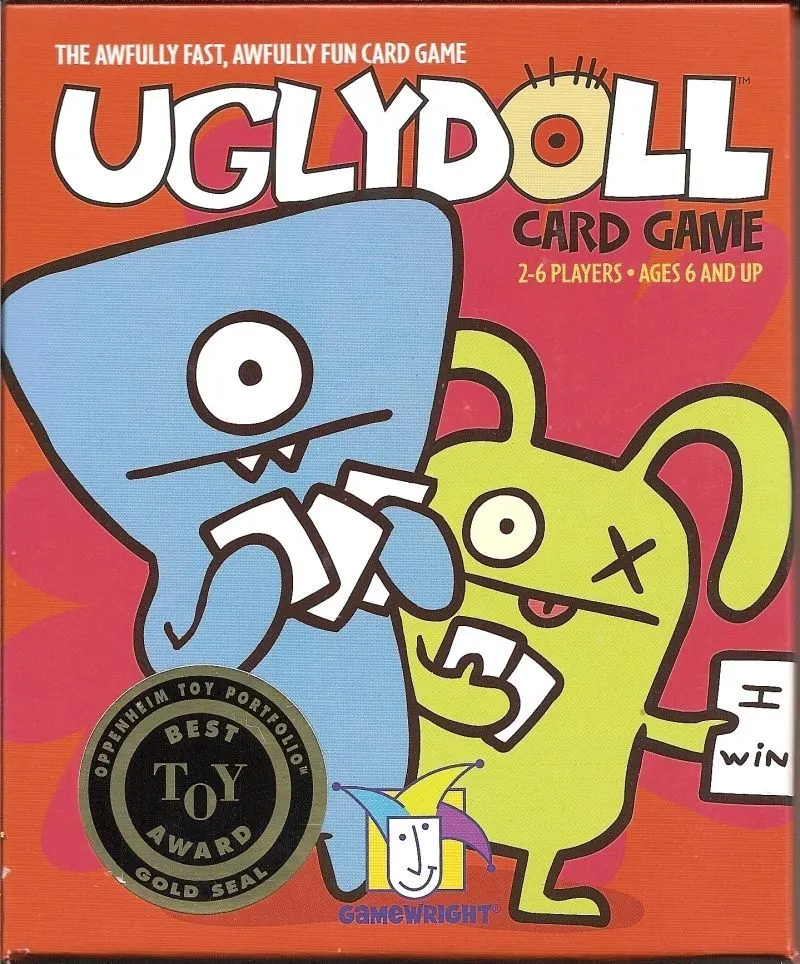
- Puesto en BGG
- BGG #19.882
- Puntuación BGG
- 6,0
Uglydoll Card Game
- 2–6 jugadores
- 15 min
- Complejidad 1,0/5
- 2006
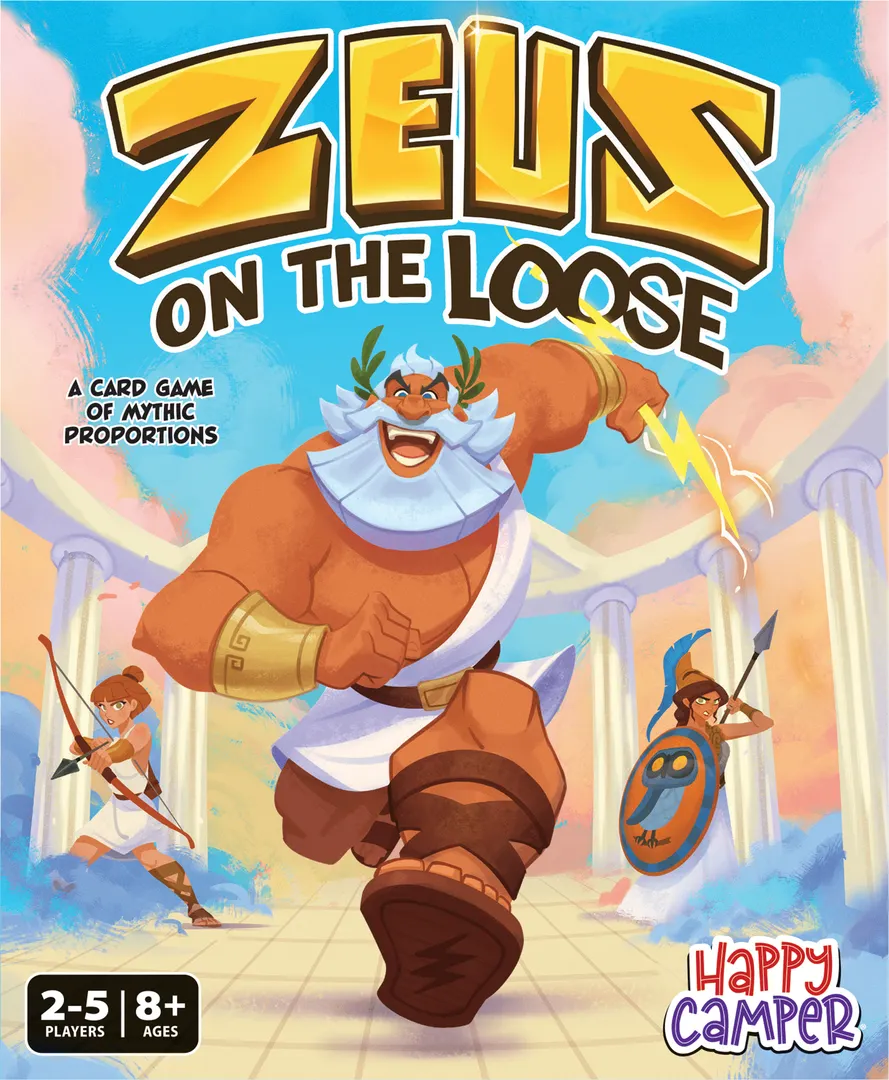
2006
Ayuda con las reglas de Zeus on the Loose
Explicaciones claras de turnos, efectos de cartas y situaciones dudosas, con referencias a fuentes oficiales e historial de preguntas guardado.
¿Qué quieres saber?
Las respuestas salen del reglamento oficial, con la página para comprobarlo.
Zeus on the Loose es un juego de mesa publicado en 2006 para 2–5 jugadores, con partidas de 15 minutos y a partir de 8 años. Fue diseñado por Jason Schneider y sus mecánicas principales son King of the Hill.



En inglés
From Happy Camper website: Catch Zeus if you can! The great Greek god has bolted from Mount Olympus and it’s up to you to nab this dashing deity. Play cards strategically, adding numbers as you climb up the mythic mountain. Grab Zeus when the total reaches a multiple of 10. Better yet, summon the strength of Apollo, Poseidon, or all-powerful Hera to bring Zeus within your grasp. Reach the top of Mount Olympus with Zeus in hand and you’re a mortal among the gods. To play is human. To win, divine! Did you know that, in addition to their supreme powers, the Greek gods were endowed with the special ability to change the course of card games? Well, at least that’s the case in Zeus on the Loose! As you figure out how to harness the strengths of the various gods within, you’ll sharpen strategic thinking along with valuable addition and subtraction skills. A quick warning about Hera: Though she may be the most powerful goddess in the game, don’t get on her bad side or else she might wind up helping an opponent steal Zeus and win! Ages 8 and up. Based on the traditional card game Ninety-Nine.
Según el catálogo, Zeus on the Loose admite de 2 a 5 jugadores. Este intervalo corresponde al número de jugadores indicado por la editorial, así que el juego puede prepararse para cualquier grupo dentro de ese margen. La preparación, algunas reglas y la puntuación pueden variar según el número de jugadores; consulta la configuración exacta en el reglamento de tu edición.
La duración indicada para Zeus on the Loose es de 15 minutos, la estimación de la editorial para una partida completa. El tiempo real depende del grupo, del número de jugadores y del conocimiento de las reglas: las primeras partidas suelen alargarse y los grupos con experiencia terminan antes. La preparación y la explicación de las reglas no están incluidas.
El catálogo indica Zeus on the Loose a partir de 8 años. Es la recomendación de la editorial y refleja la lectura necesaria, la complejidad de las reglas y las piezas pequeñas, no solo el tema. Los más pequeños a menudo pueden jugar con ayuda de un adulto: comprueba la edad recomendada en tu edición y la experiencia de tu grupo.
Zeus on the Loose tiene una puntuación de complejidad de 1,1 sobre 5 según los jugadores de BoardGameGeek, lo que lo convierte en un juego ligero. La puntuación refleja cuánto conocimiento de reglas, planificación y toma de decisiones exige una partida típica. Los juegos exigentes requieren una explicación inicial más larga, así que conviene usar una guía de preparación.
Zeus on the Loose pertenece a estas categorías: Card Game, Number y Mythology. Sus mecánicas principales son King of the Hill. Las categorías describen el tema y la ambientación de un juego, mientras que las mecánicas describen lo que los jugadores hacen realmente en su turno. Cada mecánica lleva a una página del catálogo con juegos similares.
Los autores acreditados de Zeus on the Loose son: Jason Schneider. Estos créditos proceden de los datos publicados del juego y nombran a las personas responsables de su diseño, no a ilustradores ni editoriales. Las páginas de autor de MeepleRules reúnen otros títulos de los mismos autores, algo útil cuando un juego te gusta y buscas otros parecidos.
El catálogo clasifica Zeus on the Loose como juego base. Se juega por sí solo con los componentes de la caja y no requiere ningún otro título. Las expansiones, si existen, añaden contenido o reglas nuevas y aparecen por separado en el catálogo con un enlace a este juego base.