
- Rang BGG
- BGG #11 214
- Note BGG
- 7,8
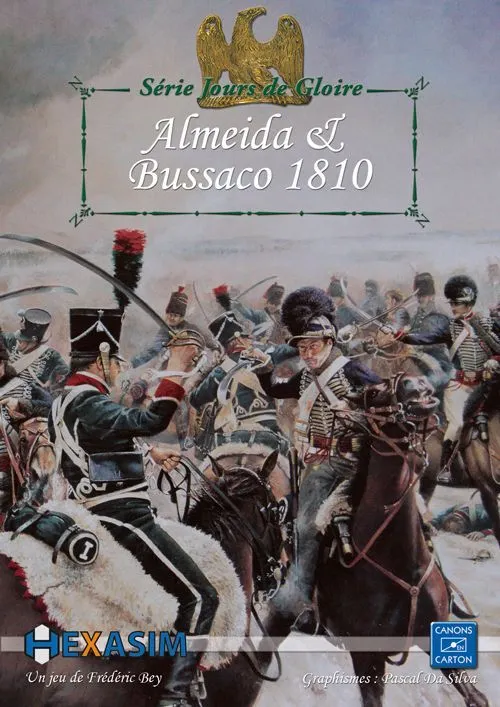
Almeida et Bussaco 1810
- 2 joueurs
- 120–240 min
- Complexité 2,4/5
- 2010
2019
Aide aux règles de Alexandre contre la Perse
Des explications claires des tours, effets de cartes et situations litigieuses, avec des références aux sources officielles et un historique des questions sauvegardé.
Pour 2 joueurs
Que voulez-vous savoir ?
Les réponses viennent du livret officiel, avec la page à vérifier.
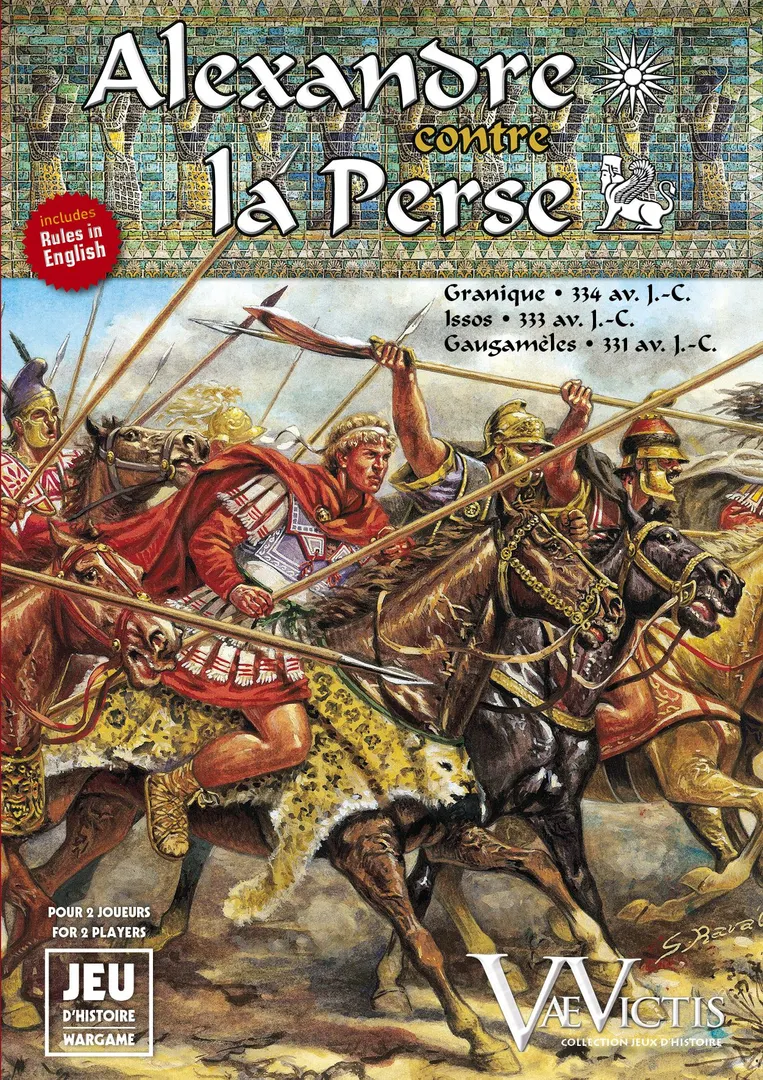
Alexandre contre la Perse est un jeu de société sorti en 2019 pour 2 joueurs, avec des parties de 60 à 240 minutes et à partir de 12 ans. Il a été conçu par Frédéric Bey et ses principales mécaniques sont Dice Rolling, Variable Set-up et Grid Movement.






En anglais
"Alexandre contre la Perse" is a tactical level board wargame which presents the first three battles in the "Au Fil de l'Épée" Antiquity series. They bring onto the stage the greatest conqueror of Antiquity in the course of the mighty confrontations which enabled him to bring Persia to its knees. GRANICUS - In 334 BC, after crushing a revolt by the city of Thebes, the young King Alexander of Macedonia turned toward the east and set out on his conquest of Asia. He crossed the Hellespont with 35,000 men. On the banks of the Granicus River he came up against an army of 40,000 men commanded by Memnon, a Greek who was in the pay of Persia. Thanks to a vigorous attack by his Companion cavalry, Alexander succeeded in dispersing the enemy horsemen and crushing Memnon’s Greek mercenaries. This brilliant victory opened the door to Asia Minor. ISSOS - A year later on the coast of Syria the King of Kings, Darius III, determined to assemble a great army and intercept Alexander. The two armies met at Issos. While repelling an attack on his left by the Persian cavalry, Alexander and his right wing charged across the river under a rain of enemy arrows. By hurling himself into a breach on the Persian left flank, Alexander brought about its collapse and the flight of Darius. The Macedonian phalanx advanced inexorably in the center of the battlefield and completed Alexander’s victory, with the result that he could go on to invade Egypt unhindered. GAUGAMELA - The final clash between Alexander and Darius took place at Gaugamela in 331 B.C. The King of Kings had mobilized impressive forces from the eastern part of his empire. His army, unusually numerous, included elephants as well as war chariots. He compelled Alexander to fight in a vast plain where the 40,000 Macedonians risked being encircled. Once again the king of Macedonia opened the battle with a cavalry attack on his right. The phalanx meanwhile suffered severely from Persian attacks, especially on its left wing where Parmenion was in command. Alexander nevertheless forestalled the enemy by making Darius himself the target of the Companions’ charge. Once they had opened a breach, the Macedonian cavalrymen passed through it and struck the Persians from the rear, causing them to rout. This occurred in the nick of time, because Parmenion’s contingents were by then on the point of breaking. Darius fled in the direction of Arbela. Alexander caught up with him, but by then he was already dead, assassinated by a group of his generals. Alexandre contre la Perse puts the players either at the head of the Macedonian army, at whose core the cavalry and the phalangites played complementary roles, or in command of the Persian army, consisting of highly varied troops collected from all over the empire. The three battles were increasingly important chronologically, in terms of the numbers involved and their complexity. Will you, as Alexander, be able to bring down a multi-national army by means of only three battles? Will you, in the role of the King of Kings, succeed in foiling Alexander’s maneuvers and vanquishing the Macedonians? —description from the publisher
Selon le catalogue, Alexandre contre la Perse se joue à 2 personnes. C’est le nombre de joueurs indiqué par l’éditeur : le jeu est donc conçu pour exactement ce nombre de participants. Les variantes pour d’autres tailles de groupe, s’il en existe, sont décrites dans la règle de votre édition ; consultez-la avant d’installer une autre configuration.
La durée indiquée pour Alexandre contre la Perse est de 60 à 240 minutes, selon l’estimation de l’éditeur pour une partie complète. La durée réelle dépend du groupe, de l’effectif et de la connaissance des règles : les premières parties sont plus longues, les groupes expérimentés terminent plus vite. Mise en place et explication des règles ne sont pas comprises.
Le catalogue indique Alexandre contre la Perse à partir de 12 ans. C’est la recommandation de l’éditeur ; elle tient compte de la lecture nécessaire, de la complexité des règles et des petits composants, pas seulement du thème. Les plus jeunes peuvent souvent participer avec l’aide d’un adulte : vérifiez l’âge indiqué sur votre édition et tenez compte de l’expérience de votre groupe.
Alexandre contre la Perse obtient une note de complexité de 2,8 sur 5 auprès des joueurs de BoardGameGeek, ce qui en fait un jeu plutôt léger. Cette note reflète la quantité de règles, de planification et de décisions qu’exige une partie typique. Prévoyez une explication plus longue pour les jeux exigeants et utilisez un guide de préparation avant la soirée.
Alexandre contre la Perse appartient à ces catégories : Wargame et Ancient. Ses principales mécaniques sont Dice Rolling, Variable Set-up et Grid Movement. Les catégories décrivent le thème et l’univers d’un jeu, tandis que les mécaniques décrivent ce que les joueurs font réellement pendant leur tour. Chaque mécanique mène à une page du catalogue avec des jeux similaires.
Les auteurs crédités pour Alexandre contre la Perse sont : Frédéric Bey. Ces crédits proviennent des données publiées du jeu et désignent les personnes responsables de sa conception, et non les illustrateurs ou les éditeurs. Les pages d’auteurs sur MeepleRules regroupent les autres titres des mêmes auteurs, ce qui est utile lorsqu’un jeu vous plaît et que vous en cherchez de similaires.
Le catalogue présente Alexandre contre la Perse comme un jeu de base. Il se joue seul avec le matériel contenu dans la boîte et ne nécessite aucun autre titre. Les extensions, s’il en existe, y ajoutent du contenu ou des règles et sont répertoriées séparément dans le catalogue, avec un lien vers ce jeu de base.