
- Rang BGG
- BGG #6 968
- Note BGG
- 7,8
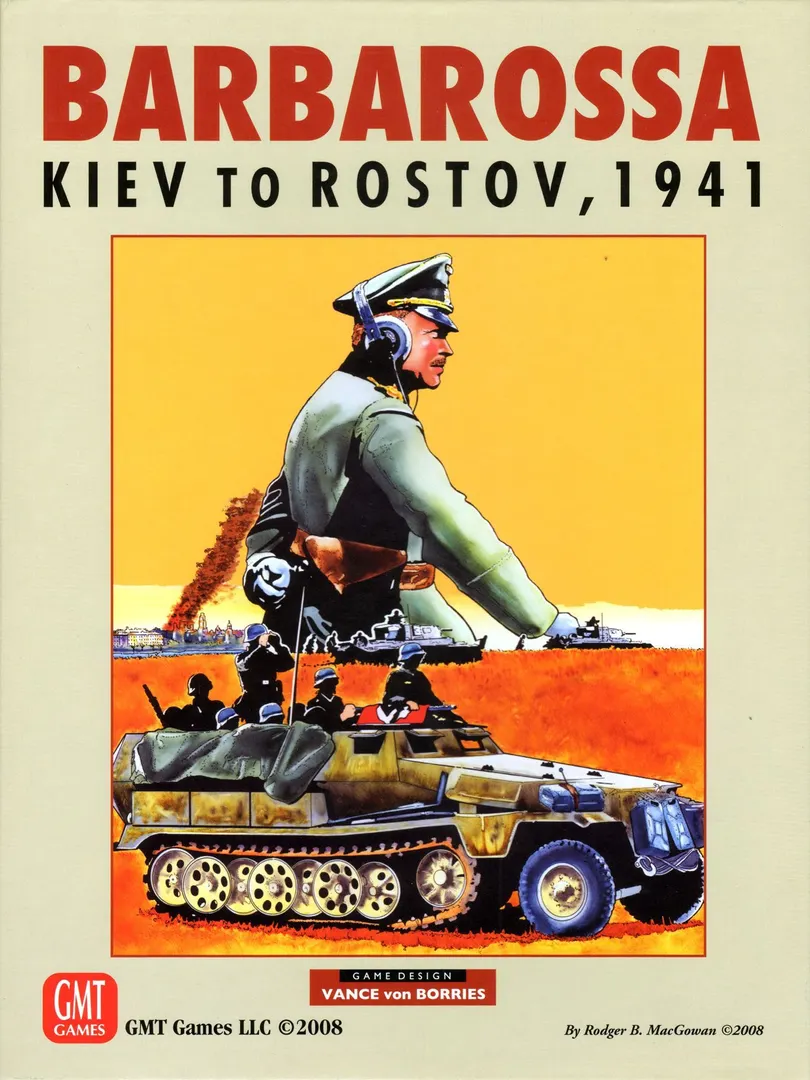
Barbarossa: Kiev to Rostov, 1941
- 1–4 joueurs
- 240 min
- Complexité 4,2/5
- 2008
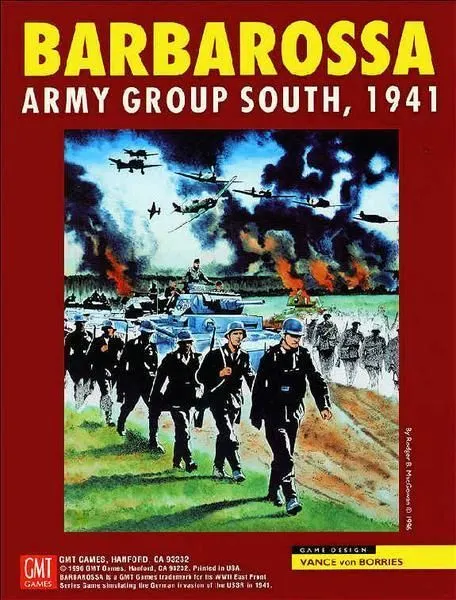
1996
Aide aux règles de Barbarossa: Army Group South, 1941
Des explications claires des tours, effets de cartes et situations litigieuses, avec des références aux sources officielles et un historique des questions sauvegardé.
Pour 1 joueur
Que voulez-vous savoir ?
Les réponses viennent du livret officiel, avec la page à vérifier.
Barbarossa: Army Group South, 1941 est un jeu de société sorti en 1996 pour 1 à 4 joueurs, avec des parties de 240 minutes et à partir de 12 ans. Il a été conçu par Vance von Borries et ses principales mécaniques sont Dice Rolling et Hexagon Grid.
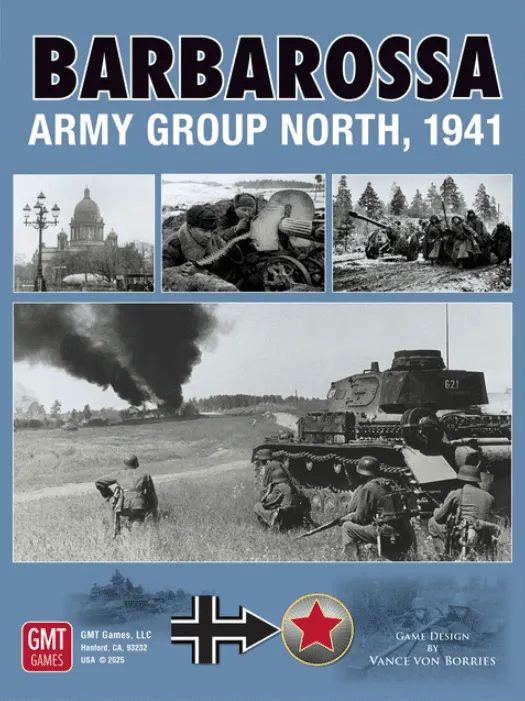
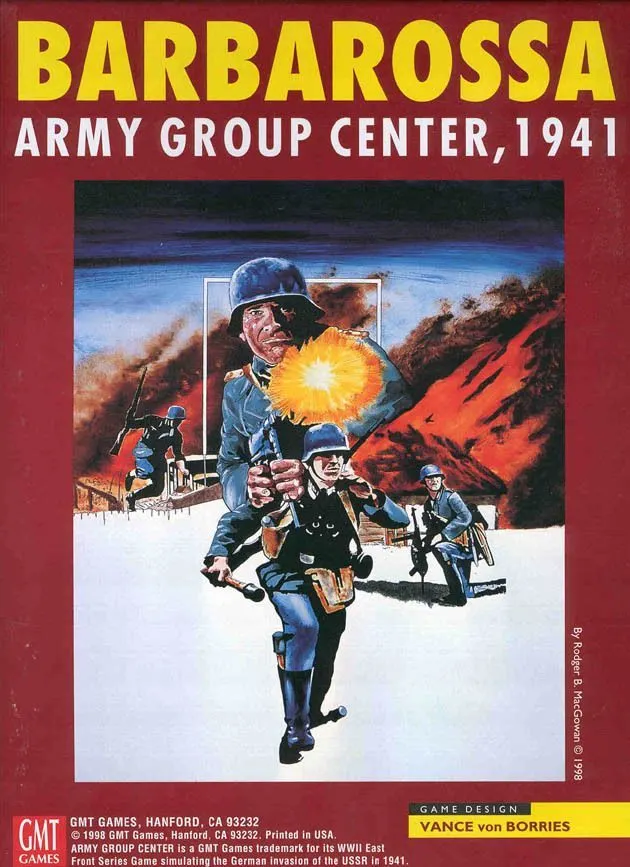






En anglais
June 1941 -- the German juggernaut rolls over the Soviet Army. As the tally of encirclements and surrenders mounts, the German advance appears unstoppable to Hitler and many others. However, the officers and men at the front are beginning to have serious misgivings -- not in themselves, but in the pre-war intelligence estimates that they had received. They had not been prepared to encounter hundreds of KV-1's and T-34's, tanks far superior to anything they possessed. For the moment, German tactics provided the margin of victory over better material, but the Russians were proving to be quick learners. Worse yet, by western European standards, Russian losses had been so staggering that there should have been no army left to fight. Not so. There seemed to be no end to these tenacious Russian defenders. As the German forces continued their eastward advance, more and more soldiers began asking, "What have we gotten ourselves into?" Kiev, the first major German objective in the south, did not fall on schedule. In fact, Soviet resistance was so fierce that it required diverting Guderian's Panzer Group away from the advance on Moscow. Kiev fell in one of the greatest encirclements of the Second World War, but the German advance on Moscow was delayed for several critical weeks. Quite possibly the delay at Kiev might have cost the German forces victory in the battle for Moscow. 840 full-color two-sided counters. MAPS Three 22x34" and one 17x22" full-color mapsheets OTHER One 10-sided die 36-page Rule Book 36-page Play Book Player Aid Cards: four two-sided Soviet Set-Up cards, four two-sided Axis Set-Up cards, Soviet Status card, Axis Status card, two 11x17 two-sided game chart cards, two cards of additional scenario charts. Eight scenarios allow players to vary their level of involvement, complexity, and starting point, from introductory to full campaign An asymmetrical sequence of play that highlights Axis armored breakthroughs and Soviet difficulties in combined arms warfare Detailed air rules that integrate with land combat and weather rules Incredibly detailed orders of battle, including special coverage of artillery, rocket artillery, engineers, bridge units, armored trains, and much more Modifications to the proven Typhoon system include revised overrun and Soviet surrender procedures, as well as a new non-op Soviet HQ system to simulate the rigid yet fragile Soviet Command structure Extensive bibliography and design/historical notes Scenarios include; Scenario #1 "Assault on Kiev" which uses a portion of map G. GT#21 to GT#28 Scenario #2 "Odessa" which uses a portion of Map F. GT#26 to GT#40 Scenario #3 "Rundstedt Attacks" which uses most of Map E. GT#1 to GT#6 Scenario #4 "Operation Munich" which uses portions of maps E and F, an optional rule allows map E to be omitted. GT#6 to GT#17 Scenario #5 "Campaign Game" which uses all of maps E,F, and G. GT#1 to GT#28 Scenario #6 "Uman Pocket" which uses maps F and G. GT#9 to GT#28 Scenario #7 "Rostov" which uses small map R. GT#T19 to GT#T33 (note Typhoon style game turn code). Scenario #8 "Counterattack" which uses small map R. GT#T30 to GT#T32
Selon le catalogue, Barbarossa: Army Group South, 1941 se joue de 1 à 4 personnes. Cette fourchette correspond au nombre de joueurs indiqué par l’éditeur : le jeu s’installe donc pour toute taille de groupe dans cette limite. La mise en place, certaines règles et le décompte peuvent varier selon l’effectif ; vérifiez la configuration exacte dans la règle de votre édition.
La durée indiquée pour Barbarossa: Army Group South, 1941 est de 240 minutes, selon l’estimation de l’éditeur pour une partie complète. La durée réelle dépend du groupe, de l’effectif et de la connaissance des règles : les premières parties sont plus longues, les groupes expérimentés terminent plus vite. Mise en place et explication des règles ne sont pas comprises.
Le catalogue indique Barbarossa: Army Group South, 1941 à partir de 12 ans. C’est la recommandation de l’éditeur ; elle tient compte de la lecture nécessaire, de la complexité des règles et des petits composants, pas seulement du thème. Les plus jeunes peuvent souvent participer avec l’aide d’un adulte : vérifiez l’âge indiqué sur votre édition et tenez compte de l’expérience de votre groupe.
Barbarossa: Army Group South, 1941 obtient une note de complexité de 4,2 sur 5 auprès des joueurs de BoardGameGeek, ce qui en fait un jeu exigeant. Cette note reflète la quantité de règles, de planification et de décisions qu’exige une partie typique. Prévoyez une explication plus longue pour les jeux exigeants et utilisez un guide de préparation avant la soirée.
Barbarossa: Army Group South, 1941 appartient à ces catégories : Wargame et World War II. Ses principales mécaniques sont Dice Rolling et Hexagon Grid. Les catégories décrivent le thème et l’univers d’un jeu, tandis que les mécaniques décrivent ce que les joueurs font réellement pendant leur tour. Chaque mécanique mène à une page du catalogue avec des jeux similaires.
Les auteurs crédités pour Barbarossa: Army Group South, 1941 sont : Vance von Borries. Ces crédits proviennent des données publiées du jeu et désignent les personnes responsables de sa conception, et non les illustrateurs ou les éditeurs. Les pages d’auteurs sur MeepleRules regroupent les autres titres des mêmes auteurs, ce qui est utile lorsqu’un jeu vous plaît et que vous en cherchez de similaires.
Le catalogue présente Barbarossa: Army Group South, 1941 comme un jeu de base. Il se joue seul avec le matériel contenu dans la boîte et ne nécessite aucun autre titre. Les extensions, s’il en existe, y ajoutent du contenu ou des règles et sont répertoriées séparément dans le catalogue, avec un lien vers ce jeu de base.