
- Rang BGG
- BGG #2 295
- Note BGG
- 7,1
Xiangqi
- 2 joueurs
- 60 min
- Complexité 3,6/5
- 762

1930
Aide aux règles de Brazilian Checkers
Des explications claires des tours, effets de cartes et situations litigieuses, avec des références aux sources officielles et un historique des questions sauvegardé.
Pour 2 joueurs
Que voulez-vous savoir ?
Les réponses viennent du livret officiel, avec la page à vérifier.
Brazilian Checkers est un jeu de société sorti en 1930 pour 2 joueurs, avec des parties de 20 minutes et à partir de 6 ans. Ses principales mécaniques sont Square Grid, Grid Movement et Pattern Movement.



En anglais
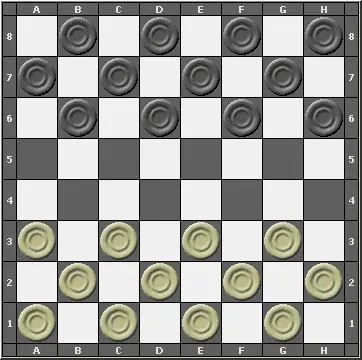
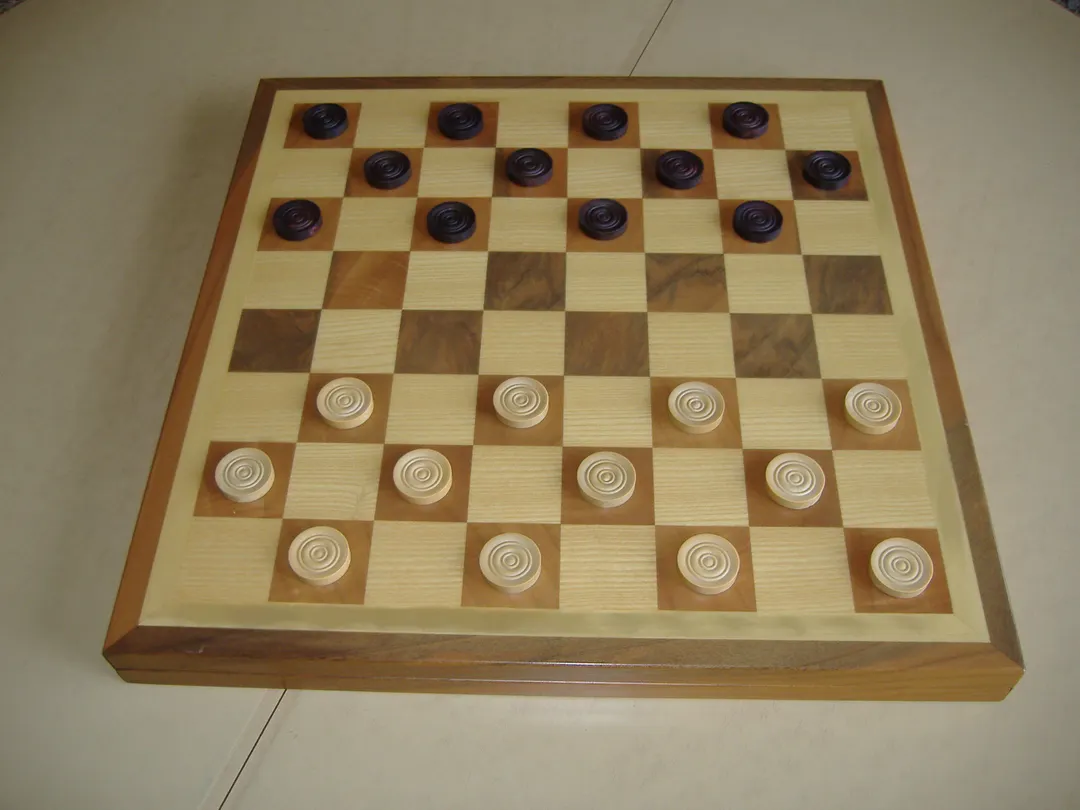
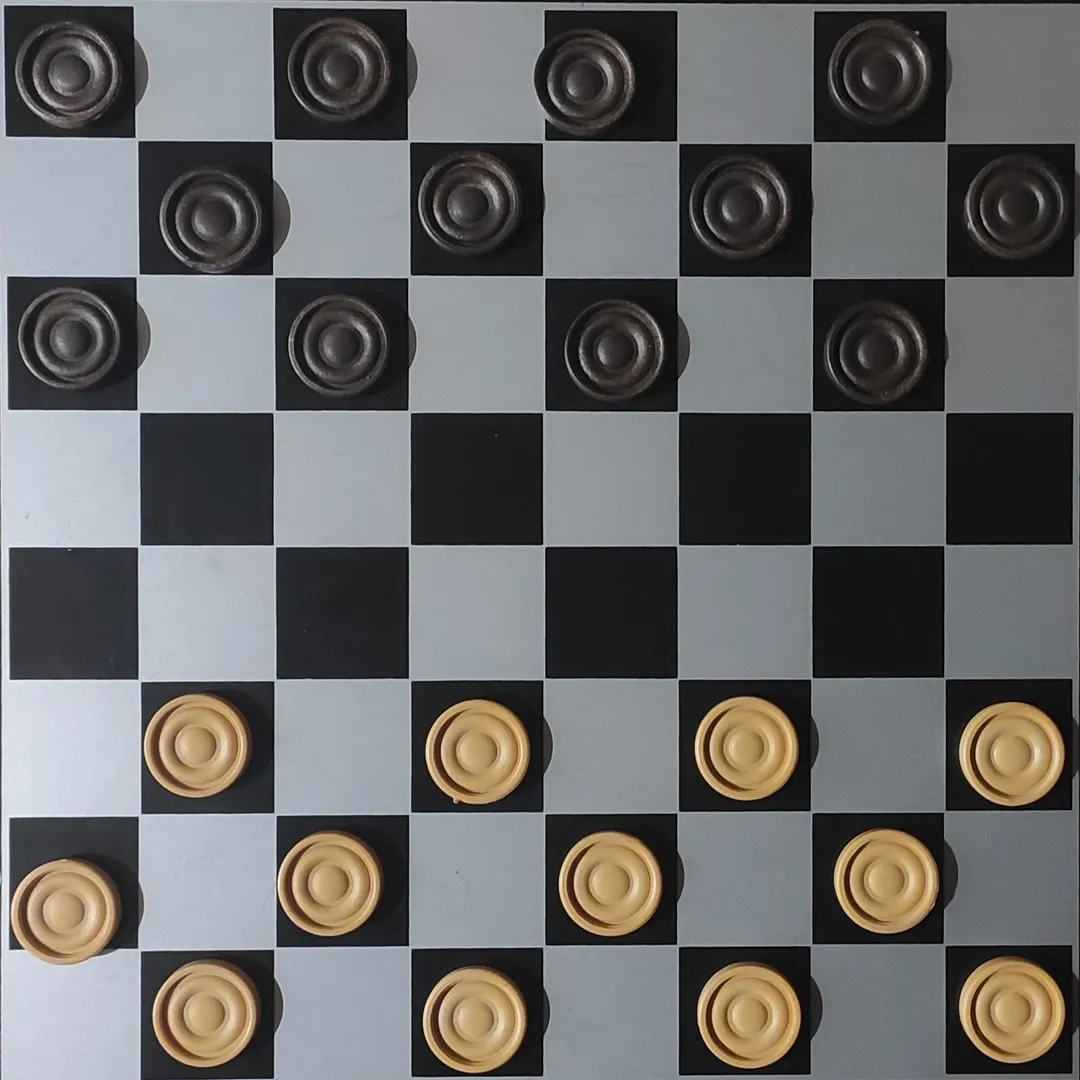
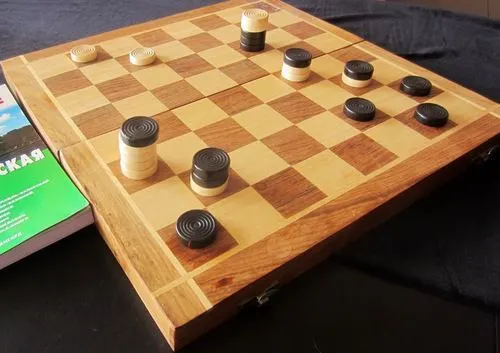
A member of the Checkers Family very popular in Brasil. Brazilian Checkers or Draughts is played under the same basic rules that apply to International Checkers except that it is played on a smaller 8 x 8, or 64-square board with each player playing 12 pieces. This variant is started by the player who either wins a random toss of a coin or the player who plays the light colored pieces. Then the players alternately make their moves thereafter. Rules of the Game: This checkers variation is played using an 8 x 8, or 64 squares checker board of light and dark squares and each player has 12 pieces of contrasting colors, usually red and white. The board is placed between the two players in such a way that the double corner is on the right side and a dark colored square is on the left side of each player. The player places his pieces on the first three rows on his side of the board The Moves of the Men: Checker players can only move their pieces forward one at a time on each empty square to the left or to the right. If a player successfully moves his pieces to the last, or "king row," then that piece must be crowned "king" by the opponent by placing a second checker on top of the crowned piece. The Moves of the King: King pieces are "flying kings," which means that they can move over many empty squares on the diagonal lines that pass over the square on which they are located. Captures: In Brazilian Checkers captures are mandatory. And, maximum captures are compulsory as well, which means that if a player has more than one way to capture the opposing pieces then he must choose that way that will result in the capture of the most number of pieces. If a checker piece reaches the king row while in a capture sequence, it must keep on capturing pieces backward for as long as there still pieces to capture. That capturing piece cannot be crowned king unless it finishes the move and stops on king row. Captures by the Men: Men can capture by jumping forward or backward over a single piece that is located next to it only if the square located next to the captured piece is unoccupied. If the man can jump again from its landing square to make another capture, then it must do so because all captures are mandatory. Captures by a King: A crowned piece can capture an opponent's piece forward and backward diagonally if it is on the same path where it is located and if the squares between them are unoccupied and that if the square immediately after the piece that will be captured is also unoccupied. The crowned piece can land on any empty square within the same path and if a continuous capture is possible, then the player must keep on capturing even if this move will not redound to the best interest of the player making the capture. The Winning Player: A player wins the game if he has captured all of his opponent's pieces or successfully blocked his opponent's pieces such that the opponent is unable to move any of his pieces. Conditions for a Draw: The players can mutually agree to a draw. A draw may also happen if the same position has occurred three times during the game, or if there are three crowned pieces playing against one and that both players have made 16 moves without attaining any promotion or making a capture. Information from checkershistory.com
Selon le catalogue, Brazilian Checkers se joue à 2 personnes. C’est le nombre de joueurs indiqué par l’éditeur : le jeu est donc conçu pour exactement ce nombre de participants. Les variantes pour d’autres tailles de groupe, s’il en existe, sont décrites dans la règle de votre édition ; consultez-la avant d’installer une autre configuration.
La durée indiquée pour Brazilian Checkers est de 20 minutes, selon l’estimation de l’éditeur pour une partie complète. La durée réelle dépend du groupe, de l’effectif et de la connaissance des règles : les premières parties sont plus longues, les groupes expérimentés terminent plus vite. Mise en place et explication des règles ne sont pas comprises.
Le catalogue indique Brazilian Checkers à partir de 6 ans. C’est la recommandation de l’éditeur ; elle tient compte de la lecture nécessaire, de la complexité des règles et des petits composants, pas seulement du thème. Les plus jeunes peuvent souvent participer avec l’aide d’un adulte : vérifiez l’âge indiqué sur votre édition et tenez compte de l’expérience de votre groupe.
Brazilian Checkers obtient une note de complexité de 1,0 sur 5 auprès des joueurs de BoardGameGeek, ce qui en fait un jeu léger. Cette note reflète la quantité de règles, de planification et de décisions qu’exige une partie typique. Prévoyez une explication plus longue pour les jeux exigeants et utilisez un guide de préparation avant la soirée.
Brazilian Checkers appartient à ces catégories : Abstract Strategy. Ses principales mécaniques sont Square Grid, Grid Movement et Pattern Movement. Les catégories décrivent le thème et l’univers d’un jeu, tandis que les mécaniques décrivent ce que les joueurs font réellement pendant leur tour. Chaque mécanique mène à une page du catalogue avec des jeux similaires.
Le catalogue présente Brazilian Checkers comme un jeu de base. Il se joue seul avec le matériel contenu dans la boîte et ne nécessite aucun autre titre. Les extensions, s’il en existe, y ajoutent du contenu ou des règles et sont répertoriées séparément dans le catalogue, avec un lien vers ce jeu de base.