
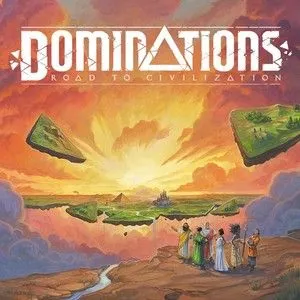
- Rang BGG
- BGG #2 264
- Note BGG
- 7,3
Dominations: Road to Civilization
- 2–4 joueurs
- 60–120 min
- Complexité 3,6/5
- 2019

Aide aux règles de Copan: Dying City
Des explications claires des tours, effets de cartes et situations litigieuses, avec des références aux sources officielles et un historique des questions sauvegardé.
Que voulez-vous savoir ?
Les réponses viennent du livret officiel, avec la page à vérifier.
Copan: Dying City est un jeu de société pour 1 à 4 joueurs, avec des parties de 60 à 180 minutes et à partir de 14 ans. Il a été conçu par Olivier Melison et Eric Dubus et ses principales mécaniques sont Tile Placement et Worker Placement.






En anglais
Welcome to the city of Copan, shining jewel of the Maya civilization. The city is flourishing, and as one of its ruling families, this golden age holds many opportunities for you to increase your influence and wealth. But Copan is destined to fall. Dark times lie ahead, and as you work to secure your legacy over generations, you have to face the city's slow decline. Your progress will hindered by dwindling resources, crumbling political structure, natural disasters, and war. Will your family become a part of the history of Copan, forever carved into the steps of the hieroglyphic stair? Or will your story be forgotten? Copan: Dying City is a heavy Eurogame for 1 to 4 players with both worker-placement and tile-placement mechanisms. The game features a reversed difficulty curve because when play begins, resources are plentiful, making most actions easy to accomplish. However, all resources are finite. When they reach critical levels, they trigger potentially devastating events, and once they run out, they're gone forever. Every move you make impacts the rest of the game, both for you and other players, as Copan's inevitable fate looms. —description from the publisher
Selon le catalogue, Copan: Dying City se joue de 1 à 4 personnes. Cette fourchette correspond au nombre de joueurs indiqué par l’éditeur : le jeu s’installe donc pour toute taille de groupe dans cette limite. La mise en place, certaines règles et le décompte peuvent varier selon l’effectif ; vérifiez la configuration exacte dans la règle de votre édition.
La durée indiquée pour Copan: Dying City est de 60 à 180 minutes, selon l’estimation de l’éditeur pour une partie complète. La durée réelle dépend du groupe, de l’effectif et de la connaissance des règles : les premières parties sont plus longues, les groupes expérimentés terminent plus vite. Mise en place et explication des règles ne sont pas comprises.
Le catalogue indique Copan: Dying City à partir de 14 ans. C’est la recommandation de l’éditeur ; elle tient compte de la lecture nécessaire, de la complexité des règles et des petits composants, pas seulement du thème. Les plus jeunes peuvent souvent participer avec l’aide d’un adulte : vérifiez l’âge indiqué sur votre édition et tenez compte de l’expérience de votre groupe.
Copan: Dying City obtient une note de complexité de 3,7 sur 5 auprès des joueurs de BoardGameGeek, ce qui en fait un jeu de complexité moyenne. Cette note reflète la quantité de règles, de planification et de décisions qu’exige une partie typique. Prévoyez une explication plus longue pour les jeux exigeants et utilisez un guide de préparation avant la soirée.
Copan: Dying City appartient à ces catégories : Ancient et Civilization. Ses principales mécaniques sont Tile Placement et Worker Placement. Les catégories décrivent le thème et l’univers d’un jeu, tandis que les mécaniques décrivent ce que les joueurs font réellement pendant leur tour. Chaque mécanique mène à une page du catalogue avec des jeux similaires.
Les auteurs crédités pour Copan: Dying City sont : Olivier Melison et Eric Dubus. Ces crédits proviennent des données publiées du jeu et désignent les personnes responsables de sa conception, et non les illustrateurs ou les éditeurs. Les pages d’auteurs sur MeepleRules regroupent les autres titres des mêmes auteurs, ce qui est utile lorsqu’un jeu vous plaît et que vous en cherchez de similaires.
Le catalogue présente Copan: Dying City comme un jeu de base. Il se joue seul avec le matériel contenu dans la boîte et ne nécessite aucun autre titre. Les extensions, s’il en existe, y ajoutent du contenu ou des règles et sont répertoriées séparément dans le catalogue, avec un lien vers ce jeu de base.