
- Rang BGG
- BGG #499
- Note BGG
- 7,9
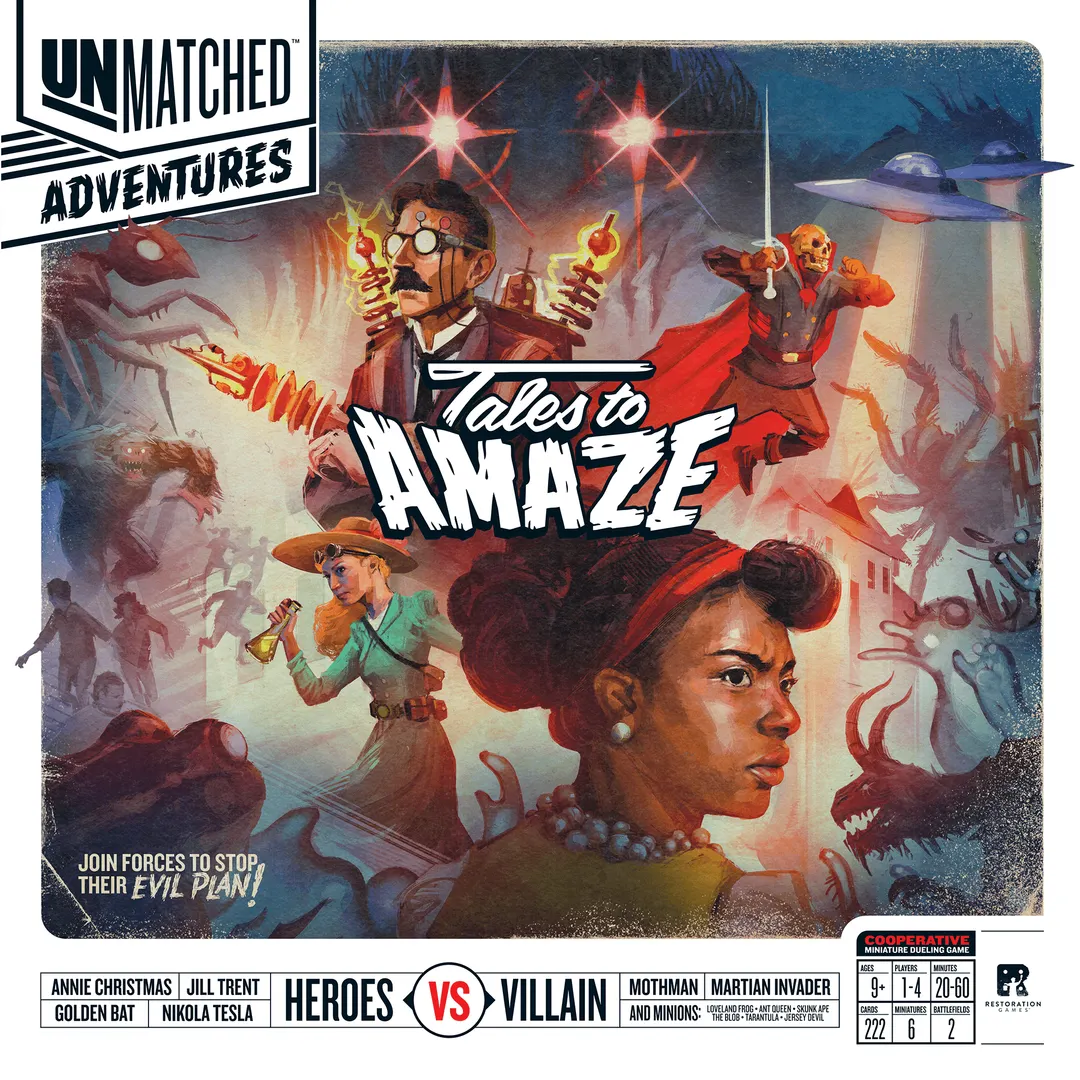
Unmatched Adventures: Tales to Amaze
- 1–4 joueurs
- 20–60 min
- Complexité 2,3/5
- 2023
2012
Aide aux règles de Day of the Dead
Des explications claires des tours, effets de cartes et situations litigieuses, avec des références aux sources officielles et un historique des questions sauvegardé.
Pour 2 joueurs
Que voulez-vous savoir ?
Les réponses viennent du livret officiel, avec la page à vérifier.
Day of the Dead est un jeu de société sorti en 2012 pour 2 joueurs, avec des parties de 30 minutes et à partir de 13 ans. Il a été conçu par Evan Raisner et ses principales mécaniques sont Variable Player Powers, Hand Management et Campaign / Battle Card Driven.
En anglais
Day of the Dead is a highly strategic card game that turns you and a friend into necromancers! Summon the best team of undead fighters and in six turns you’ll be named Super Grand Master, a highly coveted and extremely descriptive title. At the start of the game, each necromancer is given a hand containing nine cards. They represent an eccentric collection of skeletons, zombies, vampires, ghouls, and other spooks. Each turn, you select one of these weird characters and send it to the field. Once your opponent has done the same, the fun begins! All the fighters pair off and fight to the death. Normally, this sort of thing would be dangerous, but undead are durable and really get into the spirit of the thing. Winners score points while losers are flipped face down. Undead are resilient, so losing fighters will reassemble themselves in time for next turn’s battle. But if you don’t think your losing fighter will do better next turn, you can pull him out of line and turn him into a spirit. Spirits are the ultimate fans, boosting the power of all of your fighters. Some spirits even let you replace weaker fighters! Strategy in Day of the Dead centers around positioning; when played in the right place, any fighter can be a champion. On the other hand, even your favorite fighter can be a total failure if you are too stubborn to pull him out of a losing matchup. Stay flexible and you will bury your competition. Turn Order Summoning — When you bring new cards to the field. A New Slot Opens — Each turn a new slot opens up on the field for both players. On the first turn, each player takes a card from their hand and places it as a fallen fighter in this new slot. On each turn after that, they will take their current spirit card and place it there. Play a New Card — Fighters start their undeath as spirits, face down and slightly below the field. Spirits are also rotated 90 degrees to show that they are special. When considering what card to play, remember that you can only have 2 cards of each back in play. On turn 6, the final turn, you are allowed to break this rule and choose whatever card back you want. The Field Becomes Active — Flip all cards on the field face up (except for your spirit, it’s not on the field though it’s watching with considerable interest). If any player chose an Unearth card to be their spirit, they resolve this effect now. Then you’re ready to fight! Fighting — When your fighters get to work. Fights resolve one by one, starting with the newest slot and going to the oldest. Fights are 1 on 1 affairs and follow rigid rules. Be aware of what spirits each player has, as they will affect the outcome of each fight. Use Effects — Starting with the player who has the Priority counter, both fighters use their effects. Fighters must use their effects if able.If a player has a Double card as their spirit, they use their fighter’s effect, then immediately use it again. Add Up the Power — Add on the printed power of each fighter to any bonuses they may have accumulated via effects or spirits (Remember, if a player has a Power Up card as their spirit, they will get +2 power this fight). Compare Power — The higher-powered fighter is declared winner (in the event of a tie, both fighters are considered winners) and stays active. The lower-powered fighter is declared the loser and flips face down, becoming fallen. The Loser May Become a Spirit — If your fighter lost its fight this turn and you want to try something new, you can pull it from line and turn it into a spirit. Move on to the Next Fight Rewards — When you gain victory points. Score Victory Points — Each player scores victory points equal to the printed power values on their active fighters. Fallen cards score no points. Use the score board to keep track of it all. Pass Priority — The player who currently has the priority counter passes it to the other player. Next turn, that player will be able to use their effects first. This turn is now over! Winning At the end of 6 turns, a winner is declared. Whoever has the most victory points is that amazing person/
Selon le catalogue, Day of the Dead se joue à 2 personnes. C’est le nombre de joueurs indiqué par l’éditeur : le jeu est donc conçu pour exactement ce nombre de participants. Les variantes pour d’autres tailles de groupe, s’il en existe, sont décrites dans la règle de votre édition ; consultez-la avant d’installer une autre configuration.
La durée indiquée pour Day of the Dead est de 30 minutes, selon l’estimation de l’éditeur pour une partie complète. La durée réelle dépend du groupe, de l’effectif et de la connaissance des règles : les premières parties sont plus longues, les groupes expérimentés terminent plus vite. Mise en place et explication des règles ne sont pas comprises.
Le catalogue indique Day of the Dead à partir de 13 ans. C’est la recommandation de l’éditeur ; elle tient compte de la lecture nécessaire, de la complexité des règles et des petits composants, pas seulement du thème. Les plus jeunes peuvent souvent participer avec l’aide d’un adulte : vérifiez l’âge indiqué sur votre édition et tenez compte de l’expérience de votre groupe.
Day of the Dead obtient une note de complexité de 2,0 sur 5 auprès des joueurs de BoardGameGeek, ce qui en fait un jeu plutôt léger. Cette note reflète la quantité de règles, de planification et de décisions qu’exige une partie typique. Prévoyez une explication plus longue pour les jeux exigeants et utilisez un guide de préparation avant la soirée.
Day of the Dead appartient à ces catégories : Card Game et Fighting. Ses principales mécaniques sont Variable Player Powers, Hand Management et Campaign / Battle Card Driven. Les catégories décrivent le thème et l’univers d’un jeu, tandis que les mécaniques décrivent ce que les joueurs font réellement pendant leur tour. Chaque mécanique mène à une page du catalogue avec des jeux similaires.
Les auteurs crédités pour Day of the Dead sont : Evan Raisner. Ces crédits proviennent des données publiées du jeu et désignent les personnes responsables de sa conception, et non les illustrateurs ou les éditeurs. Les pages d’auteurs sur MeepleRules regroupent les autres titres des mêmes auteurs, ce qui est utile lorsqu’un jeu vous plaît et que vous en cherchez de similaires.
Le catalogue présente Day of the Dead comme un jeu de base. Il se joue seul avec le matériel contenu dans la boîte et ne nécessite aucun autre titre. Les extensions, s’il en existe, y ajoutent du contenu ou des règles et sont répertoriées séparément dans le catalogue, avec un lien vers ce jeu de base.