
- Note BGG
- 7,1
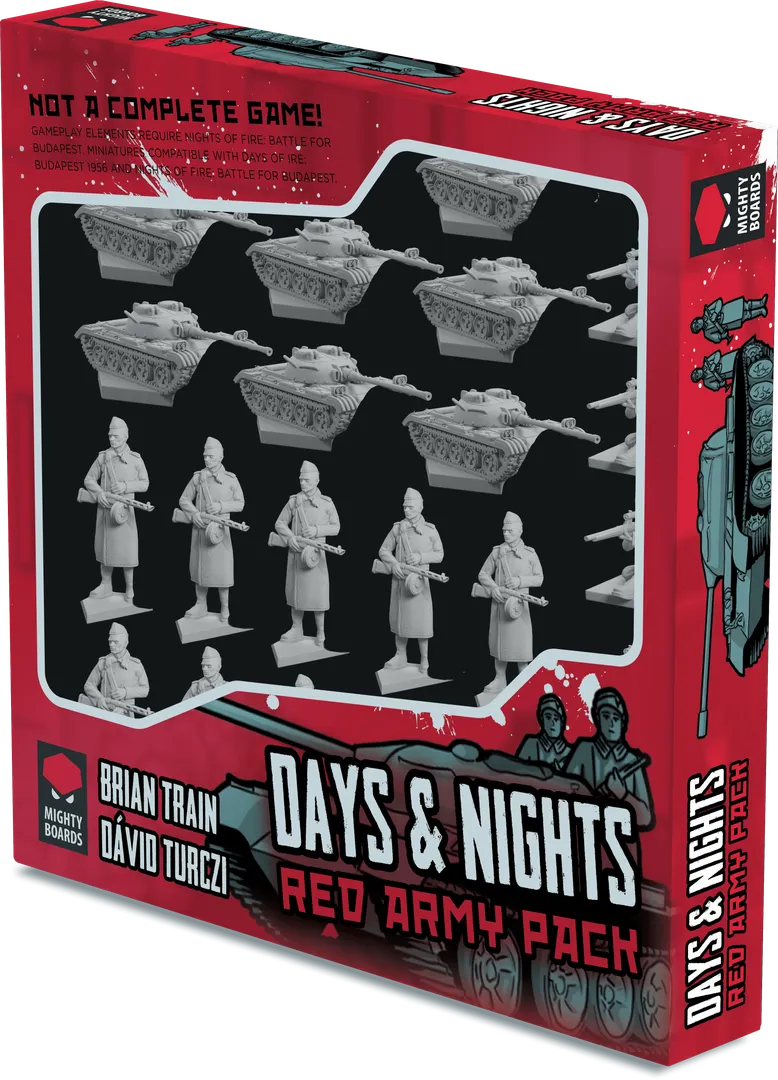
Days & Nights: Red Army Pack
- 1–3 joueurs
- 60–120 min
- Complexité 2,0/5
- 2018
2016
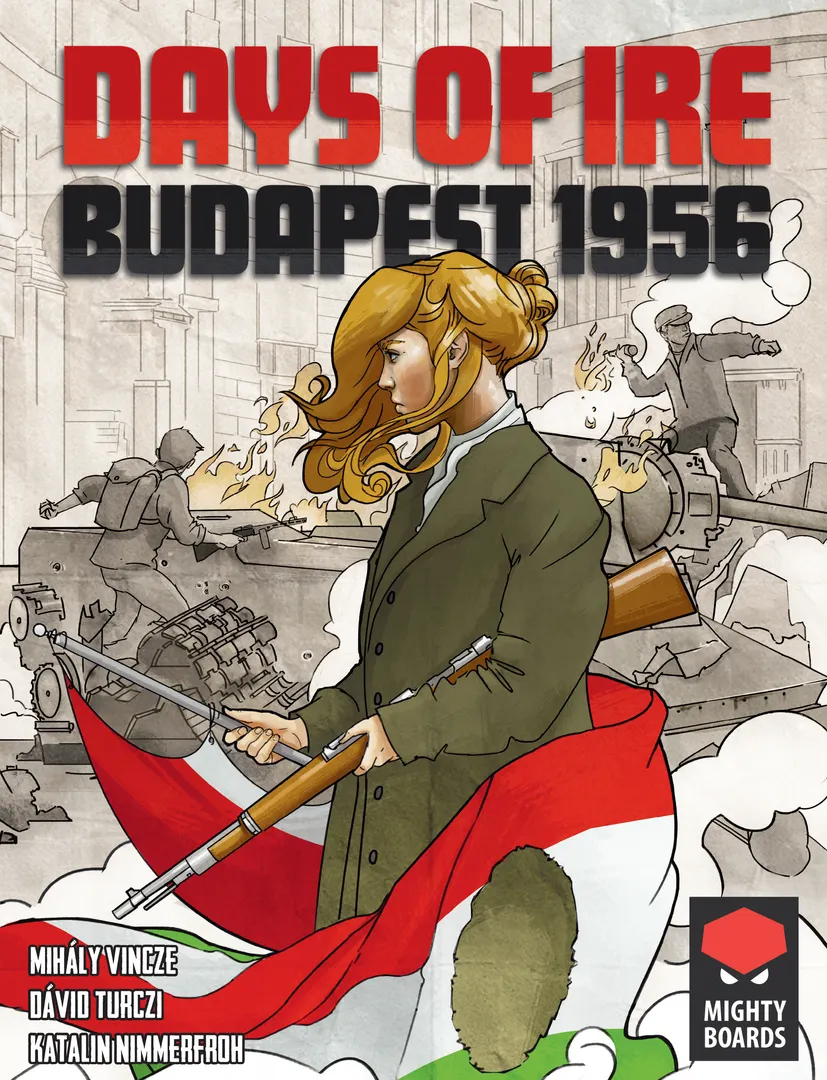
Aide aux règles de Days of Ire: Budapest 1956
Des explications claires des tours, effets de cartes et situations litigieuses, avec des références aux sources officielles et un historique des questions sauvegardé.
Pour 1 joueur
Que voulez-vous savoir ?
Les réponses viennent du livret officiel, avec la page à vérifier.
Days of Ire: Budapest 1956 est un jeu de société sorti en 2016 pour 1 à 4 joueurs, avec des parties de 60 à 90 minutes et à partir de 10 ans. Il a été conçu par Dávid Turczi, Mihály Vincze et Katalin Nimmerfroh et ses principales mécaniques sont Hand Management, Dice Rolling et Cooperative Game.






En anglais
It's 1956, and waves of protest in Poland are once again showing cracks of the Eastern European communist bloc. Emboldened by these signs, students and intellectuals in Budapest, the Hungarian capital, organize a protest of previously unseen magnitudes. As the communist leadership sweeps in to kill the movement in its tracks a violent response is provoked, thus sparking the Revolution of the 23rd of October. One player takes charge of the Soviet forces trying to shape the headlines to his liking and uses the militia and snipers of the State Protection Authority to stop the revolutionaries at all cost. The other player(s) (from 1-3 opponents) co-operatively play as the ringleaders of the revolutionary forces collecting resources (represented as icons on their cards) and recruiting other fighters to ensure the revolution's events end up in favor of their side, while fighting off tanks and soldiers in this exciting, historically inspired card driven game. Days of Ire: Budapest 1956 is played over seven days — the last week of October 1956. The Soviet commander plays headline cards at the beginning of every turn, gathering Command Points and triggering effects that sometimes help, sometimes hinder the revolutionary effort. This card-play, reminiscent of well-known card-driven wargames (CDG) such as Twilight Struggle or Labyrinth: War on Terror, is what drives the tempo and the strategic thrust of the game. The other player(s) form the revolutionary side. They collect cards and fighters for two reasons: to resolve events for boosts to their side, and to fight off militia, snipers, and Soviet tanks in a drastic fight for survival. They have to manage their positions while spreading across Budapest, carefully dividing their actions as a team and always keeping an eye on their morale lest they run out of cards. This team-playing aspect — reminiscent of highly successful cooperative games such as Pandemic — guarantees ease of access to players who would otherwise be more intimidated by a traditional CDG. If any of the revolutionary ringleaders suffer too many wounds, or if they fail to resolve enough events by the end of the game, history changes and the revolution falls. But if they keep the streets of Budapest free from oppression, the revolution lives on, to fight another day. Historical Note: In real life, the revolution succeeded, and Hungary was free for less than a week. On the 4th of November, the Soviet forces quickly recaptured the country, but that is a subject for a different game...
Selon le catalogue, Days of Ire: Budapest 1956 se joue de 1 à 4 personnes. Cette fourchette correspond au nombre de joueurs indiqué par l’éditeur : le jeu s’installe donc pour toute taille de groupe dans cette limite. La mise en place, certaines règles et le décompte peuvent varier selon l’effectif ; vérifiez la configuration exacte dans la règle de votre édition.
La durée indiquée pour Days of Ire: Budapest 1956 est de 60 à 90 minutes, selon l’estimation de l’éditeur pour une partie complète. La durée réelle dépend du groupe, de l’effectif et de la connaissance des règles : les premières parties sont plus longues, les groupes expérimentés terminent plus vite. Mise en place et explication des règles ne sont pas comprises.
Le catalogue indique Days of Ire: Budapest 1956 à partir de 10 ans. C’est la recommandation de l’éditeur ; elle tient compte de la lecture nécessaire, de la complexité des règles et des petits composants, pas seulement du thème. Les plus jeunes peuvent souvent participer avec l’aide d’un adulte : vérifiez l’âge indiqué sur votre édition et tenez compte de l’expérience de votre groupe.
Days of Ire: Budapest 1956 obtient une note de complexité de 2,8 sur 5 auprès des joueurs de BoardGameGeek, ce qui en fait un jeu plutôt léger. Cette note reflète la quantité de règles, de planification et de décisions qu’exige une partie typique. Prévoyez une explication plus longue pour les jeux exigeants et utilisez un guide de préparation avant la soirée.
Days of Ire: Budapest 1956 appartient à ces catégories : Wargame, Political et Modern Warfare. Ses principales mécaniques sont Hand Management, Dice Rolling et Cooperative Game. Les catégories décrivent le thème et l’univers d’un jeu, tandis que les mécaniques décrivent ce que les joueurs font réellement pendant leur tour. Chaque mécanique mène à une page du catalogue avec des jeux similaires.
Les auteurs crédités pour Days of Ire: Budapest 1956 sont : Dávid Turczi, Mihály Vincze et Katalin Nimmerfroh. Ces crédits proviennent des données publiées du jeu et désignent les personnes responsables de sa conception, et non les illustrateurs ou les éditeurs. Les pages d’auteurs sur MeepleRules regroupent les autres titres des mêmes auteurs, ce qui est utile lorsqu’un jeu vous plaît et que vous en cherchez de similaires.
Le catalogue présente Days of Ire: Budapest 1956 comme un jeu de base. Il se joue seul avec le matériel contenu dans la boîte et ne nécessite aucun autre titre. Les extensions, s’il en existe, y ajoutent du contenu ou des règles et sont répertoriées séparément dans le catalogue, avec un lien vers ce jeu de base.