

- Rang BGG
- BGG #2 298
- Note BGG
- 7,2
The Thing: Infection at Outpost 31
- 4–8 joueurs
- 60–120 min
- Complexité 2,3/5
- 2017
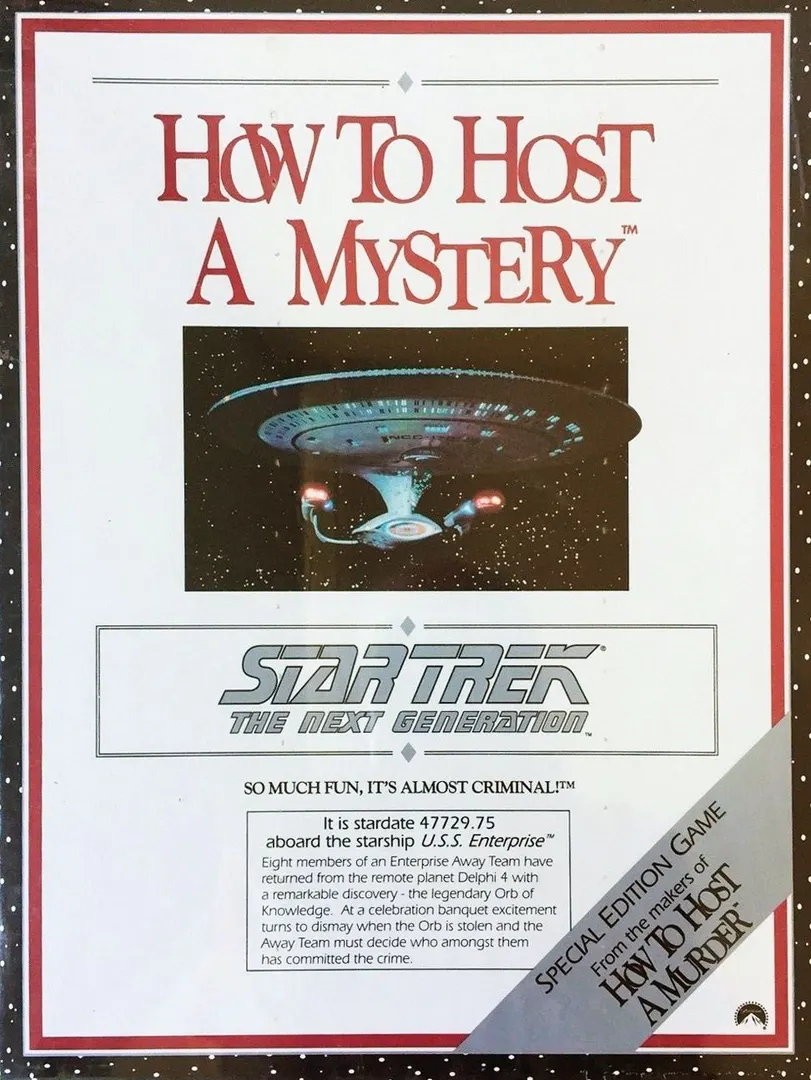
1992
Aide aux règles de How to Host a Mystery: Star Trek – The Next Generation
Des explications claires des tours, effets de cartes et situations litigieuses, avec des références aux sources officielles et un historique des questions sauvegardé.
Pour 8 joueurs
Que voulez-vous savoir ?
Les réponses viennent du livret officiel, avec la page à vérifier.
How to Host a Mystery: Star Trek – The Next Generation est un jeu de société sorti en 1992 pour 8 joueurs, avec des parties de 360 minutes et à partir de 14 ans. Ses principales mécaniques sont Role Playing.




En anglais
[from the box] You and your guests are the "star suspects!" Eight of the galaxy's most colorful characters await the arrival of their host at a commemorative dinner held in the banquet room of the U.S.S. Enterprise. High spirits soon turn to astonishment as Captain Jean-Luc Picard announces a theft of universal proportion! You and your dinner guests will enjoy hours of suspense and intrigue recreating eight of television's most fantastic roles and figuring out which "STAR TREK: THE NEXT GENERATION" suspect is guilty of committing the crime? [sic] All you need is a sense of humor and a willingness to take a lighthearted attitude toward blackmail, sex, larceny, deceit and sci-fi. Just add eight suspects and the food. This special edition game supplies the rest!
Selon le catalogue, How to Host a Mystery: Star Trek – The Next Generation se joue à 8 personnes. C’est le nombre de joueurs indiqué par l’éditeur : le jeu est donc conçu pour exactement ce nombre de participants. Les variantes pour d’autres tailles de groupe, s’il en existe, sont décrites dans la règle de votre édition ; consultez-la avant d’installer une autre configuration.
La durée indiquée pour How to Host a Mystery: Star Trek – The Next Generation est de 360 minutes, selon l’estimation de l’éditeur pour une partie complète. La durée réelle dépend du groupe, de l’effectif et de la connaissance des règles : les premières parties sont plus longues, les groupes expérimentés terminent plus vite. Mise en place et explication des règles ne sont pas comprises.
Le catalogue indique How to Host a Mystery: Star Trek – The Next Generation à partir de 14 ans. C’est la recommandation de l’éditeur ; elle tient compte de la lecture nécessaire, de la complexité des règles et des petits composants, pas seulement du thème. Les plus jeunes peuvent souvent participer avec l’aide d’un adulte : vérifiez l’âge indiqué sur votre édition et tenez compte de l’expérience de votre groupe.
How to Host a Mystery: Star Trek – The Next Generation obtient une note de complexité de 1,8 sur 5 auprès des joueurs de BoardGameGeek, ce qui en fait un jeu léger. Cette note reflète la quantité de règles, de planification et de décisions qu’exige une partie typique. Prévoyez une explication plus longue pour les jeux exigeants et utilisez un guide de préparation avant la soirée.
How to Host a Mystery: Star Trek – The Next Generation appartient à ces catégories : Movies / TV / Radio theme, Murder / Mystery et Science Fiction. Ses principales mécaniques sont Role Playing. Les catégories décrivent le thème et l’univers d’un jeu, tandis que les mécaniques décrivent ce que les joueurs font réellement pendant leur tour. Chaque mécanique mène à une page du catalogue avec des jeux similaires.
Le catalogue présente How to Host a Mystery: Star Trek – The Next Generation comme un jeu de base. Il se joue seul avec le matériel contenu dans la boîte et ne nécessite aucun autre titre. Les extensions, s’il en existe, y ajoutent du contenu ou des règles et sont répertoriées séparément dans le catalogue, avec un lien vers ce jeu de base.