
- Note BGG
- 5,0
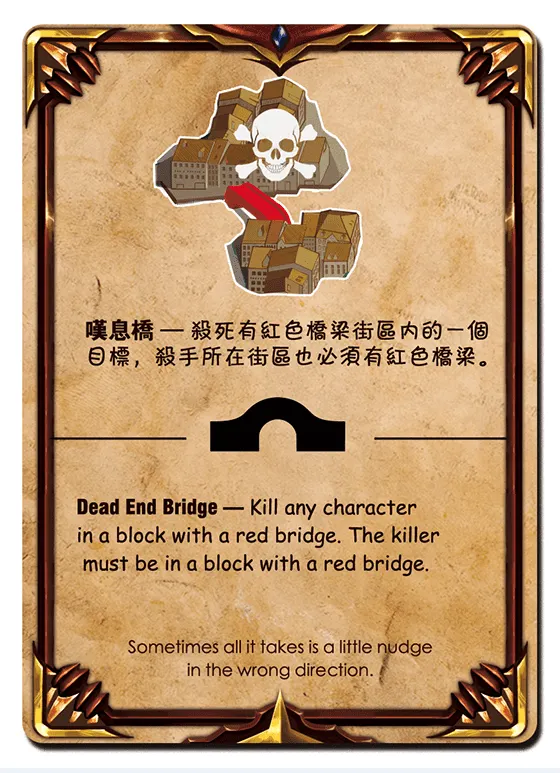
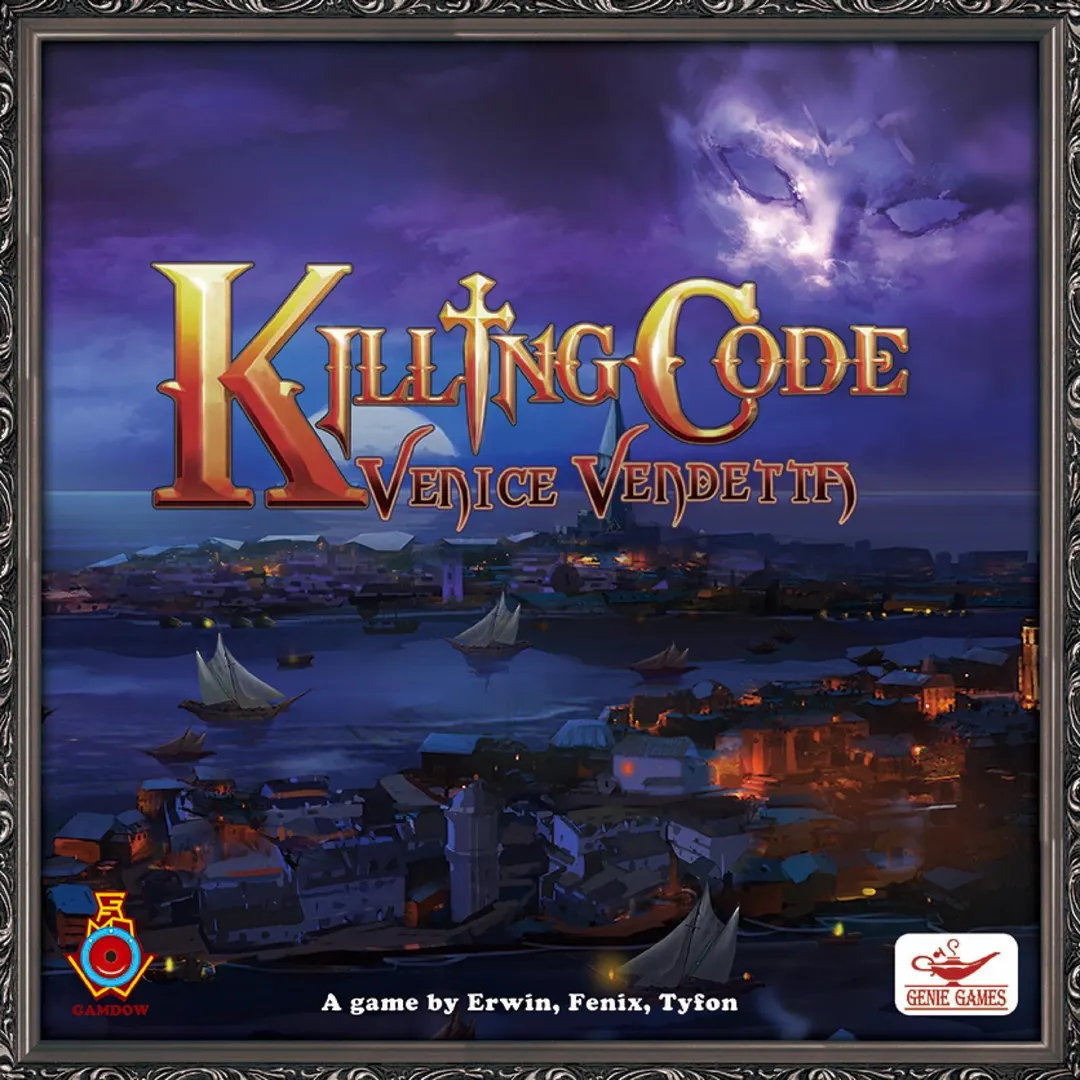
Killing Code: Venice Vendetta – Dead End Bridge
- 3–6 joueurs
- 45–75 min
- 2017
2017
Aide aux règles de Killing Code: Venice Vendetta
Des explications claires des tours, effets de cartes et situations litigieuses, avec des références aux sources officielles et un historique des questions sauvegardé.
Que voulez-vous savoir ?
Les réponses viennent du livret officiel, avec la page à vérifier.
Killing Code: Venice Vendetta est un jeu de société sorti en 2017 pour 2 à 6 joueurs, avec des parties de 45 à 75 minutes et à partir de 10 ans. Il a été conçu par Erwin, Fenix et Tyfon et ses principales mécaniques sont Variable Player Powers, Area Movement et Area Majority / Influence.






En anglais
Killing Code: Venice Vendetta is a cooperative reasoning game in which the players must work together to discover the identity of a killer in the city before it is too late. One player acts as the killer, secretly assuming the identity of one of the citizens of Venice and looking for opportunities to kill some of the others. The other players act together to unmask the killer's identity. Within the round limit, the killer must keep their identity hidden and complete their killings, while the other players must investigate the murder methods to discover clues leading to the killer's unmasking and stop these atrocities. Aside from the standard game mode, the game includes five scenarios that can provide players with more rules and story experiences. Game Playing: Stage 1: Flip Over Cards: At the start of this stage, the killer takes all the character cards still in play, shuffles them face down and places the pile in front of him.(In the first round of a normal game, this will be all 13 character cards, reduced each round when the killer takes victims). Deal a number of character cards according to the number of players, then flip those cards face-up and place them in area easily reached by all players. These will be the character cards availible for use this round. Stage 2: The Investigators Act Starting with the investigator to the left of the killer, that player chooses one of the availible character cards for this round and places it face-up in front of him or herself. Once a character card has been placed in front of a player no other investigator may choose that card. After placing the card infront of him or herself, the investigator can move that character according to the movement value on the card and one active ability on the card. After the investigator finishes moving his or her chosen character and taking any actions, the next investigator clockwise repeats this process until all investigators have taken a character card. Stage 3: The Killer Acts The killer's stage consists of 2 parts: movement and murder. -Movement- The killer can choose from 2 options for movement: Use the remaining 2 character cards unchosen by the non-killer players. The killer chooses what order to use these cards in. Use 1 card in front of a non-killer player. After the killer has taken his or her movement action(s), he or she is ready to take a life. -Murder- The killer selects a killing code card from his or her hand, using its ability to end the lives of one or more characters based on the qualifications of the killing code card text. Each round the killer can only make use of 1 killing code card. Please refer to the killing code card section of this rulebook for further clarification. The killer dons the mask, dramatically announces who will die, then lays that character's marker down in the block they were just alive in. Search the character cards for the character killed and place that card face up on the grave marker from this round, then the killer places the killing code card that he or she used face down on top of that character card. If multiple characters were killed at once, place them all on the same grave before placing the killing code card over them. Accusation Round After the killer has successfully killed 5 or more characters or has used 5 killing code cards, the game immediately enters a special final round called the accusation round. The final round is an additional round which only has the first 2 stages, the killer will not take any action in this round, instead he or she should don the mask, steeple his or her hands and watch the proceedings dramatically. When the investigators are finished moving in this round, they must immediately make an accusation. The investigators may only accuse one suspect. Various methods of reaching an agreement on this accusation include: Discussion Voting Arm Wrestling Drinking Contest Giving in to the Most Persuasive Who-Donnit Speech Being Generally Louder than the Other Investigators Agree with the Person you Secretly Find Attractive Bribing, Coercing, or Torturing the Killer Or any additional methods which the design company assumes no responsibility for the consequences of. Or whatever, you know, it doesn't matter, just guess. Faced with this accusation, the killer must flip up his or her suspect card with a flourish. Victory or Defeat Complete the Accusation So close, yet so far very very wrong... No matter when it is made, if the accusation was correct, the investigators win. If the accusation was wrong, the killer wins.
Selon le catalogue, Killing Code: Venice Vendetta se joue de 2 à 6 personnes. Cette fourchette correspond au nombre de joueurs indiqué par l’éditeur : le jeu s’installe donc pour toute taille de groupe dans cette limite. La mise en place, certaines règles et le décompte peuvent varier selon l’effectif ; vérifiez la configuration exacte dans la règle de votre édition.
La durée indiquée pour Killing Code: Venice Vendetta est de 45 à 75 minutes, selon l’estimation de l’éditeur pour une partie complète. La durée réelle dépend du groupe, de l’effectif et de la connaissance des règles : les premières parties sont plus longues, les groupes expérimentés terminent plus vite. Mise en place et explication des règles ne sont pas comprises.
Le catalogue indique Killing Code: Venice Vendetta à partir de 10 ans. C’est la recommandation de l’éditeur ; elle tient compte de la lecture nécessaire, de la complexité des règles et des petits composants, pas seulement du thème. Les plus jeunes peuvent souvent participer avec l’aide d’un adulte : vérifiez l’âge indiqué sur votre édition et tenez compte de l’expérience de votre groupe.
Killing Code: Venice Vendetta obtient une note de complexité de 2,3 sur 5 auprès des joueurs de BoardGameGeek, ce qui en fait un jeu plutôt léger. Cette note reflète la quantité de règles, de planification et de décisions qu’exige une partie typique. Prévoyez une explication plus longue pour les jeux exigeants et utilisez un guide de préparation avant la soirée.
Killing Code: Venice Vendetta appartient à ces catégories : Deduction, Murder / Mystery et Medieval. Ses principales mécaniques sont Variable Player Powers, Area Movement et Area Majority / Influence. Les catégories décrivent le thème et l’univers d’un jeu, tandis que les mécaniques décrivent ce que les joueurs font réellement pendant leur tour. Chaque mécanique mène à une page du catalogue avec des jeux similaires.
Les auteurs crédités pour Killing Code: Venice Vendetta sont : Erwin, Fenix et Tyfon. Ces crédits proviennent des données publiées du jeu et désignent les personnes responsables de sa conception, et non les illustrateurs ou les éditeurs. Les pages d’auteurs sur MeepleRules regroupent les autres titres des mêmes auteurs, ce qui est utile lorsqu’un jeu vous plaît et que vous en cherchez de similaires.
Le catalogue présente Killing Code: Venice Vendetta comme un jeu de base. Il se joue seul avec le matériel contenu dans la boîte et ne nécessite aucun autre titre. Les extensions, s’il en existe, y ajoutent du contenu ou des règles et sont répertoriées séparément dans le catalogue, avec un lien vers ce jeu de base.