- Note BGG
- 6,0
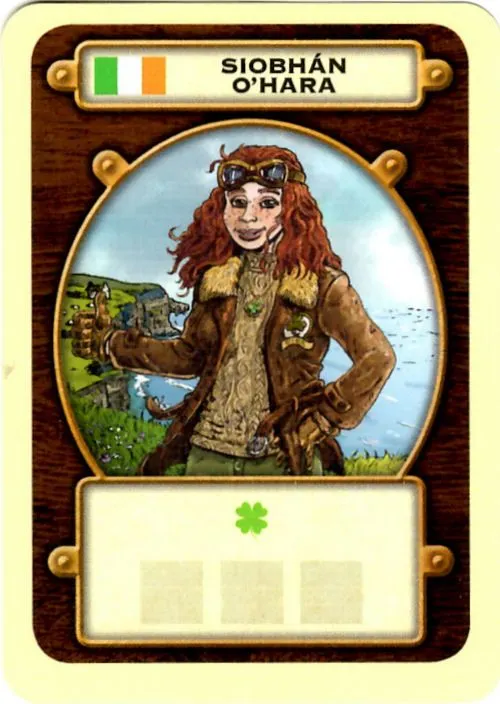
Magnificent Flying Machines: Siobhán O'Hara
- 2–6 joueurs
- 60–150 min
- 2018
2018
Aide aux règles de Magnificent Flying Machines
Des explications claires des tours, effets de cartes et situations litigieuses, avec des références aux sources officielles et un historique des questions sauvegardé.
Que voulez-vous savoir ?
Les réponses viennent du livret officiel, avec la page à vérifier.
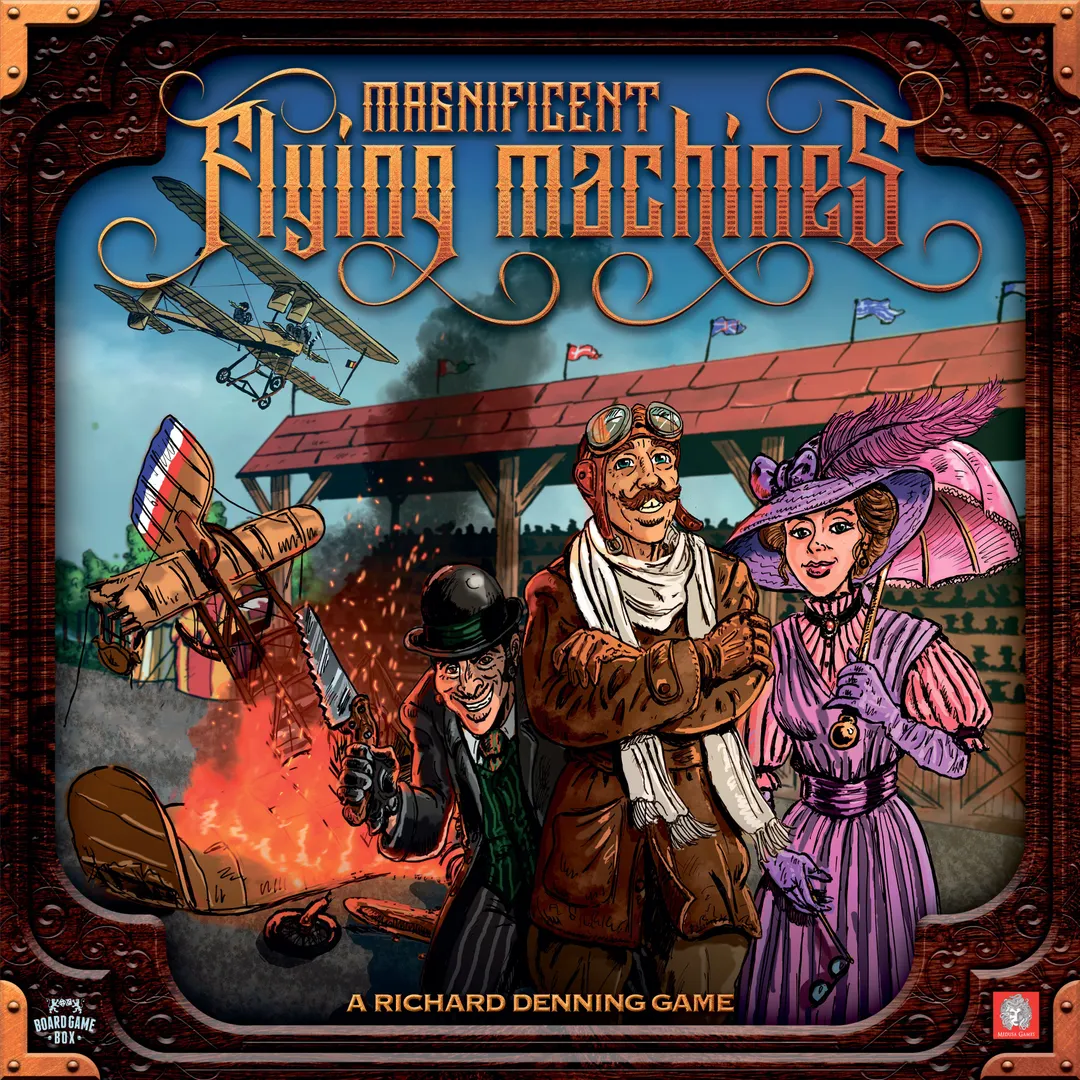
Magnificent Flying Machines est un jeu de société sorti en 2018 pour 2 à 6 joueurs, avec des parties de 60 à 150 minutes et à partir de 12 ans. Il a été conçu par Richard Denning et ses principales mécaniques sont Push Your Luck, Dice Rolling et Simulation.





En anglais
This game takes inspiration from the great air races of circa 1908 to 1913 which took place in the pioneering era of air travel. These air races galvanized interest across the world and encouraged by generous prizes by newspapers and other sponsors attracted international entries. Air travel was risky and most unreliable. Often only a small number of the entrants would make it to the finish line. Will one of your pilots manage to face up to the challenge? But watch out: In this era of gentlemanly behavior and stiff upper lips, there are a few cads and bounders who will cheat to win. In Magnificent Flying Machines, the player who ends the game with the most victory points wins. These can be earned in various ways including being the first to land successfully on a certain terrain tile, landing on the middle airfield, transporting cargo or passengers, or performing trick maneuvers. Simply being the first to cross the finishing line is unlikely to be enough on its own to secure a victory. The winner will be the player who picks a strategy that best matches the abilities of the pilot and features of the flying machine they are using. The game is played in a series of rounds. A round begins with the first player taking a turn. Each player takes their turn in order clockwise around the table. During a turn a player has two action phases available. There are three types of action phase to choose from. These are the takeoff phase (which may also include refueling, repairing and scavenging spare parts), the flying phase (which may also include gaining altitude and performing trick maneuvers), and the landing phase (which may also include refueling). In addition, whenever a flying machine lands on a terrain tile any passengers that wish to will disembark, and any cargo intended for that terrain type is unloaded. It may also take on available equipment, cargo and passengers if space is available to do so. Players progress in the game by passing a series of takeoff, flying and landing tests. To determine the difficulty of a particular test, first look at the number of symbols for that test shown on the terrain tile that the flying machine is on. Simply add the number of symbols shown on the terrain tile to the number of symbols on the relevant weather tile. If a player needs to take a test, first check to see the total number of relevant symbols shown on the flying machine dashboard. This is the number of dice that may be rolled when attempting to obtain a sufficient number of symbols to pass the test. If the player does not roll enough symbols they may then choose to make use of special equipment, use spare parts, or play trick and boost cards to obtain additional symbols in order to pass the test. If a player is unable to obtain a sufficient number of symbols to pass the test then a failure occurs. If the dice rolled include a catastrophic failure symbol, then a catastrophic failure occurs. The effects of such a failure vary depending on the test being taken.
Selon le catalogue, Magnificent Flying Machines se joue de 2 à 6 personnes. Cette fourchette correspond au nombre de joueurs indiqué par l’éditeur : le jeu s’installe donc pour toute taille de groupe dans cette limite. La mise en place, certaines règles et le décompte peuvent varier selon l’effectif ; vérifiez la configuration exacte dans la règle de votre édition.
La durée indiquée pour Magnificent Flying Machines est de 60 à 150 minutes, selon l’estimation de l’éditeur pour une partie complète. La durée réelle dépend du groupe, de l’effectif et de la connaissance des règles : les premières parties sont plus longues, les groupes expérimentés terminent plus vite. Mise en place et explication des règles ne sont pas comprises.
Le catalogue indique Magnificent Flying Machines à partir de 12 ans. C’est la recommandation de l’éditeur ; elle tient compte de la lecture nécessaire, de la complexité des règles et des petits composants, pas seulement du thème. Les plus jeunes peuvent souvent participer avec l’aide d’un adulte : vérifiez l’âge indiqué sur votre édition et tenez compte de l’expérience de votre groupe.
Magnificent Flying Machines obtient une note de complexité de 2,3 sur 5 auprès des joueurs de BoardGameGeek, ce qui en fait un jeu plutôt léger. Cette note reflète la quantité de règles, de planification et de décisions qu’exige une partie typique. Prévoyez une explication plus longue pour les jeux exigeants et utilisez un guide de préparation avant la soirée.
Magnificent Flying Machines appartient à ces catégories : Transportation et Aviation / Flight. Ses principales mécaniques sont Push Your Luck, Dice Rolling et Simulation. Les catégories décrivent le thème et l’univers d’un jeu, tandis que les mécaniques décrivent ce que les joueurs font réellement pendant leur tour. Chaque mécanique mène à une page du catalogue avec des jeux similaires.
Les auteurs crédités pour Magnificent Flying Machines sont : Richard Denning. Ces crédits proviennent des données publiées du jeu et désignent les personnes responsables de sa conception, et non les illustrateurs ou les éditeurs. Les pages d’auteurs sur MeepleRules regroupent les autres titres des mêmes auteurs, ce qui est utile lorsqu’un jeu vous plaît et que vous en cherchez de similaires.
Le catalogue présente Magnificent Flying Machines comme un jeu de base. Il se joue seul avec le matériel contenu dans la boîte et ne nécessite aucun autre titre. Les extensions, s’il en existe, y ajoutent du contenu ou des règles et sont répertoriées séparément dans le catalogue, avec un lien vers ce jeu de base.