

- Rang BGG
- BGG #11 454
- Note BGG
- 6,8
2019: The ARCTIC
- 2–4 joueurs
- 120 min
- Complexité 4,0/5
- 2011
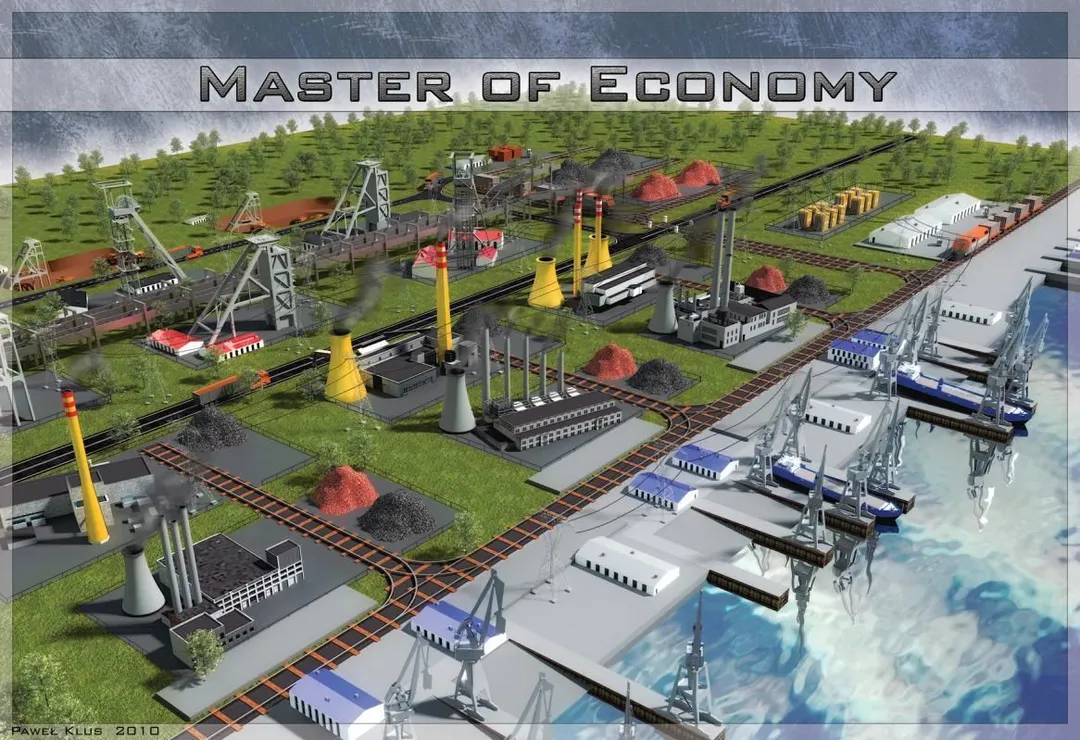
2010
Aide aux règles de Master of Economy
Des explications claires des tours, effets de cartes et situations litigieuses, avec des références aux sources officielles et un historique des questions sauvegardé.
Pour 2 joueurs
Que voulez-vous savoir ?
Les réponses viennent du livret officiel, avec la page à vérifier.
Master of Economy est un jeu de société sorti en 2010 pour 2 à 4 joueurs, avec des parties de 120 minutes et à partir de 14 ans. Il a été conçu par Andrzej Kurek et ses principales mécaniques sont Hand Management, Trading et Auction / Bidding.

En anglais
Financial simulator. Players start the game by managing their corporations (1 of 4) and using them as a tool for increasing the value of private property (like countries in "Imperial"). By effective speculation on the stock market, a player may take control of more than one corporation. Proper corporation management is preferable but not the most essential. The rules attempt to simulate real conditions of business competition and relationships between shareholders. THERE IS NO LUCK FACTOR. Internal balance discourages to play in a relation of 2(3) players versus 1. Most of the rules are quite easy and intuitive. It is the most difficult to use the rules effectively by good planning and predicting opponents’ plans. Players manage their corporations by investing in new factories and trading produced goods to earn money (like in many other games). The point is what the players do with earned money. They can re-invest it to make their corporations earn more during next phase or try to make pressure on another player by buying shares of his/her corporation. The player who has the biggest number of shares can be elected by voting as a new leader of the corporation for the next stage. Even if you don`t have enough shares to take control over another player`s firm, the investment can be quite beneficiary because it can give you some profit (if that firm is managed well) or enforce your opponent to use the corporation money for defending, which makes his final result worse than could be achieved without your pressure. Of course, the more players (max 4), the more fun there is during voting phase when all the shareholders, who are going to manage the corporation in the next stage, vote. The game tries to extract maximum advantage of double circulation of money you can find in the "Imperial". Players have money and corporations have money. So, what is new then? Besides the players, also the corporations can be shareholders and they all (corporations and players) vote for new leaders. It means that if you want to keep control over a corporation you had started with, you can, for instance, first take control over some weaker corporation which has some shares of yours. The best defense is attack, isn`t it? ;) The only weapon in this war is money. There are some tools of defense, so taking control over experienced opponent`s corporation is rather difficult, though possible. When an experienced player plays versus a beginner, he/she shouldn`t have a problem with it. Moreover, keeping control of the corporation is useful, because it is a way of generating money for the leader, although speculating by buying and selling shares is a bit more efficient. It is the best to go both ways at the same time, choosing and changing your engagement alternately. Well, it is also possible to play without any corporation and increase the value of private property only by playing as a stock market profiteer, but this way is recommended only for very experienced players. There is a fixed variant of playing 2 vs. 2.
Selon le catalogue, Master of Economy se joue de 2 à 4 personnes. Cette fourchette correspond au nombre de joueurs indiqué par l’éditeur : le jeu s’installe donc pour toute taille de groupe dans cette limite. La mise en place, certaines règles et le décompte peuvent varier selon l’effectif ; vérifiez la configuration exacte dans la règle de votre édition.
La durée indiquée pour Master of Economy est de 120 minutes, selon l’estimation de l’éditeur pour une partie complète. La durée réelle dépend du groupe, de l’effectif et de la connaissance des règles : les premières parties sont plus longues, les groupes expérimentés terminent plus vite. Mise en place et explication des règles ne sont pas comprises.
Le catalogue indique Master of Economy à partir de 14 ans. C’est la recommandation de l’éditeur ; elle tient compte de la lecture nécessaire, de la complexité des règles et des petits composants, pas seulement du thème. Les plus jeunes peuvent souvent participer avec l’aide d’un adulte : vérifiez l’âge indiqué sur votre édition et tenez compte de l’expérience de votre groupe.
Master of Economy obtient une note de complexité de 4,1 sur 5 auprès des joueurs de BoardGameGeek, ce qui en fait un jeu exigeant. Cette note reflète la quantité de règles, de planification et de décisions qu’exige une partie typique. Prévoyez une explication plus longue pour les jeux exigeants et utilisez un guide de préparation avant la soirée.
Master of Economy appartient à ces catégories : Economic, Negotiation et Educational. Ses principales mécaniques sont Hand Management, Trading et Auction / Bidding. Les catégories décrivent le thème et l’univers d’un jeu, tandis que les mécaniques décrivent ce que les joueurs font réellement pendant leur tour. Chaque mécanique mène à une page du catalogue avec des jeux similaires.
Les auteurs crédités pour Master of Economy sont : Andrzej Kurek. Ces crédits proviennent des données publiées du jeu et désignent les personnes responsables de sa conception, et non les illustrateurs ou les éditeurs. Les pages d’auteurs sur MeepleRules regroupent les autres titres des mêmes auteurs, ce qui est utile lorsqu’un jeu vous plaît et que vous en cherchez de similaires.
Le catalogue présente Master of Economy comme un jeu de base. Il se joue seul avec le matériel contenu dans la boîte et ne nécessite aucun autre titre. Les extensions, s’il en existe, y ajoutent du contenu ou des règles et sont répertoriées séparément dans le catalogue, avec un lien vers ce jeu de base.