
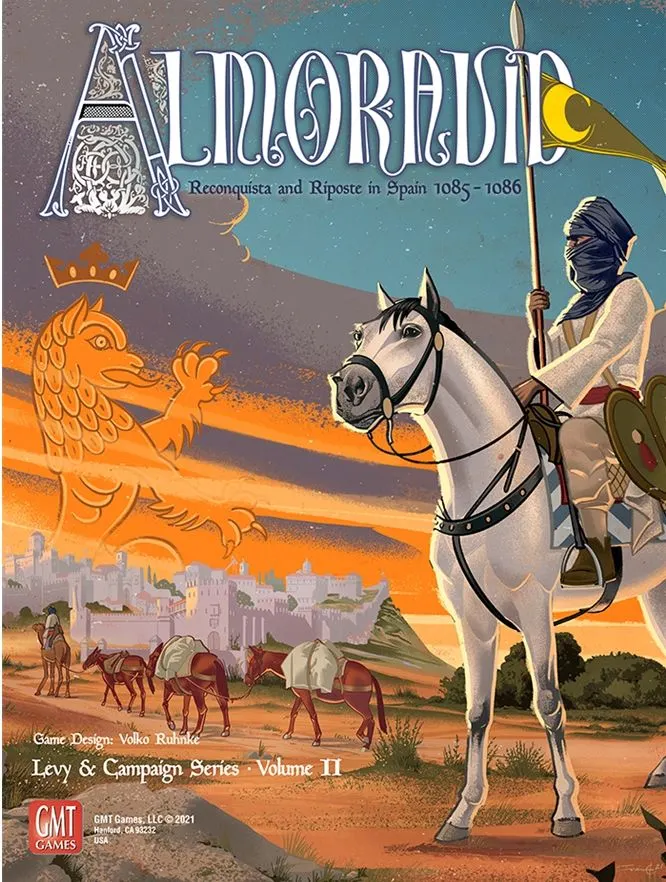
- Rang BGG
- BGG #3 826
- Note BGG
- 8,0
Almoravid: Reconquista and Riposte in Spain 1085-1086
- 1–2 joueurs
- 60–360 min
- Complexité 4,1/5
- 2022
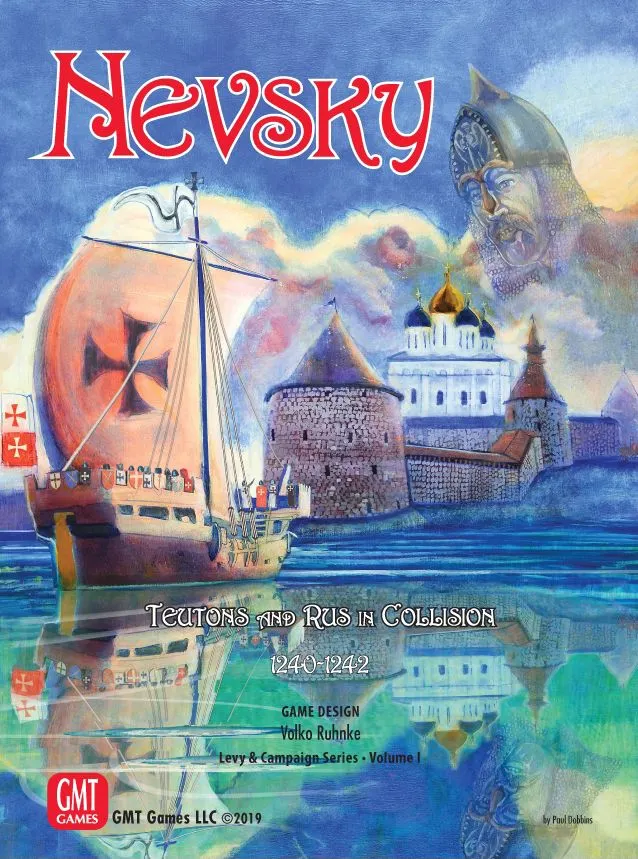
2019
Aide aux règles de Nevsky: Teutons and Rus in Collision 1240-1242
Des explications claires des tours, effets de cartes et situations litigieuses, avec des références aux sources officielles et un historique des questions sauvegardé.
Pour 1 joueur
Que voulez-vous savoir ?
Les réponses viennent du livret officiel, avec la page à vérifier.
Nevsky: Teutons and Rus in Collision 1240-1242 est un jeu de société sorti en 2019 pour 1 à 2 joueurs, avec des parties de 60 à 360 minutes et à partir de 14 ans. Il a été conçu par Volko Ruhnke et ses principales mécaniques sont Dice Rolling, Point to Point Movement et Variable Set-up.





En anglais
Nevsky: Teutons and Rus in Collision 1240-1242 is a board wargame about the storied clash between Latin Teutonic and Orthodox Russian powers along the Baltic frontier of the mid-13th-Century. It is the first volume in GMT Games’ "Levy & Campaign Series" portraying military operations in a variety of pre-industrial conflicts. In Nevsky players raise and equip their armies, then provision and maneuver them to ravage or conquer enemy territory or defeat enemy forces in battle. Feudal politics obligate an array of lords and vassals to serve on campaign—but only for limited periods. Players must keep an eye on the calendar and reward lords to keep their armies in the field. Nevsky is solitaire friendly or can add a rules option with screens that hide what the two players’ lords levy. A second option adds detail regarding vassal forces’ terms of service. In Nevsky, two players take the roles of “Russians” and “Teutons”, respectively. The Russians represent the wealthy city-state of Novgorod and its allies. The Teutons comprise German and Danish landholders—including the Teutonic Order—expanding a Baltic dominion. The sides every 40 days will levy various lords and vassals and their forces, transport, and capabilities, backed by higher political authorities—a papal legate for the Teutons and Novgorod’s city council (veche) for the Russians. Each lord is rated for fealty, lordship, service, and command and lays out his forces and assets on a mat. Wooden pieces represent units of knights, mounted sergeants, light and Asiatic cavalry, men-at-arms, and unarmored serfs and militia. Assets include counters for transport such as carts, boats, and sleds; provender to feed the army; and coin to pay for longer service or booty captured by ravaging or conquering enemy regions. The players then plan and command a campaign for that 40 days with the lords who have mustered. To represent the limits of communications on medieval operations, stacks of command cards commit players to activating lords in a sequence that may or may not meet the needs of the developing situation. Cylinder pieces on the map show the lords’ maneuvers, while markers on a feudal calendar show how much longer the lords will serve, influenced by success or failure in their campaigns. When lords clash in field battle or storming a castle, players array their lords’ mats left, right, center, and reserve and attempt to rout the enemy. Various event and capability cards reveal cultural and technological particulars that influence levy, campaign, and combat.
Selon le catalogue, Nevsky: Teutons and Rus in Collision 1240-1242 se joue de 1 à 2 personnes. Cette fourchette correspond au nombre de joueurs indiqué par l’éditeur : le jeu s’installe donc pour toute taille de groupe dans cette limite. La mise en place, certaines règles et le décompte peuvent varier selon l’effectif ; vérifiez la configuration exacte dans la règle de votre édition.
La durée indiquée pour Nevsky: Teutons and Rus in Collision 1240-1242 est de 60 à 360 minutes, selon l’estimation de l’éditeur pour une partie complète. La durée réelle dépend du groupe, de l’effectif et de la connaissance des règles : les premières parties sont plus longues, les groupes expérimentés terminent plus vite. Mise en place et explication des règles ne sont pas comprises.
Le catalogue indique Nevsky: Teutons and Rus in Collision 1240-1242 à partir de 14 ans. C’est la recommandation de l’éditeur ; elle tient compte de la lecture nécessaire, de la complexité des règles et des petits composants, pas seulement du thème. Les plus jeunes peuvent souvent participer avec l’aide d’un adulte : vérifiez l’âge indiqué sur votre édition et tenez compte de l’expérience de votre groupe.
Nevsky: Teutons and Rus in Collision 1240-1242 obtient une note de complexité de 4,0 sur 5 auprès des joueurs de BoardGameGeek, ce qui en fait un jeu exigeant. Cette note reflète la quantité de règles, de planification et de décisions qu’exige une partie typique. Prévoyez une explication plus longue pour les jeux exigeants et utilisez un guide de préparation avant la soirée.
Nevsky: Teutons and Rus in Collision 1240-1242 appartient à ces catégories : Wargame et Medieval. Ses principales mécaniques sont Dice Rolling, Point to Point Movement et Variable Set-up. Les catégories décrivent le thème et l’univers d’un jeu, tandis que les mécaniques décrivent ce que les joueurs font réellement pendant leur tour. Chaque mécanique mène à une page du catalogue avec des jeux similaires.
Les auteurs crédités pour Nevsky: Teutons and Rus in Collision 1240-1242 sont : Volko Ruhnke. Ces crédits proviennent des données publiées du jeu et désignent les personnes responsables de sa conception, et non les illustrateurs ou les éditeurs. Les pages d’auteurs sur MeepleRules regroupent les autres titres des mêmes auteurs, ce qui est utile lorsqu’un jeu vous plaît et que vous en cherchez de similaires.
Le catalogue présente Nevsky: Teutons and Rus in Collision 1240-1242 comme un jeu de base. Il se joue seul avec le matériel contenu dans la boîte et ne nécessite aucun autre titre. Les extensions, s’il en existe, y ajoutent du contenu ou des règles et sont répertoriées séparément dans le catalogue, avec un lien vers ce jeu de base.