
- Rang BGG
- BGG #15 275
- Note BGG
- 7,3
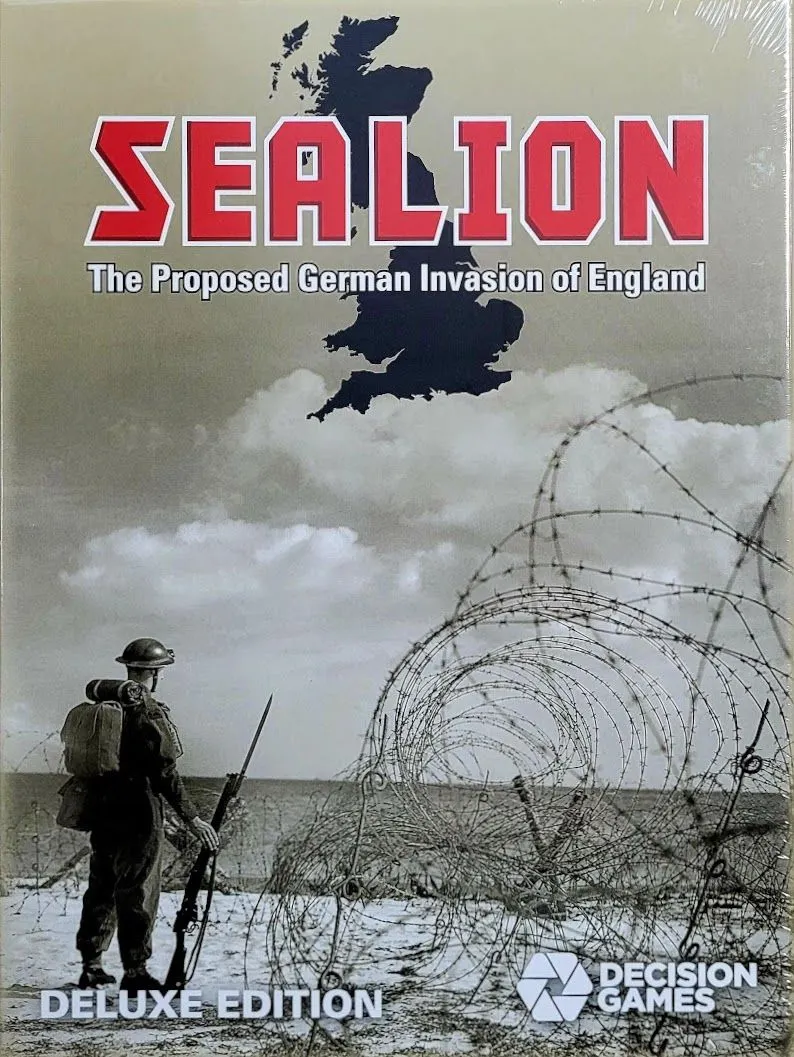
Sealion: The Proposed German Invasion of England
- 2–6 joueurs
- 180–240 min
- Complexité 3,0/5
- 2017
2011
Aide aux règles de The Battle of Lepanto
Des explications claires des tours, effets de cartes et situations litigieuses, avec des références aux sources officielles et un historique des questions sauvegardé.
Pour 1 joueur
Que voulez-vous savoir ?
Les réponses viennent du livret officiel, avec la page à vérifier.
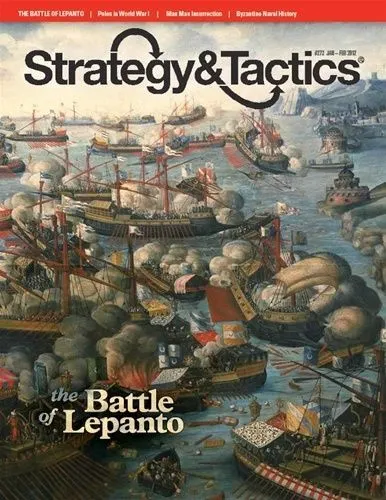
The Battle of Lepanto est un jeu de société sorti en 2011 pour 1 à 2 joueurs. Il a été conçu par Eric R. Harvey et Robert Cowling et ses principales mécaniques sont Hexagon Grid.

En anglais
The Battle of Lepanto is a two-player or multi-player (Ottoman versus Christian) operational level game, designed by Robert Cowling. The game includes 280 die-cut counters, with the each warship chit representing two ships per counter; there are three primary ships types: Galleys, Galliots and Galleasses, each with different capabilities. The colorful map features the Ionian Sea, printed with the historical set up of both sides just as the two opposing fleets were arrayed to begin battle, as well as various charts and tables for easy reference during play. The land area featured represents the peninsular areas of the Grecian mainland. The rules entail a variety of mechanics pertaining to 16th century naval combat, such as Wind Direction, Ramming, Boarding, Small-Arms Fire, Gunnery Ranges, Exhaustion, Galliot Shoreline Movement, Christian Small-Arms Advantages, Ottoman Maneuver Advantages, as well as the designations of the historical admirals in the battle, such as Don Juan, Ali Pasha, etc. The easy and quick game sequence is as follows: Movement Combat Reorientation Movement is regulated in terms of the front and back side of each warship chit. As each ship completes its movement, it is flipped from its A (Alpha) side over to its O (Omega) side (or vice versa, if they began the turn on their Omega sides). When all desired moves have been completed, the player’s remaining ships are also flipped to their O (Omega) side (or vice versa, if they began the turn on their Omega sides) to indicate the end of the entire Movement Phase. In this way, players may easily keep track of which ships have moved, and which have not, during each game turn. Victory in the game is determined by the accumulation of VPs for eliminated and damaged ships that have been inflicted by each side.
Selon le catalogue, The Battle of Lepanto se joue de 1 à 2 personnes. Cette fourchette correspond au nombre de joueurs indiqué par l’éditeur : le jeu s’installe donc pour toute taille de groupe dans cette limite. La mise en place, certaines règles et le décompte peuvent varier selon l’effectif ; vérifiez la configuration exacte dans la règle de votre édition.
The Battle of Lepanto obtient une note de complexité de 2,3 sur 5 auprès des joueurs de BoardGameGeek, ce qui en fait un jeu plutôt léger. Cette note reflète la quantité de règles, de planification et de décisions qu’exige une partie typique. Prévoyez une explication plus longue pour les jeux exigeants et utilisez un guide de préparation avant la soirée.
The Battle of Lepanto appartient à ces catégories : Wargame, Nautical et Renaissance. Ses principales mécaniques sont Hexagon Grid. Les catégories décrivent le thème et l’univers d’un jeu, tandis que les mécaniques décrivent ce que les joueurs font réellement pendant leur tour. Chaque mécanique mène à une page du catalogue avec des jeux similaires.
Les auteurs crédités pour The Battle of Lepanto sont : Eric R. Harvey et Robert Cowling. Ces crédits proviennent des données publiées du jeu et désignent les personnes responsables de sa conception, et non les illustrateurs ou les éditeurs. Les pages d’auteurs sur MeepleRules regroupent les autres titres des mêmes auteurs, ce qui est utile lorsqu’un jeu vous plaît et que vous en cherchez de similaires.
Le catalogue présente The Battle of Lepanto comme un jeu de base. Il se joue seul avec le matériel contenu dans la boîte et ne nécessite aucun autre titre. Les extensions, s’il en existe, y ajoutent du contenu ou des règles et sont répertoriées séparément dans le catalogue, avec un lien vers ce jeu de base.