
- Rang BGG
- BGG #12 182
- Note BGG
- 7,4
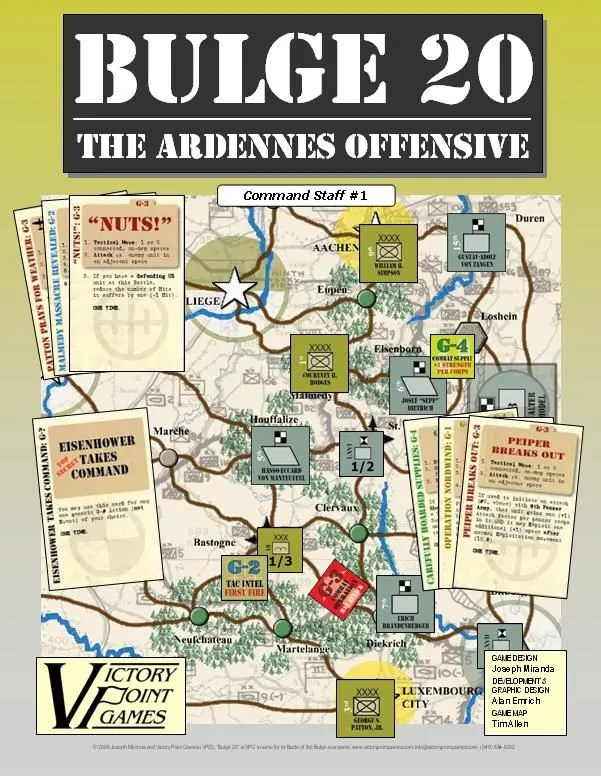
Bulge 20: The Ardennes Offensive
- 2 joueurs
- 75 min
- Complexité 2,3/5
- 2009
2011
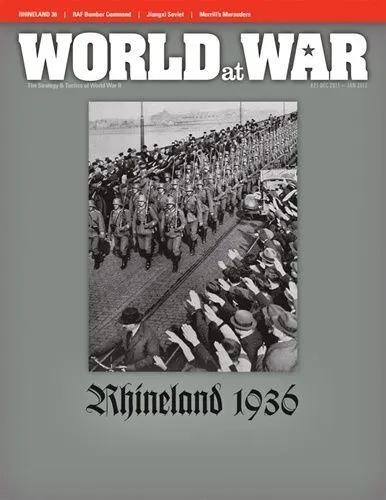
Aide aux règles de The Rhineland War, 1936-37
Des explications claires des tours, effets de cartes et situations litigieuses, avec des références aux sources officielles et un historique des questions sauvegardé.
Pour 1 joueur
Que voulez-vous savoir ?
Les réponses viennent du livret officiel, avec la page à vérifier.
The Rhineland War, 1936-37 est un jeu de société sorti en 2011 pour 1 à 2 joueurs, avec des parties de 240 minutes et à partir de 12 ans. Il a été conçu par Joseph Miranda et ses principales mécaniques sont Hexagon Grid.

En anglais
The Rhineland Crisis War, 1936-37, designed by Joseph Miranda,is a strategic-level simulation of intermediate complexity that covers an alternative World War II in Europe, one that began in 1936. The assumption is, when Hitler ordered his army to march into the Rhineland, the Allied powers, instead of appeasing him, ordered their armed forces to resist. The ensuing chain of events leads to the war expanding throughout Europe. A war fought at that time would’ve found all European militaries woefully unprepared. Central to the play of the game are its “crisis chits.” They represent various diplomatic and military events that could bring other powers into the war. Players pick crisis chits depending on the number of crisis hexes (printed on the map) they control. The more such hexes they control, the greater the chances they have of gaining more allies. At the same time, grabbing too much territory can lead to political collapse at home, as domestic foes work to undermine your power before the conflict explodes into a wider war. Rhineland Crisis War is a two-player game. One player commands the Axis, controlling Germany and the countries that choose to align with Berlin. The other is the Allied player, who controls the anti-German forces. Each hex on the map represents 62 miles (100 km) from side to opposite side. Each full game turn represents one month. Units of maneuver are corps and armies. Special rules cover: crises, political collapse, reinforcements, replacements, terror bombing, railroads, fog of war, airpower, naval and amphibious operations, weather, neutrals, the Soviet Union, armistice and surrender, the Spanish Civil War, expeditionary forces, airborne units, air transport, fifth columns, alpine units, and anti-aircraft units. The turn sequence is as follows. I. Axis Player Turn A. Axis Mobilization Phase B. Axis Terror Bombing Phase C. Axis Movement Phase D. Axis Combat Phase E. Axis Rally Phase F. Axis Crisis Phase II. Allied Player Turn A. Allied Mobilization Phase B. Allied Terror Bombing Phase C. Allied Movement Phase D. Allied Combat Phase E. Allied Rally Phase. F. Allied Crisis Phase III. End of Turn Phase
Selon le catalogue, The Rhineland War, 1936-37 se joue de 1 à 2 personnes. Cette fourchette correspond au nombre de joueurs indiqué par l’éditeur : le jeu s’installe donc pour toute taille de groupe dans cette limite. La mise en place, certaines règles et le décompte peuvent varier selon l’effectif ; vérifiez la configuration exacte dans la règle de votre édition.
La durée indiquée pour The Rhineland War, 1936-37 est de 240 minutes, selon l’estimation de l’éditeur pour une partie complète. La durée réelle dépend du groupe, de l’effectif et de la connaissance des règles : les premières parties sont plus longues, les groupes expérimentés terminent plus vite. Mise en place et explication des règles ne sont pas comprises.
Le catalogue indique The Rhineland War, 1936-37 à partir de 12 ans. C’est la recommandation de l’éditeur ; elle tient compte de la lecture nécessaire, de la complexité des règles et des petits composants, pas seulement du thème. Les plus jeunes peuvent souvent participer avec l’aide d’un adulte : vérifiez l’âge indiqué sur votre édition et tenez compte de l’expérience de votre groupe.
The Rhineland War, 1936-37 obtient une note de complexité de 3,2 sur 5 auprès des joueurs de BoardGameGeek, ce qui en fait un jeu de complexité moyenne. Cette note reflète la quantité de règles, de planification et de décisions qu’exige une partie typique. Prévoyez une explication plus longue pour les jeux exigeants et utilisez un guide de préparation avant la soirée.
The Rhineland War, 1936-37 appartient à ces catégories : Wargame et World War II. Ses principales mécaniques sont Hexagon Grid. Les catégories décrivent le thème et l’univers d’un jeu, tandis que les mécaniques décrivent ce que les joueurs font réellement pendant leur tour. Chaque mécanique mène à une page du catalogue avec des jeux similaires.
Les auteurs crédités pour The Rhineland War, 1936-37 sont : Joseph Miranda. Ces crédits proviennent des données publiées du jeu et désignent les personnes responsables de sa conception, et non les illustrateurs ou les éditeurs. Les pages d’auteurs sur MeepleRules regroupent les autres titres des mêmes auteurs, ce qui est utile lorsqu’un jeu vous plaît et que vous en cherchez de similaires.
Le catalogue présente The Rhineland War, 1936-37 comme un jeu de base. Il se joue seul avec le matériel contenu dans la boîte et ne nécessite aucun autre titre. Les extensions, s’il en existe, y ajoutent du contenu ou des règles et sont répertoriées séparément dans le catalogue, avec un lien vers ce jeu de base.