
- Rang BGG
- BGG #24
- Note BGG
- 8,1
7 Wonders Duel
- 2 joueurs
- 30 min
- Complexité 2,2/5
- 2015
2018
Aide aux règles de The Sands of Time
Des explications claires des tours, effets de cartes et situations litigieuses, avec des références aux sources officielles et un historique des questions sauvegardé.
Pour 2 joueurs
Que voulez-vous savoir ?
Les réponses viennent du livret officiel, avec la page à vérifier.
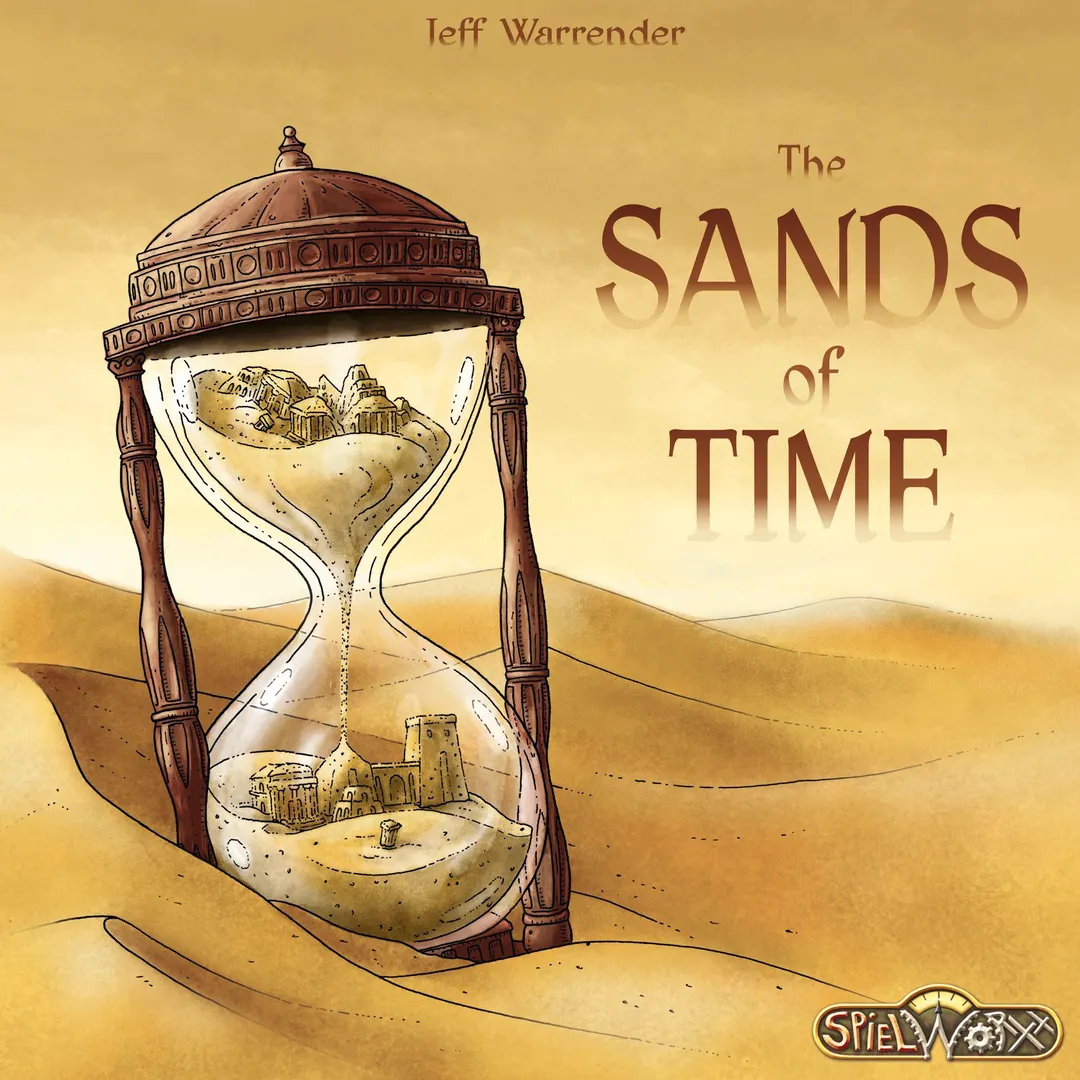
The Sands of Time est un jeu de société sorti en 2018 pour 2 à 5 joueurs, avec des parties de 120 à 180 minutes et à partir de 12 ans. Il a été conçu par Jeff Warrender et ses principales mécaniques sont Hand Management, Income et Dice Rolling.



En anglais
The sands of time sweep across the ages, burying the cities and monuments of civilizations, leaving only whispers of the glory of ancient societies. The Sands of Time is a civilization-building game set loosely in classical antiquity, on a board inspired by a Roman-era map. Each player rules over a civilization in the ancient world, attempting exploits that will be remembered long after the civilization has withered. Each turn, players will select two action cards, which represent edicts delivered by the player to his populace, announcing what aspects of the empire he/she wishes to address: building structures, implementing advances, migrating population, initiating combat, annexing new territories, instituting reforms to manage the empire’s unrest, building trade routes, demanding tribute, and -- crucially –- recording Chronicles about his/her reign. The central element of the game's scoring system, Chronicle cards represent claims of great accomplishments. To score a chronicle, the player must have a "heritage" level commensurate with the claim he/she is making: claims of great works will only be believed and perpetuated if the player's civilization has established a reputation in the relevant civilization category (cultural, civil, or political). Actions generally require the payment of resources (crops or gold), and action costs correlate either to the player's empire size or the player's Unrest level. Unrest increases when a player's territories become too crowded, or when a player re-uses an action card, or when a player voluntarily presses on his populace to squeeze additional productivity out of them. Managing Unrest is a central concern for the player throughout the game. Players must strike the right balance between competition and peaceful interaction with their neighbors, to propel their civilizations from insignificant, forgettable kingdoms into empires worthy of the attention of historians!
Selon le catalogue, The Sands of Time se joue de 2 à 5 personnes. Cette fourchette correspond au nombre de joueurs indiqué par l’éditeur : le jeu s’installe donc pour toute taille de groupe dans cette limite. La mise en place, certaines règles et le décompte peuvent varier selon l’effectif ; vérifiez la configuration exacte dans la règle de votre édition.
La durée indiquée pour The Sands of Time est de 120 à 180 minutes, selon l’estimation de l’éditeur pour une partie complète. La durée réelle dépend du groupe, de l’effectif et de la connaissance des règles : les premières parties sont plus longues, les groupes expérimentés terminent plus vite. Mise en place et explication des règles ne sont pas comprises.
Le catalogue indique The Sands of Time à partir de 12 ans. C’est la recommandation de l’éditeur ; elle tient compte de la lecture nécessaire, de la complexité des règles et des petits composants, pas seulement du thème. Les plus jeunes peuvent souvent participer avec l’aide d’un adulte : vérifiez l’âge indiqué sur votre édition et tenez compte de l’expérience de votre groupe.
The Sands of Time obtient une note de complexité de 4,2 sur 5 auprès des joueurs de BoardGameGeek, ce qui en fait un jeu exigeant. Cette note reflète la quantité de règles, de planification et de décisions qu’exige une partie typique. Prévoyez une explication plus longue pour les jeux exigeants et utilisez un guide de préparation avant la soirée.
The Sands of Time appartient à ces catégories : Ancient et Civilization. Ses principales mécaniques sont Hand Management, Income et Dice Rolling. Les catégories décrivent le thème et l’univers d’un jeu, tandis que les mécaniques décrivent ce que les joueurs font réellement pendant leur tour. Chaque mécanique mène à une page du catalogue avec des jeux similaires.
Les auteurs crédités pour The Sands of Time sont : Jeff Warrender. Ces crédits proviennent des données publiées du jeu et désignent les personnes responsables de sa conception, et non les illustrateurs ou les éditeurs. Les pages d’auteurs sur MeepleRules regroupent les autres titres des mêmes auteurs, ce qui est utile lorsqu’un jeu vous plaît et que vous en cherchez de similaires.
Le catalogue présente The Sands of Time comme un jeu de base. Il se joue seul avec le matériel contenu dans la boîte et ne nécessite aucun autre titre. Les extensions, s’il en existe, y ajoutent du contenu ou des règles et sont répertoriées séparément dans le catalogue, avec un lien vers ce jeu de base.