

- Posizione BGG
- BGG #17.499
- Valutazione BGG
- 6,5
Tri-Tactics
- 2 giocatori
- 240 min
- Complessità 2,5/5
- 1932
1919
Aiuto con le regole di Dover Patrol
Spiegazioni chiare di turni, effetti delle carte e situazioni dubbie, con riferimenti alle fonti ufficiali e cronologia delle domande salvata.
Per 2 giocatori
Cosa vuoi sapere?
Le risposte vengono dal regolamento ufficiale, con la pagina da verificare.
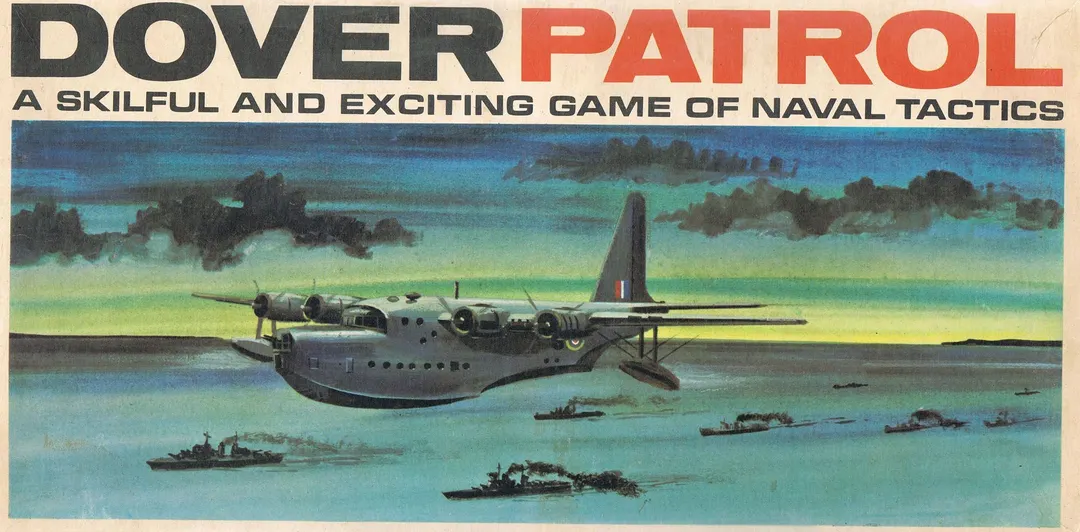
Dover Patrol è un gioco da tavolo pubblicato nel 1919 per 2 giocatori, con partite da 180 minuti e dai 12 anni in su. È stato ideato da Harry Gibson e le sue meccaniche principali sono Square Grid, Memory e Grid Movement.



In inglese
This game DOVER PATROL by Harry Gibson is a wonderful Naval themed and early version of a type of hidden tactics game of skill. It was sold alongside the similar L'Attaque and Aviation: The Aerial Tactics Game of Attack and Defence and a more complicated game called Tri-Tactics designed as an incorporation of all three, by Gibsons and marketed together at the time as Series: The Big Four (Gibsons). Note: L'Attaque was patented in 1909 in France by Mademoiselle Hermance Edan, the U.K. distribution rights for which were acquired in 1925 by Gibsons. Dover Patrol was launched in 1911, whereas the original H. P. Gibson & Sons company was registered in 1919. Prior to that, The International Card Company operated between 1903 and 1919, when Harry Percy Gibson purchased ICC to form his company. Whether Harry Gibson designed the game is therefore open to some doubt. The game play of Dover Patrol is very much like L'Attaque, which forms the basis of the near-identical game Stratego by Jumbo, published in 1946 after World War II when the patent would have expired. Gibsons themselves had to effectively ‘start again’ around that time having had their premises destroyed in the Blitz. The board, which supposedly represents an area of sea, is superimposed with a rectangular grid. A Base is shown on two of the opposite edges of the board. The area round each base is protected by a harbour wall. Each player has a fleet of forty playing pieces. These pieces are rectangles of cardboard which stand upon plastic supports. The two sides are distinguished by the colour on the back of each card, red and blue in this case. The fronts of the cards depict various ships, mines and a flying boat. Each piece has a printed value from 1 for a Patrol Vessel to 10 for the Flagship. These values represent the relative strength of each ship and also indicate the type of ship; battle cruisers, light cruisers, etc.. The ships are also named, H.M.S. Lion, H.M.S. Glasgow and so on. The object of the game is to capture the enemy Flag and transport it back to one's own base while still retaining possession of one's own Flag. To start the game, the players place their Flag on their Base and then set up their pieces, one per rectangle, on their own side of the board and with the backs of the cards facing the opponent. In turn the players move a piece one space orthogonally until two opposing pieces are back-to-back. The moving player may then call 'Attack', the two relevant pieces are then revealed and the one with the lower value is sunk and removed from the board. In addition to the fighting ships, the players have a number of auxiliary pieces. Mines will automatically blow up virtually all ships that are moved into an attacking position, regardless of whether the owner of the moving ship attacks or not. Once placed, mines may not be moved. Only the mine sweepers can destroy mines. The mine layers act as floating mines. They can be moved but may not attack, but have the same effect upon enemy shipping as a mine. Only the destroyers can sink them. Submarines have a marauding role and can sink all ships except mine layers and MTB's. The good old flying boat has a very important role as it is principally used to capture the enemy flag because it can fly over the harbour walls. Only MTB's and destroyers can shoot it down. When the opposing flag is captured, it is clipped to the top of the capturing piece and thus its whereabouts are known to all. The Flag can be transferred to any other piece standing orthogonally adjacent to the piece which is transporting it. It is a fairly straightforward game to play, though tactics can well be employed, particularly in the setting up phase. Similar to: L'Attaque Aviation: The Aerial Tactics Game of Attack and Defence Tri-Tactics Stratego
Secondo il catalogo, Dover Patrol supporta 2 giocatori. È il numero di giocatori indicato dall’editore, quindi il gioco è pensato esattamente per quel numero di partecipanti. Le varianti per gruppi di altre dimensioni, se esistono, sono descritte nel regolamento della tua edizione: consultalo prima di preparare una configurazione diversa.
La durata indicata per Dover Patrol è di 180 minuti, la stima dell’editore per una partita completa. La durata effettiva dipende dal gruppo, dal numero di giocatori e dalla conoscenza delle regole: le prime partite durano di più, i gruppi esperti finiscono prima. Preparazione e spiegazione delle regole non sono comprese nella stima.
Il catalogo indica Dover Patrol dai 12 anni in su. È la raccomandazione dell’editore e tiene conto della lettura richiesta, della complessità delle regole e dei componenti piccoli, non solo del tema. I più giovani spesso possono giocare con l’aiuto di un adulto: controlla l’età consigliata sulla tua edizione e l’esperienza del tuo gruppo con i giochi da tavolo.
Dover Patrol ha un punteggio di complessità di 2,1 su 5 secondo i giocatori di BoardGameGeek, il che lo rende un gioco piuttosto leggero. Il punteggio riflette quanta conoscenza delle regole, pianificazione e decisioni richiede una partita tipica. I giochi impegnativi richiedono una prima spiegazione più lunga, quindi conviene usare una guida di preparazione.
Dover Patrol appartiene a queste categorie: Wargame, Nautical e World War II. Le sue meccaniche principali sono Square Grid, Memory e Grid Movement. Le categorie descrivono il tema e l’ambientazione di un gioco, mentre le meccaniche descrivono ciò che i giocatori fanno davvero nel proprio turno. Ogni meccanica porta a una pagina del catalogo con giochi simili.
Gli autori accreditati di Dover Patrol sono: Harry Gibson. Questi crediti provengono dai dati pubblicati del gioco e indicano le persone responsabili della sua progettazione, non gli illustratori o gli editori. Le pagine degli autori su MeepleRules raccolgono altri titoli degli stessi autori, utili quando un gioco ti piace e ne cerchi di simili.
Il catalogo classifica Dover Patrol come gioco base. Si gioca da solo con i componenti presenti nella scatola e non richiede altri titoli. Le espansioni, se esistono, aggiungono nuovo contenuto o nuove regole e sono elencate separatamente nel catalogo con un collegamento a questo gioco base.