

- Posizione BGG
- BGG #13.954
- Valutazione BGG
- 8,3
Burnside Takes Command
- 2 giocatori
- 120 min
- Complessità 3,2/5
- 2003
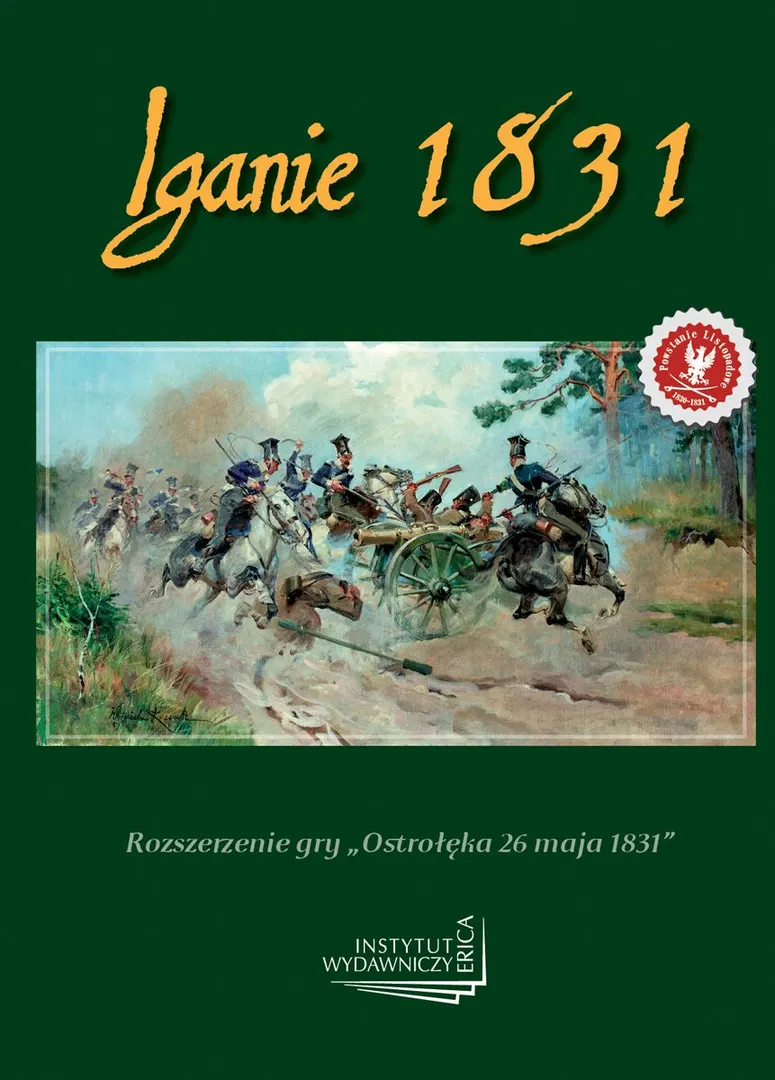
Aiuto con le regole di Iganie 1831
Spiegazioni chiare di turni, effetti delle carte e situazioni dubbie, con riferimenti alle fonti ufficiali e cronologia delle domande salvata.
Cosa vuoi sapere?
Le risposte vengono dal regolamento ufficiale, con la pagina da verificare.
Iganie 1831 è un’espansione di Ostroleka 26 maja 1831 pubblicata nel 2018 per 2 giocatori, con partite da 150 a 240 minuti e dai 16 anni in su. È stato ideato da Ryszard Kita e le sue meccaniche principali sono Dice Rolling, Hexagon Grid e Simulation.





In inglese
Iganie 1831 covers the battle of Iganie, one of the most brilliant victories of Poles over Russians during the November Uprising. It was fought between the Polish army commanded by General Ignacy Prądzyński and the Russian 6th Corps commanded by General Grigory Rosen. The battle was the final part of the Polish Spring Offensive. The goal of the operation was Russian army’s main depot in Siedlce, which supplied all Russian forces fighting in the Kingdom of Poland. After two first successful for Poles battles at Wawer and Dębe Wielkie (both on March 31st 1831) the pursuit for the defeated Russians was stopped. It allowed them to control chaos which appeared during the retreat, reorganize their units and bring reinforcements. The battle of Iganie was the last try to broke Russian 6th Corps near Siedlce and capture the Russian main depot. Planned by General Prądzyński attack of three groups approaching from three different directions failed becaue of the lack of operational coordination and poor command of General Jan Skrzynecki. Two groups which had to cooperate with Prądzyński’s maneuver group did not appear during the battle and has come to the battlefield in the late evening or the next day. This caused that Prądzyński’s forces had to fight outnumbered by Russians. Russian forces also were divided into parts. General Rosen was bound by the orders from Field Marshal Ivan Diebitsch which urged him first of all to defend Siedlce and keep defensive position on the eastern bank of the Muchawiec river. That gave Prądzyński chance to beat the enemy situated on the western bank of the Muchawiec river before Russians combine all their units and destroy his group. The decisive moment of the battle was when Russians started to move battalions from the eastern bank of the Muchawiec river to its western bank where the battle was taking place. Prądzyński decided to seize the only bridge on the river. During terrific bayonet fight Polish 5th Line Infantry Regiment completely broke the elite Russian Jaeger Brigade (13th & 14th Jaeger Regiments), called Warna Lions (because of their fame gained in the recently finished war with Turkey), and captured the bridge. This cut off Russian units on the western bank of the river from the rest of their comrades. Finally Poles won the battle. The Russian losses are estimated between 3 600 – 4 500 soldiers, while Polish one numbered 400 – 500 soldiers. Tactical success of Poles was undoubted, however they did not decide to attack through the swampy river Muchawiec also because of the informations that the main Russian army is near and would join the Rosen’s forces the next day. The game is an expansion for Ostrołęka 26 maja 1831. It means that Iganie 1831 uses system rules (also charts & tables) and markers which are in Ostrołęka 26 maja 1831. There are two scenarios in the game: the historical and the alternative one. The first one in more detailed way simulates the battle and all background of it, especially specific events and operational situation of both sides. The alternative scenario is more flexible, giving the players more possibilities to create their own strategy and modify the course of the battle. However this scenario also stays in historical frames. Although the game bases on Ostrołęka 26 maja 1831 system rules, there are few new rules for this battle only. The most important are command points and changeable phase order. In the rule & scenario book you will find also a detailed historical article on the battle and some additional system rules for Ostrołęka 26 maja 1831 (especially an integrated table of artillery fire with round-shot and granades). The playing time varies from 2,5 to 4 hours, however there is an autowin option which can end the game faster. Components (all packed in ziplock): - One mapsheet 42 x 30 cm - 108 die-cut counters - One rulebook and scenariobook (both in one book) - One sheet with information on Russian artillery modifiers - Two sheets whit unit rosters (for Poles and Russians) - One sheet with turn track and command points tracks - One sheet with mapsheet legenda
Secondo il catalogo, Iganie 1831 supporta 2 giocatori. È il numero di giocatori indicato dall’editore, quindi il gioco è pensato esattamente per quel numero di partecipanti. Le varianti per gruppi di altre dimensioni, se esistono, sono descritte nel regolamento della tua edizione: consultalo prima di preparare una configurazione diversa.
La durata indicata per Iganie 1831 è di 150–240 minuti, la stima dell’editore per una partita completa. La durata effettiva dipende dal gruppo, dal numero di giocatori e dalla conoscenza delle regole: le prime partite durano di più, i gruppi esperti finiscono prima. Preparazione e spiegazione delle regole non sono comprese nella stima.
Il catalogo indica Iganie 1831 dai 16 anni in su. È la raccomandazione dell’editore e tiene conto della lettura richiesta, della complessità delle regole e dei componenti piccoli, non solo del tema. I più giovani spesso possono giocare con l’aiuto di un adulto: controlla l’età consigliata sulla tua edizione e l’esperienza del tuo gruppo con i giochi da tavolo.
Iganie 1831 ha un punteggio di complessità di 3,4 su 5 secondo i giocatori di BoardGameGeek, il che lo rende un gioco di media complessità. Il punteggio riflette quanta conoscenza delle regole, pianificazione e decisioni richiede una partita tipica. I giochi impegnativi richiedono una prima spiegazione più lunga, quindi conviene usare una guida di preparazione.
Iganie 1831 appartiene a queste categorie: Wargame, Expansion for Base-game e Post-Napoleonic. Le sue meccaniche principali sono Dice Rolling, Hexagon Grid e Simulation. Le categorie descrivono il tema e l’ambientazione di un gioco, mentre le meccaniche descrivono ciò che i giocatori fanno davvero nel proprio turno. Ogni meccanica porta a una pagina del catalogo con giochi simili.
Gli autori accreditati di Iganie 1831 sono: Ryszard Kita. Questi crediti provengono dai dati pubblicati del gioco e indicano le persone responsabili della sua progettazione, non gli illustratori o gli editori. Le pagine degli autori su MeepleRules raccolgono altri titoli degli stessi autori, utili quando un gioco ti piace e ne cerchi di simili.
Il catalogo classifica Iganie 1831 come espansione di Ostroleka 26 maja 1831. Le espansioni aggiungono contenuti, regole o scenari al gioco base e di solito non si possono giocare da sole, quindi per usarla ti serve Ostroleka 26 maja 1831. Controlla che la tua edizione di Ostroleka 26 maja 1831 sia compatibile, perché alcune espansioni sono state riviste tra un’edizione e l’altra.