
- Posizione BGG
- BGG #15.226
- Valutazione BGG
- 7,2
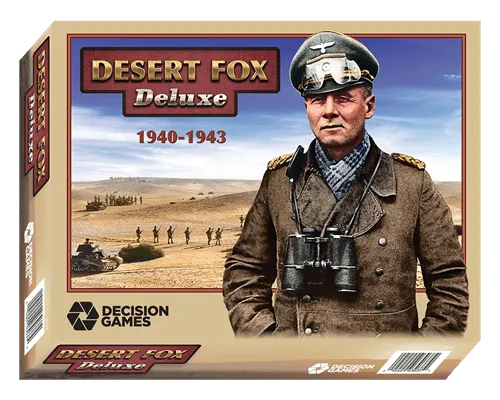
Desert Fox Deluxe
- 2 giocatori
- 180–2880 min
- Complessità 3,1/5
- 2016
2013
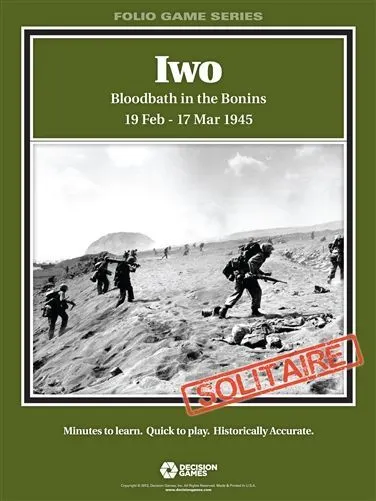
Aiuto con le regole di Iwo: Bloodbath in the Bonins 19 Feb – 17 Mar 1945
Spiegazioni chiare di turni, effetti delle carte e situazioni dubbie, con riferimenti alle fonti ufficiali e cronologia delle domande salvata.
Per 1 giocatore
Cosa vuoi sapere?
Le risposte vengono dal regolamento ufficiale, con la pagina da verificare.
Iwo: Bloodbath in the Bonins 19 Feb – 17 Mar 1945 è un gioco da tavolo pubblicato nel 2013 per 1–2 giocatori, con partite da 60 a 120 minuti e dai 12 anni in su. È stato ideato da Chris Perello e le sue meccaniche principali sono Dice Rolling, Hexagon Grid e Simulation.




In inglese
Iwo, Bloodbath in the Bonins 19 Feb – 17 Mar 1945, is a solitaire board-wargame using a modification of the Series: Fire & Movement combat system (Decision Games). Developed to portray the mechanized battlefields of a later generation, F&M stresses the use of fire support to generate breakthroughs, followed by a rapid penetration by mobile reserves. Iwo Jima was a critical point on the flight path of US bombers from their Saipan bases to their Japanese targets. The island would be a refuge for malfunctioning or damaged bombers coming or going. An obvious target for a US amphibious assault, the Japanese had reinforced the garrison and dug miles of tunnels the length and breadth of the island. Their goal was to inflict maximum casualties on the Americans to force them to reconsider the seemingly inevitable invasion of Japan. The resulting battle was brutal, even by the standards of the Pacific War. On Iwo, the Japanese fought from within an extensive tunnel network, neutralizing the usual fire support effects and limiting maneuver to the US approach to each fortified position. The Japanese units are hidden, their strength revealed only at the instant of combat, so the US player must mass against a position to play it safe, using fire support to suppress the defenders and so reduce attacker casualties (a key victory condition]. On the other hand, the US player must clear the island to win, and time is not on his side. Sooner or later he must take risks to push the battle forward. Taking some terrain, like Mount Suribachi, is critical to weakening the island's defense. The Japanese defense is handled by a short, simple set of priorities when conducting Japanese bombardments, punctuated with an occasional Banzai charge. A weak attack against a bunker may only displace the defenders to another position, where they will have to be attacked again. The rules include an option for a two-player game, with a second player handling the Japanese forces. Note: This is a SOLITAIRE game with two-player rules included. Game Scale: Game Turn: 2 days Hex: 350 yards / 300 meters Units: Company to Battalion Game Inventory: One 17 x 22" full color map One dual-side printed countersheet (100 1/2" counters) One 4-page Iwo rulebook One 8-page Fire & Movement Folio Standard rulebook Solitaire Playability: Very High Complexity Level: Low Players: 1 (Solitaire game, but 2 or more can play) Playing Time: 1-2 hours Players will need to include one 6-sided die for play.
Secondo il catalogo, Iwo: Bloodbath in the Bonins 19 Feb – 17 Mar 1945 supporta da 1 a 2 giocatori. L’intervallo corrisponde al numero di giocatori indicato dall’editore, quindi il gioco si può preparare per qualsiasi gruppo entro quei limiti. Preparazione, alcune regole e punteggio possono comunque variare in base al numero di giocatori: controlla la configurazione esatta nel regolamento della tua edizione.
La durata indicata per Iwo: Bloodbath in the Bonins 19 Feb – 17 Mar 1945 è di 60–120 minuti, la stima dell’editore per una partita completa. La durata effettiva dipende dal gruppo, dal numero di giocatori e dalla conoscenza delle regole: le prime partite durano di più, i gruppi esperti finiscono prima. Preparazione e spiegazione delle regole non sono comprese nella stima.
Il catalogo indica Iwo: Bloodbath in the Bonins 19 Feb – 17 Mar 1945 dai 12 anni in su. È la raccomandazione dell’editore e tiene conto della lettura richiesta, della complessità delle regole e dei componenti piccoli, non solo del tema. I più giovani spesso possono giocare con l’aiuto di un adulto: controlla l’età consigliata sulla tua edizione e l’esperienza del tuo gruppo con i giochi da tavolo.
Iwo: Bloodbath in the Bonins 19 Feb – 17 Mar 1945 ha un punteggio di complessità di 2,5 su 5 secondo i giocatori di BoardGameGeek, il che lo rende un gioco piuttosto leggero. Il punteggio riflette quanta conoscenza delle regole, pianificazione e decisioni richiede una partita tipica. I giochi impegnativi richiedono una prima spiegazione più lunga, quindi conviene usare una guida di preparazione.
Iwo: Bloodbath in the Bonins 19 Feb – 17 Mar 1945 appartiene a queste categorie: Wargame e World War II. Le sue meccaniche principali sono Dice Rolling, Hexagon Grid e Simulation. Le categorie descrivono il tema e l’ambientazione di un gioco, mentre le meccaniche descrivono ciò che i giocatori fanno davvero nel proprio turno. Ogni meccanica porta a una pagina del catalogo con giochi simili.
Gli autori accreditati di Iwo: Bloodbath in the Bonins 19 Feb – 17 Mar 1945 sono: Chris Perello. Questi crediti provengono dai dati pubblicati del gioco e indicano le persone responsabili della sua progettazione, non gli illustratori o gli editori. Le pagine degli autori su MeepleRules raccolgono altri titoli degli stessi autori, utili quando un gioco ti piace e ne cerchi di simili.
Il catalogo classifica Iwo: Bloodbath in the Bonins 19 Feb – 17 Mar 1945 come gioco base. Si gioca da solo con i componenti presenti nella scatola e non richiede altri titoli. Le espansioni, se esistono, aggiungono nuovo contenuto o nuove regole e sono elencate separatamente nel catalogo con un collegamento a questo gioco base.