
- Posizione BGG
- BGG #2078
- Valutazione BGG
- 7,3
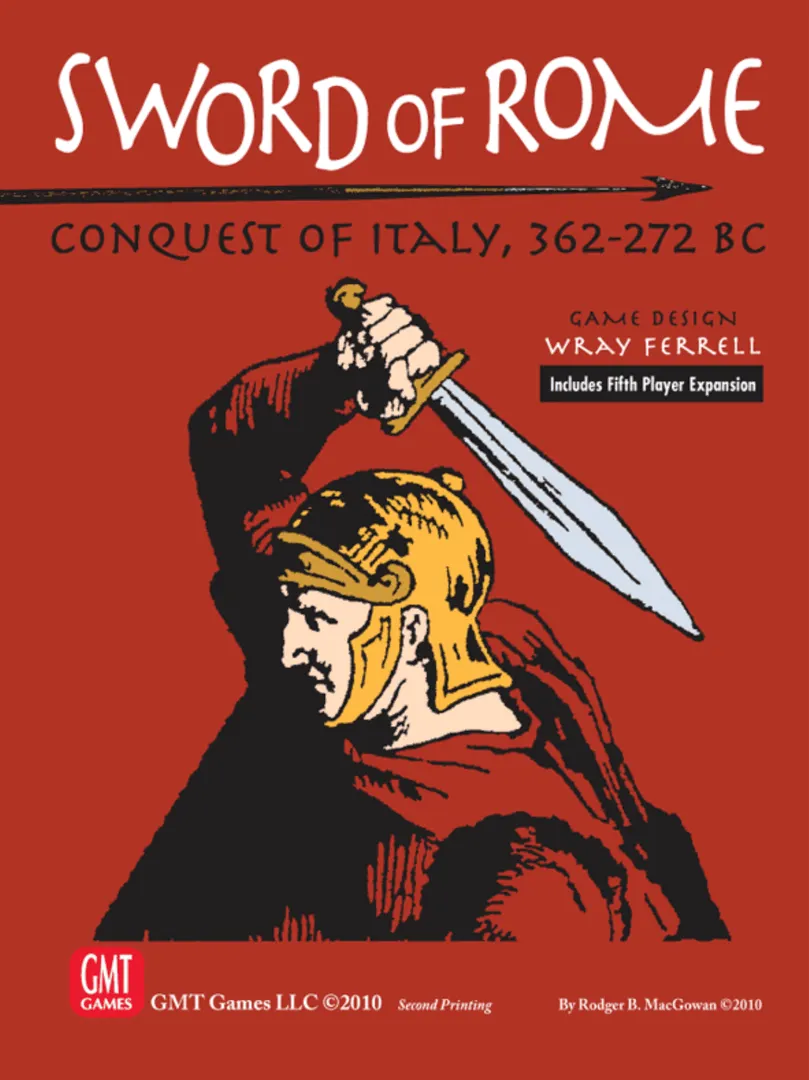
Sword of Rome: Conquest of Italy, 362-272 BC
- 2–5 giocatori
- 360 min
- Complessità 3,3/5
- 2004
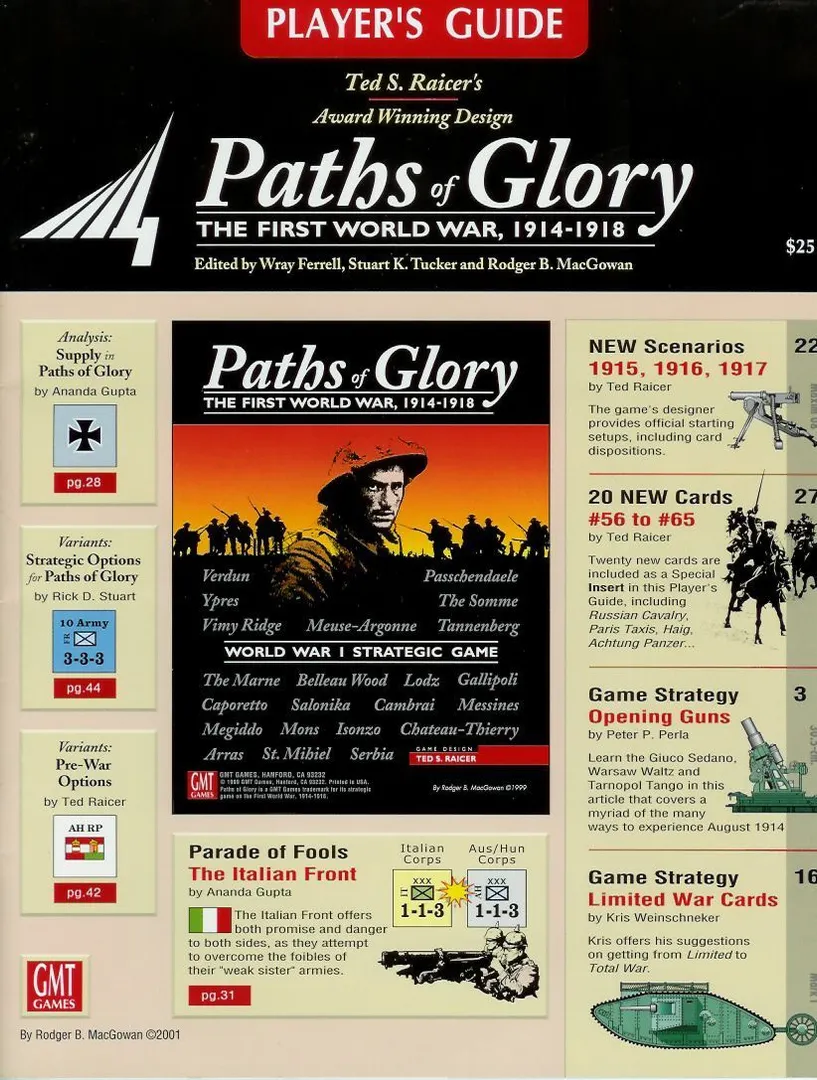
Aiuto con le regole di Paths of Glory: Player's Guide
Spiegazioni chiare di turni, effetti delle carte e situazioni dubbie, con riferimenti alle fonti ufficiali e cronologia delle domande salvata.
Cosa vuoi sapere?
Le risposte vengono dal regolamento ufficiale, con la pagina da verificare.
Paths of Glory: Player's Guide è un’espansione di Paths of Glory pubblicata nel 2001 per 2 giocatori e dai 14 anni in su. È stato ideato da Ted Raicer, Rodger B. MacGowan, Stuart K. Tucker e Wray Ferrell e le sue meccaniche principali sono Dice Rolling, Simulation e Campaign / Battle Card Driven.




In inglese
The Player's Guide contains articles that describe tips, tactics, strategies, and variants available for Paths of Glory. In addition to the 48-page magazine, the Player's Guide includes 20 new cards and a 1/4 sheet of additional counters. Recent deluxe editions of the base game (6th edition 2018 and later) already contain the "optional counters first released in the POG Player’s Guide in 2002" and the "20 Optional Cards from the POG Player’s Guide". (from GMT Games's website:) Features The Paths of Glory Player's Guide is designed as an expansion kit for your enjoyment of this wonderful game, with exciting and informative articles featuring strategies for you to employ, new scenarios and variants, new playing cards, in-depth analysis of key features in the game, and so much more. Executive Editor Wray Ferrell has put together an excellent team of authors and Managing Editor Stuart K. Tucker's handsome layout design makes reading and utilizing the Player's Guide a pleasure. Contents and Authors Strategy The Opening Guns (Peter P. Perla) - Learn the Giuco Sedano, Warsaw Waltz and Tarnopol Tango in this article that covers a myriad of the many ways to experience August 1914 in Paths of Glory. Goin' Mobile (Kris Weinschneker) - Play of the Mobilization deck involves some critical choices about War Status and Reinforcements. Limited War Cards (Kris Weinschneker) - Continuing his discussion of the card decks, Kris offers his suggestions on getting from "Limited" to "Total" war quickly. Total War Cards (Kris Weinschneker) - Wrapping up his review of the cards, Kris offers some endgame card play suggestions. New Scenarios and Cards New Scenarios (Ted Raicer) - The game's designer provides the official starting setups, including card dispositions, for games begun in 1915, 1916, or 1917. Adding More Paths to Your Deck (Ted Raicer) - Twenty new cards are included as an insert to this magazine. Here are their historical bases. Analysis PoG Supply (Ananda Gupta) - The disruption of supply lines can cause the collapse of a front. Each theater has a number of key locations in the defense of those vital supply lines. Parade of Fools: The Italian Front (Ananda Gupta) - The Italian front offers both promise and danger to both sides, as they attempt to overcome the foibles of their "weak sister" armies. Optional Rules: Assessing the Balance (Ananda Gupta) - How effective are the mainstream optional rules at establishing a balanced game? Cybergaming PBEM Primer (Kris Weinschneker) - A primer on playing Paths of Glory via Play By Email. Variants Variant Cards (Tod Reiser) - More card ideas to consider adding to your deck. Pre-War Options (Ted Raicer) - For those wanting to vary the starting force setup, here are some ideas for each major nation. Strategic Options (Rick D. Stuart) - Rick provides us with more options to alter game play - some affecting the setup, some used later in the game. Historical Variants (Brad Martin) - For those seeking to experiment with history and game balance, here are more variant rule ideas.
Secondo il catalogo, Paths of Glory: Player's Guide supporta 2 giocatori. È il numero di giocatori indicato dall’editore, quindi il gioco è pensato esattamente per quel numero di partecipanti. Le varianti per gruppi di altre dimensioni, se esistono, sono descritte nel regolamento della tua edizione: consultalo prima di preparare una configurazione diversa.
Il catalogo indica Paths of Glory: Player's Guide dai 14 anni in su. È la raccomandazione dell’editore e tiene conto della lettura richiesta, della complessità delle regole e dei componenti piccoli, non solo del tema. I più giovani spesso possono giocare con l’aiuto di un adulto: controlla l’età consigliata sulla tua edizione e l’esperienza del tuo gruppo con i giochi da tavolo.
Paths of Glory: Player's Guide ha un punteggio di complessità di 2,9 su 5 secondo i giocatori di BoardGameGeek, il che lo rende un gioco piuttosto leggero. Il punteggio riflette quanta conoscenza delle regole, pianificazione e decisioni richiede una partita tipica. I giochi impegnativi richiedono una prima spiegazione più lunga, quindi conviene usare una guida di preparazione.
Paths of Glory: Player's Guide appartiene a queste categorie: Card Game, Wargame e Expansion for Base-game. Le sue meccaniche principali sono Dice Rolling, Simulation e Campaign / Battle Card Driven. Le categorie descrivono il tema e l’ambientazione di un gioco, mentre le meccaniche descrivono ciò che i giocatori fanno davvero nel proprio turno. Ogni meccanica porta a una pagina del catalogo con giochi simili.
Gli autori accreditati di Paths of Glory: Player's Guide sono: Ted Raicer, Rodger B. MacGowan, Stuart K. Tucker e Wray Ferrell. Questi crediti provengono dai dati pubblicati del gioco e indicano le persone responsabili della sua progettazione, non gli illustratori o gli editori. Le pagine degli autori su MeepleRules raccolgono altri titoli degli stessi autori, utili quando un gioco ti piace e ne cerchi di simili.
Il catalogo classifica Paths of Glory: Player's Guide come espansione di Paths of Glory. Le espansioni aggiungono contenuti, regole o scenari al gioco base e di solito non si possono giocare da sole, quindi per usarla ti serve Paths of Glory. Controlla che la tua edizione di Paths of Glory sia compatibile, perché alcune espansioni sono state riviste tra un’edizione e l’altra.