
- Valutazione BGG
- 7,5
Princes of the Renaissance: Expansion Bundle
- 3–6 giocatori
- 150–180 min
- Complessità 3,0/5
- 2016
2003
Aiuto con le regole di Princes of the Renaissance
Spiegazioni chiare di turni, effetti delle carte e situazioni dubbie, con riferimenti alle fonti ufficiali e cronologia delle domande salvata.
Per 3 giocatori
Cosa vuoi sapere?
Le risposte vengono dal regolamento ufficiale, con la pagina da verificare.
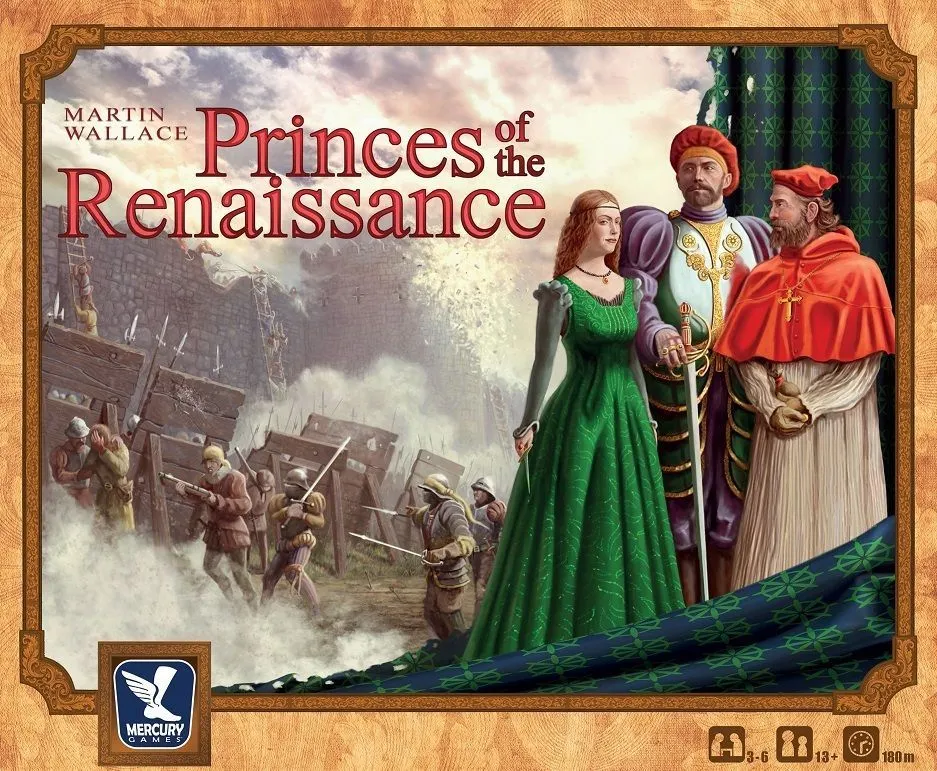
Princes of the Renaissance è un gioco da tavolo pubblicato nel 2003 per 3–6 giocatori, con partite da 180 minuti e dai 12 anni in su. È stato ideato da Martin Wallace e le sue meccaniche principali sono Variable Player Powers, Auction / Bidding e Dice Rolling.







In inglese
Princes of the Renaissance is set in Renaissance Italy. Each player takes on the role of one of the minor Condottiere princes, such as the Gonzagas or d'Estes. Then there are the big five major cities: Venice, Milan, Florence, Rome, and Naples. These are not controlled by individual players, but players will gain 'interests' in them as the game progresses. Each city has six tiles, most of which represent a famous character such as Lucrezia Borgia or Lorenzo Medici. Each tile has its own special properties that are linked to the character on the tile. Thus Cesare Borgia will help you to become more treacherous, while a Venetian merchant will increase your income. These tiles are also worth victory points, depending on the status of the city at the end of the game. A city's status will change as a result of war. When two cities fight, they will each need a Condottiere to fight for them. Players bid, using influence points, to decide who will represent each city. The outcome of the war will depend on a little luck and the size of each player's army. Each player also gets paid for fighting, no matter what the outcome of the war is. Thus players can turn influence into gold, which in turn can be used to buy more City tiles. No game on the Italian Renaissance would be complete without an element of treachery. Players can be openly treacherous by buying Treachery tiles, which will allow them to do nasty things like steal influence, bribe troops, or knock players out of an auction. However, the game allows players to be devious in other ways, that still remain legal. Making sure that a war goes the way you want it to is an important part of the game, and it is not always the player with the best army who ends up fighting. Want a city to lose, well become Condottiere for them and make sure you have a really bad army, or use Treachery tiles to bribe your own troops not to fight. At some point some player will become the Pope, which means he can form a Holy League (i.e. join one side in a battle). Want to make sure the Pope is on the 'right' side, well why not bribe him? What players negotiate over is up to them. The game does not force negotiation and works perfectly well without it, but it remains an avenue for players to explore.
Secondo il catalogo, Princes of the Renaissance supporta da 3 a 6 giocatori. L’intervallo corrisponde al numero di giocatori indicato dall’editore, quindi il gioco si può preparare per qualsiasi gruppo entro quei limiti. Preparazione, alcune regole e punteggio possono comunque variare in base al numero di giocatori: controlla la configurazione esatta nel regolamento della tua edizione.
La durata indicata per Princes of the Renaissance è di 180 minuti, la stima dell’editore per una partita completa. La durata effettiva dipende dal gruppo, dal numero di giocatori e dalla conoscenza delle regole: le prime partite durano di più, i gruppi esperti finiscono prima. Preparazione e spiegazione delle regole non sono comprese nella stima.
Il catalogo indica Princes of the Renaissance dai 12 anni in su. È la raccomandazione dell’editore e tiene conto della lettura richiesta, della complessità delle regole e dei componenti piccoli, non solo del tema. I più giovani spesso possono giocare con l’aiuto di un adulto: controlla l’età consigliata sulla tua edizione e l’esperienza del tuo gruppo con i giochi da tavolo.
Princes of the Renaissance ha un punteggio di complessità di 3,5 su 5 secondo i giocatori di BoardGameGeek, il che lo rende un gioco di media complessità. Il punteggio riflette quanta conoscenza delle regole, pianificazione e decisioni richiede una partita tipica. I giochi impegnativi richiedono una prima spiegazione più lunga, quindi conviene usare una guida di preparazione.
Princes of the Renaissance appartiene a queste categorie: Economic, Negotiation e Renaissance. Le sue meccaniche principali sono Variable Player Powers, Auction / Bidding e Dice Rolling. Le categorie descrivono il tema e l’ambientazione di un gioco, mentre le meccaniche descrivono ciò che i giocatori fanno davvero nel proprio turno. Ogni meccanica porta a una pagina del catalogo con giochi simili.
Gli autori accreditati di Princes of the Renaissance sono: Martin Wallace. Questi crediti provengono dai dati pubblicati del gioco e indicano le persone responsabili della sua progettazione, non gli illustratori o gli editori. Le pagine degli autori su MeepleRules raccolgono altri titoli degli stessi autori, utili quando un gioco ti piace e ne cerchi di simili.
Il catalogo classifica Princes of the Renaissance come gioco base. Si gioca da solo con i componenti presenti nella scatola e non richiede altri titoli. Le espansioni, se esistono, aggiungono nuovo contenuto o nuove regole e sono elencate separatamente nel catalogo con un collegamento a questo gioco base.