
- Posizione BGG
- BGG #23
- Valutazione BGG
- 8,4
Eclipse: Second Dawn for the Galaxy
- 2–6 giocatori
- 60–200 min
- Complessità 3,7/5
- 2020
2023
Aiuto con le regole di Storm Over Jerusalem: The Roman Siege
Spiegazioni chiare di turni, effetti delle carte e situazioni dubbie, con riferimenti alle fonti ufficiali e cronologia delle domande salvata.
Per 2 giocatori
Cosa vuoi sapere?
Le risposte vengono dal regolamento ufficiale, con la pagina da verificare.
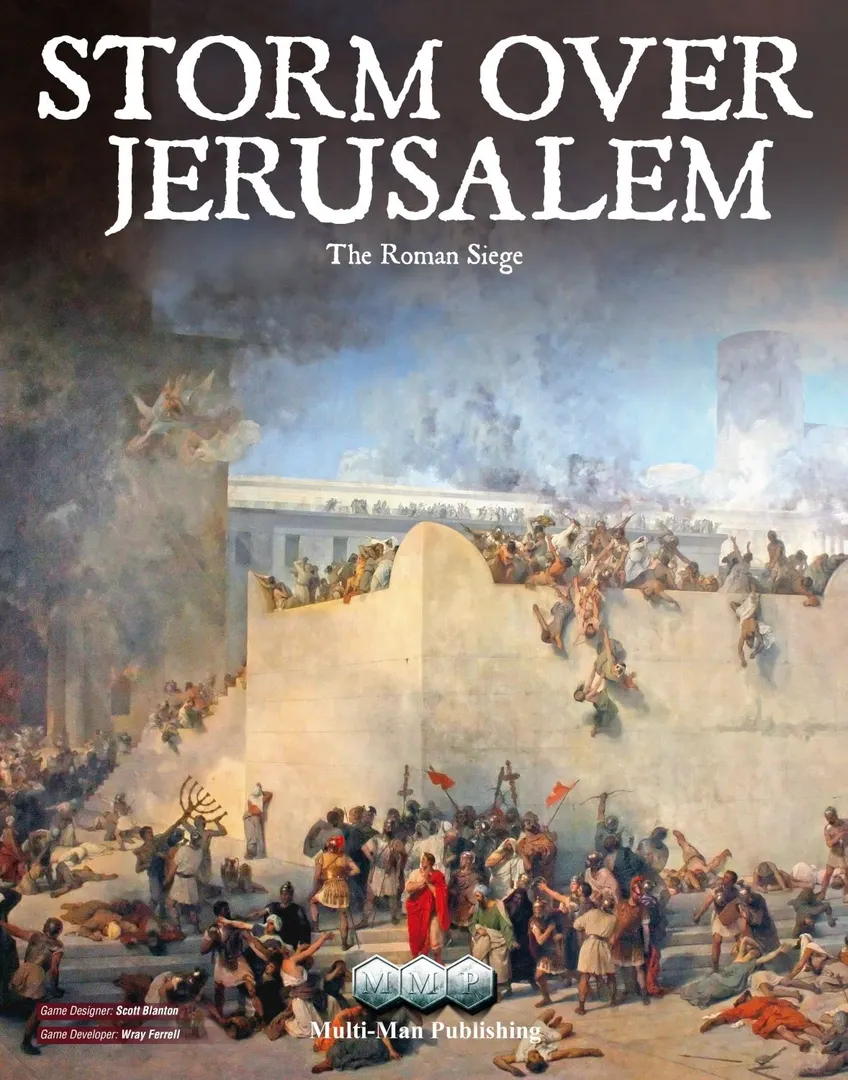
Storm Over Jerusalem: The Roman Siege è un gioco da tavolo pubblicato nel 2023 per 2 giocatori, con partite da 120 a 180 minuti e dai 12 anni in su. È stato ideato da Scott Blanton e le sue meccaniche principali sono Area-Impulse.



In inglese
By the year 70 of the Common Era (CE), the province of Judea had been in revolt against Rome for nearly 4 years. The protests and riots that began in 66 CE had quickly turned into open rebellion. The standard Roman punitive force under Syrian legate Cestius Gallus, having failed to capture Jerusalem, was wiped out at Beth Horon. General Vespasian was given command of the Roman army in the region and ordered to crush the rebellion and restore order. Turmoil in Rome, however, saw Vespasian recalled to become Emperor. In early 70 CE, Emperor Vespasian dispatched his son Titus (a future Emperor) along with four legions to end the rebellion in this important province. Titus arrived in Jerusalem in April to find the city still at war with itself. Throughout the rebellion, differing Judean factions had fought a bitter internecine war among themselves. The primary factions fighting each other in Jerusalem at this time were controlled by Simon bar Giora and John of Gischala. With the arrival of Titus and his legions, however, they were now faced with a common threat to their immediate survival. The brutal siege of Jerusalem lasted nearly five months. During the siege, city walls were breached one-by-one, much of the city devastated, and the Temple—central to both the Jewish religion and the defense of the city—destroyed and burned. With the capture of Jerusalem, Titus had effectively ended the Judean revolt, with the last of the rebels finally cornered and eliminated in the legendary siege of Masada in 73 CE. Storm Over Jerusalem: The Roman Siege is a 2-player wargame simulating the Siege of Jerusalem in 70AD. One player controls the Roman forces, and the other player controls the Judean forces. Using the Area Move system redefined in Storm Over Stalingrad and Storm Over Dien Bien Phu, the game features the use of tactical cards to augment game play, adding to the tension experienced by both sides. The rules are similar in length to those seen in previous Storm Over games, and are of the same level of complexity, with additions made for the situations encountered in this battle. Additional rules added to the game include Siege Towers, the Walls of Jerusalem, and Judean leaders. In addition to these new rules, new cards have been created in order to represent events encountered during the battle. These include “Battering Rams”, “Famine”, “Rigging the Colonnades”, and “Escape the Siege”. Game Scale: Game Turn: approximately 10 - 14 days Area: approximately 1" = 300ft / 91 meters Units: Legions Game Inventory: One 22 x 34" full color mapsheet One dual-side printed countersheet (108 3/4" counters w/ 1 blank) One dual-side printed countersheet (54 3/4" & 88 5/8" counters w/ 17 blanks) One 12-page full color rulebook Two dual-side printed player aid cards One deck of 55 tactical playing cards Four 6 sided dice (2 red & 2 blue) Solitaire Playability: Low Complexity Level: Low Players: 2 (or more) Playing Time: 2-3 hours
Secondo il catalogo, Storm Over Jerusalem: The Roman Siege supporta 2 giocatori. È il numero di giocatori indicato dall’editore, quindi il gioco è pensato esattamente per quel numero di partecipanti. Le varianti per gruppi di altre dimensioni, se esistono, sono descritte nel regolamento della tua edizione: consultalo prima di preparare una configurazione diversa.
La durata indicata per Storm Over Jerusalem: The Roman Siege è di 120–180 minuti, la stima dell’editore per una partita completa. La durata effettiva dipende dal gruppo, dal numero di giocatori e dalla conoscenza delle regole: le prime partite durano di più, i gruppi esperti finiscono prima. Preparazione e spiegazione delle regole non sono comprese nella stima.
Il catalogo indica Storm Over Jerusalem: The Roman Siege dai 12 anni in su. È la raccomandazione dell’editore e tiene conto della lettura richiesta, della complessità delle regole e dei componenti piccoli, non solo del tema. I più giovani spesso possono giocare con l’aiuto di un adulto: controlla l’età consigliata sulla tua edizione e l’esperienza del tuo gruppo con i giochi da tavolo.
Storm Over Jerusalem: The Roman Siege ha un punteggio di complessità di 2,6 su 5 secondo i giocatori di BoardGameGeek, il che lo rende un gioco piuttosto leggero. Il punteggio riflette quanta conoscenza delle regole, pianificazione e decisioni richiede una partita tipica. I giochi impegnativi richiedono una prima spiegazione più lunga, quindi conviene usare una guida di preparazione.
Storm Over Jerusalem: The Roman Siege appartiene a queste categorie: Wargame e Ancient. Le sue meccaniche principali sono Area-Impulse. Le categorie descrivono il tema e l’ambientazione di un gioco, mentre le meccaniche descrivono ciò che i giocatori fanno davvero nel proprio turno. Ogni meccanica porta a una pagina del catalogo con giochi simili.
Gli autori accreditati di Storm Over Jerusalem: The Roman Siege sono: Scott Blanton. Questi crediti provengono dai dati pubblicati del gioco e indicano le persone responsabili della sua progettazione, non gli illustratori o gli editori. Le pagine degli autori su MeepleRules raccolgono altri titoli degli stessi autori, utili quando un gioco ti piace e ne cerchi di simili.
Il catalogo classifica Storm Over Jerusalem: The Roman Siege come gioco base. Si gioca da solo con i componenti presenti nella scatola e non richiede altri titoli. Le espansioni, se esistono, aggiungono nuovo contenuto o nuove regole e sono elencate separatamente nel catalogo con un collegamento a questo gioco base.