
- Valutazione BGG
- 7,4
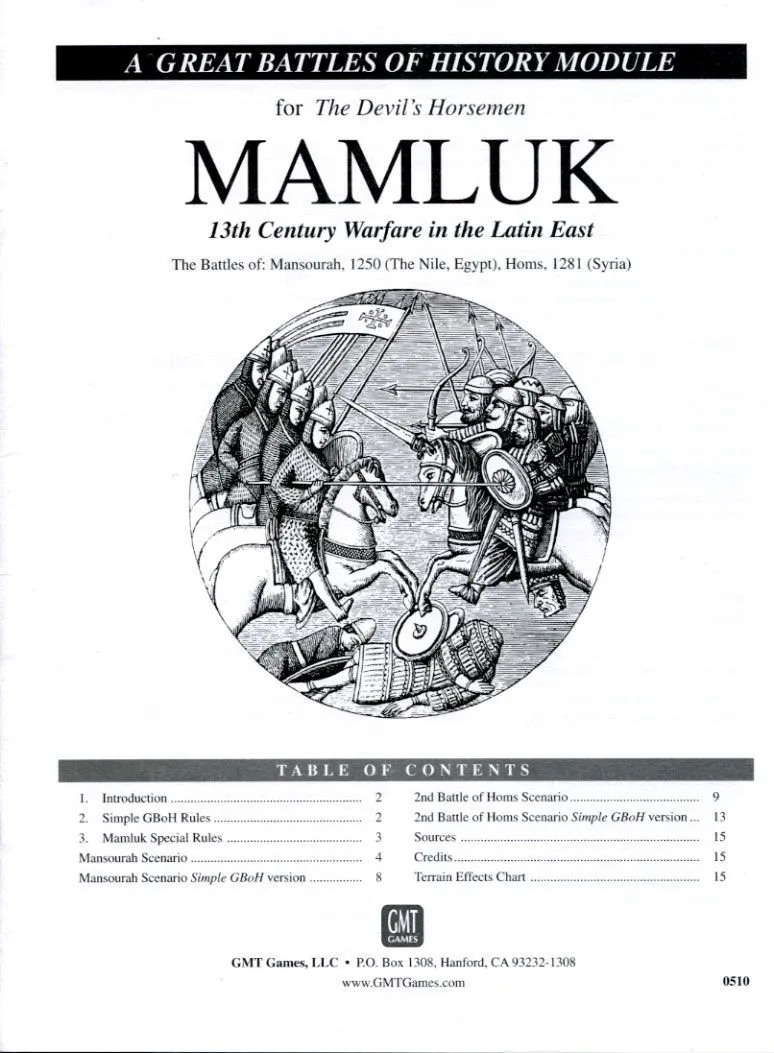
Mamluk
- 2 giocatori
- 240 min
- Complessità 3,6/5
- 2006
2004
Aiuto con le regole di The Devil's Horsemen: The Mongol War Machine
Spiegazioni chiare di turni, effetti delle carte e situazioni dubbie, con riferimenti alle fonti ufficiali e cronologia delle domande salvata.
Per 2 giocatori
Cosa vuoi sapere?
Le risposte vengono dal regolamento ufficiale, con la pagina da verificare.
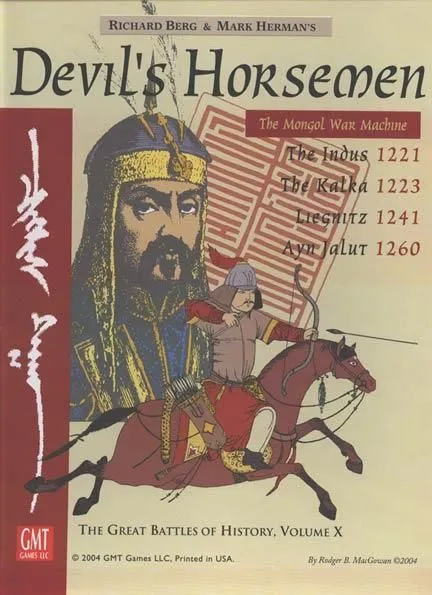
The Devil's Horsemen: The Mongol War Machine è un gioco da tavolo pubblicato nel 2004 per 2 giocatori, con partite da 240 minuti e dai 12 anni in su. È stato ideato da Richard H. Berg e Mark Herman e le sue meccaniche principali sono Hexagon Grid e Simulation.












In inglese
"The Mongol War Machine in the 13th Century" - Volume X in the Great Battles of History Series (GBoH). (from GMT Games website:) The Great Battles of History series is back with Devil's Horsemen, an examination of the military tactics of steppe tribe warfare, as immortalized by the mighty armies of Genghis Khan and the Mongols. The game focuses on cavalry and archery action, featuring mounted archers of exceptional skill. Devil's Horsemen depicts the four major battles of the era - The Indus, The Kalka, Liegnitz and Ayn Jalut. Devil's Horsemen features basic rules for both regular and SimpleGBoH play. The rules bring the system into full flower of mounted archery, with a detailed, augmented set of archery and cavalry mechanics that include various types of Shower Fire (as opposed to plain Volley Fire), Impetuosity and Aggression, Feigned Retreat, Harass and Disperse tactics, and Rally to Standards, with the various armies and units being rated for their ability to use these. Devil's Horsemen presens a truly colorful array of armies for you to lead into battle: there are 10 full tumen (divisions) of Mongols, plus Polovtsians, Galicians, Chernigovians, Kievans, Persian Khwarazmians, Poles, Silesians, Bohemians, the great Teutonic Knights, and the first army to ever significantly defeat the Mongols, The Mamluks. These mighty armies show up in four great battles of the period (ranging from battles needing 1/2 mapsheet to two full-mapsheets). The Indus (Genghis Khan vs. Shah Jalal ad-Din and the Khwarazmian Persians, 1221). One mapsheet in size, this is the battle that gave The Mongols control over all of Central Asia. The Kalka (Prince Subudei vs. the combined Armies of Rus, 1223). Two mapsheets in size, this battle includes two massive (and very nattily dressed) armies, with the Rus suffering under fractured command, and the Mongols giving us a foretaste of the famous Zulu horns of the buffalo tactics. Liegnitz (Prices Baidan and Kaidan vs. Henry the Pious and an army of Eastern Europeans, 1241). A 1/2 mapsheet battle which introduced Europe to the Mongols, and from which we get the famous Christian prayer of the era, From the Fury of the Tartars, oh Lord, Deliver Us. But you do get to use the best European heavy cavalry of the day, the Teutonic knights, under fearsome commander, Poppo. Ayn Jalut (Prince Ketbugha vs. The Mamluks, 1260). A 1/2 mapsheet battle that saw the first real defeat of a Mongol Army, this time by the new Middle East Muslim power, the Mamluks. Granted, this was a second-rate, rear-guard group of Mongols, but the Mamluks showed they were a new force to reckon with. COMPONENTS 979 full-color counters Two full-color double-sided 22x34" mapsheets Rules Book Scenario Book One Player Aid Card One 10-sided die DESIGNERS: Mark Herman and Richard Berg ART DIRECTOR/PACKAGE DESIGN: Rodger B. MacGowan MAP ART: Mark Simonitch COUNTER ART: Mark Simonitch, Rodger B. MacGowan, Mike Lemick
Secondo il catalogo, The Devil's Horsemen: The Mongol War Machine supporta 2 giocatori. È il numero di giocatori indicato dall’editore, quindi il gioco è pensato esattamente per quel numero di partecipanti. Le varianti per gruppi di altre dimensioni, se esistono, sono descritte nel regolamento della tua edizione: consultalo prima di preparare una configurazione diversa.
La durata indicata per The Devil's Horsemen: The Mongol War Machine è di 240 minuti, la stima dell’editore per una partita completa. La durata effettiva dipende dal gruppo, dal numero di giocatori e dalla conoscenza delle regole: le prime partite durano di più, i gruppi esperti finiscono prima. Preparazione e spiegazione delle regole non sono comprese nella stima.
Il catalogo indica The Devil's Horsemen: The Mongol War Machine dai 12 anni in su. È la raccomandazione dell’editore e tiene conto della lettura richiesta, della complessità delle regole e dei componenti piccoli, non solo del tema. I più giovani spesso possono giocare con l’aiuto di un adulto: controlla l’età consigliata sulla tua edizione e l’esperienza del tuo gruppo con i giochi da tavolo.
The Devil's Horsemen: The Mongol War Machine ha un punteggio di complessità di 3,4 su 5 secondo i giocatori di BoardGameGeek, il che lo rende un gioco di media complessità. Il punteggio riflette quanta conoscenza delle regole, pianificazione e decisioni richiede una partita tipica. I giochi impegnativi richiedono una prima spiegazione più lunga, quindi conviene usare una guida di preparazione.
The Devil's Horsemen: The Mongol War Machine appartiene a queste categorie: Wargame e Medieval. Le sue meccaniche principali sono Hexagon Grid e Simulation. Le categorie descrivono il tema e l’ambientazione di un gioco, mentre le meccaniche descrivono ciò che i giocatori fanno davvero nel proprio turno. Ogni meccanica porta a una pagina del catalogo con giochi simili.
Gli autori accreditati di The Devil's Horsemen: The Mongol War Machine sono: Richard H. Berg e Mark Herman. Questi crediti provengono dai dati pubblicati del gioco e indicano le persone responsabili della sua progettazione, non gli illustratori o gli editori. Le pagine degli autori su MeepleRules raccolgono altri titoli degli stessi autori, utili quando un gioco ti piace e ne cerchi di simili.
Il catalogo classifica The Devil's Horsemen: The Mongol War Machine come gioco base. Si gioca da solo con i componenti presenti nella scatola e non richiede altri titoli. Le espansioni, se esistono, aggiungono nuovo contenuto o nuove regole e sono elencate separatamente nel catalogo con un collegamento a questo gioco base.