
- Posizione BGG
- BGG #7104
- Valutazione BGG
- 7,9
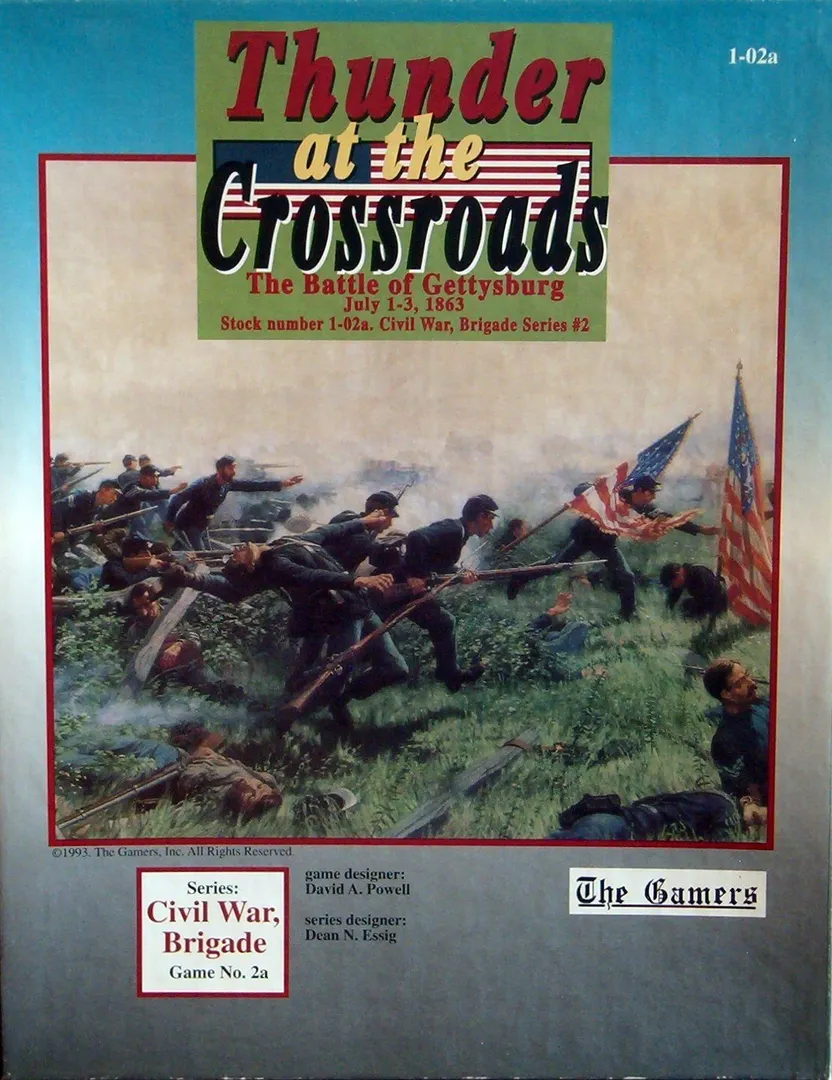
Thunder at the Crossroads: The Battle of Gettysburg, July 1-3, 1863 (Second Edition)
- 2 giocatori
- 360 min
- Complessità 3,4/5
- 1993
2004
Aiuto con le regole di Three Battles of Manassas
Spiegazioni chiare di turni, effetti delle carte e situazioni dubbie, con riferimenti alle fonti ufficiali e cronologia delle domande salvata.
Per 2 giocatori
Cosa vuoi sapere?
Le risposte vengono dal regolamento ufficiale, con la pagina da verificare.
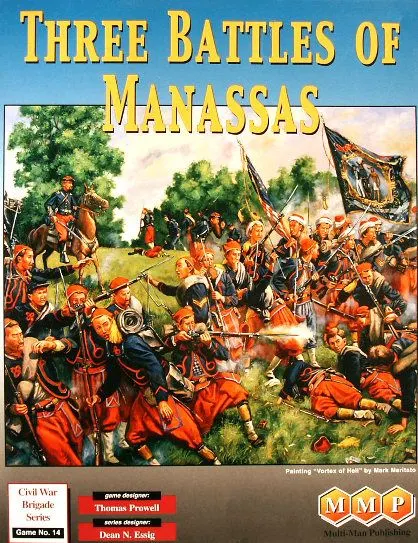
Three Battles of Manassas è un gioco da tavolo pubblicato nel 2004 per 2 giocatori, con partite da 180 minuti e dai 14 anni in su. È stato ideato da Dean Essig, Thomas Prowell e David A. Powell e le sue meccaniche principali sono Hexagon Grid.
In inglese
Three Battles of Manassas, is three games in one and covers the First Battle of Bull Run, gives a second-edition treatment of the 2nd Manassas battle (originally simulated in the CWB first edition game August Fury), and takes a "what if" look at a potential 3rd Battle of Manassas in the fall of 1863. The large map area lets you play the full campaign of each of the three battles. There is a large amount of room to maneuver. There are also a large number of poor leaders who can refuse to move, misunderstand your orders & generally frustrate your plans. There are options to have better leaders (like Grant, in 1862) take command. The 14th entry in the Civil War Brigade (CWB) Series. Game Scale: Game Turn: 30 minutes Hex: 200 yards Units: Brigades Game Inventory: Three 22 x 34" maps Two dual-side printed countersheets (560 1/2" counters) One 32-page CWBS rules booklet One 16-page Clash of Volunteers game rules booklet One 24-page August Fury II game rules booklet One 24-page Bury These Poor Men game rules booklet Two 4-page Charts & Tables folders Two 6-sided dice
Secondo il catalogo, Three Battles of Manassas supporta 2 giocatori. È il numero di giocatori indicato dall’editore, quindi il gioco è pensato esattamente per quel numero di partecipanti. Le varianti per gruppi di altre dimensioni, se esistono, sono descritte nel regolamento della tua edizione: consultalo prima di preparare una configurazione diversa.
La durata indicata per Three Battles of Manassas è di 180 minuti, la stima dell’editore per una partita completa. La durata effettiva dipende dal gruppo, dal numero di giocatori e dalla conoscenza delle regole: le prime partite durano di più, i gruppi esperti finiscono prima. Preparazione e spiegazione delle regole non sono comprese nella stima.
Il catalogo indica Three Battles of Manassas dai 14 anni in su. È la raccomandazione dell’editore e tiene conto della lettura richiesta, della complessità delle regole e dei componenti piccoli, non solo del tema. I più giovani spesso possono giocare con l’aiuto di un adulto: controlla l’età consigliata sulla tua edizione e l’esperienza del tuo gruppo con i giochi da tavolo.
Three Battles of Manassas ha un punteggio di complessità di 3,3 su 5 secondo i giocatori di BoardGameGeek, il che lo rende un gioco di media complessità. Il punteggio riflette quanta conoscenza delle regole, pianificazione e decisioni richiede una partita tipica. I giochi impegnativi richiedono una prima spiegazione più lunga, quindi conviene usare una guida di preparazione.
Three Battles of Manassas appartiene a queste categorie: Wargame e American Civil War. Le sue meccaniche principali sono Hexagon Grid. Le categorie descrivono il tema e l’ambientazione di un gioco, mentre le meccaniche descrivono ciò che i giocatori fanno davvero nel proprio turno. Ogni meccanica porta a una pagina del catalogo con giochi simili.
Gli autori accreditati di Three Battles of Manassas sono: Dean Essig, Thomas Prowell e David A. Powell. Questi crediti provengono dai dati pubblicati del gioco e indicano le persone responsabili della sua progettazione, non gli illustratori o gli editori. Le pagine degli autori su MeepleRules raccolgono altri titoli degli stessi autori, utili quando un gioco ti piace e ne cerchi di simili.
Il catalogo classifica Three Battles of Manassas come gioco base. Si gioca da solo con i componenti presenti nella scatola e non richiede altri titoli. Le espansioni, se esistono, aggiungono nuovo contenuto o nuove regole e sono elencate separatamente nel catalogo con un collegamento a questo gioco base.