

- Posizione BGG
- BGG #11.796
- Valutazione BGG
- 8,4
SEEKRIEG 5
- 2–10 giocatori
- 120 min
- Complessità 4,1/5
- 2004
Aiuto con le regole di Victory at Sea: Yamato
Spiegazioni chiare di turni, effetti delle carte e situazioni dubbie, con riferimenti alle fonti ufficiali e cronologia delle domande salvata.
Cosa vuoi sapere?
Le risposte vengono dal regolamento ufficiale, con la pagina da verificare.
Victory at Sea: Yamato è un’espansione di Victory at Sea: Battle for the Pacific pubblicata nel 2020 per 2 giocatori e dai 10 anni in su. Le sue meccaniche principali sono Dice Rolling, Simulation e Measurement Movement.


In inglese
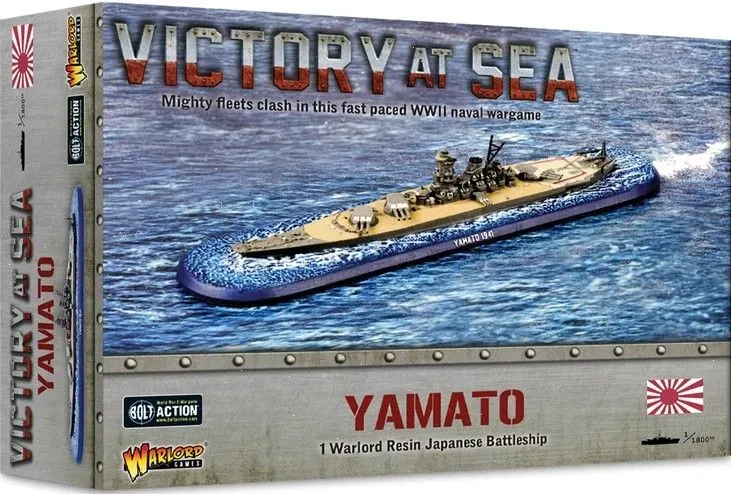
Yamato (大和, "Great Harmony") and her sister ship, Musashi, were constructed shortly before the outbreak of World War II. They were the heaviest and most powerfully armed battleships ever constructed; armed with nine 18.1” Type 94 main guns – the largest guns ever mounted on a warship. The battleship’s design was an answer to the numerically dominant US Navy – Imperial Japan’s primary threat in the Pacific. Though laid down in 1937 the battleship was not actually commissioned until late 1941, a week after fated attack on Pearl Harbour. She served as the flagship of the Combined Fleet. It was from her bridge that Admiral Isoroku Yamamoto directed the fleet at Midway in June 1942, though this proved a disastrous defeat for the Japanese. She was thereafter replaced by the Musashi as flagship and spent the larger part of 1943 and 44 moving between ports in a responsive role. October 1944 was the only occasion on which Yamato fired her main guns in anger, at the Battle of Leyte Gulf. Yamato had been tasked with repelling American forces invading the Phillipines. Though success lay within Japanese grasp, such was the ferocity of a counterattack of a light escort carrier group of the U.S. Navy’s Task Force 77 that the Japanese enacted a retreat, falsely believing they faced a much larger carrier force. By early in 1945, Naval superiority in the Pacific belonged firmly to the US Navy. In an effort to delay the Allies’ advance, Yamato was dispatched to Okinawa in April 1945, with no expectation to ever return. Her orders were to beach herself and fight until destroyed. This was not allowed to occur when, on 7 April 1945 when she was sunk by US carrier-based bombers and torpedo bombers, with the loss of the majority of her complement. Contents: 1 Model Ship ‣ Yamato 1 Ship Card Damage Sliders —description from the publisher
Secondo il catalogo, Victory at Sea: Yamato supporta 2 giocatori. È il numero di giocatori indicato dall’editore, quindi il gioco è pensato esattamente per quel numero di partecipanti. Le varianti per gruppi di altre dimensioni, se esistono, sono descritte nel regolamento della tua edizione: consultalo prima di preparare una configurazione diversa.
Il catalogo indica Victory at Sea: Yamato dai 10 anni in su. È la raccomandazione dell’editore e tiene conto della lettura richiesta, della complessità delle regole e dei componenti piccoli, non solo del tema. I più giovani spesso possono giocare con l’aiuto di un adulto: controlla l’età consigliata sulla tua edizione e l’esperienza del tuo gruppo con i giochi da tavolo.
Victory at Sea: Yamato appartiene a queste categorie: Wargame, Miniatures e Nautical. Le sue meccaniche principali sono Dice Rolling, Simulation e Measurement Movement. Le categorie descrivono il tema e l’ambientazione di un gioco, mentre le meccaniche descrivono ciò che i giocatori fanno davvero nel proprio turno. Ogni meccanica porta a una pagina del catalogo con giochi simili.
Il catalogo classifica Victory at Sea: Yamato come espansione di Victory at Sea: Battle for the Pacific. Le espansioni aggiungono contenuti, regole o scenari al gioco base e di solito non si possono giocare da sole, quindi per usarla ti serve Victory at Sea: Battle for the Pacific. Controlla che la tua edizione di Victory at Sea: Battle for the Pacific sia compatibile, perché alcune espansioni sono state riviste tra un’edizione e l’altra.