

- Pozycja w BGG
- BGG #5232
- Ocena BGG
- 8,0
18OE: On the Rails of the Orient Express
- 2–8 graczy
- 720 min
- Złożoność 4,5/5
- 2014
2011
Pomoc w zasadach gry 1865: Sardinia
Zrozumiałe wyjaśnienia tur, efektów kart i spornych sytuacji z odnośnikami do oficjalnych źródeł i zapisaną historią pytań.
Dla 2 graczy
Co chcesz wiedzieć?
Odpowiedzi pochodzą z oficjalnej instrukcji, ze stroną do sprawdzenia.
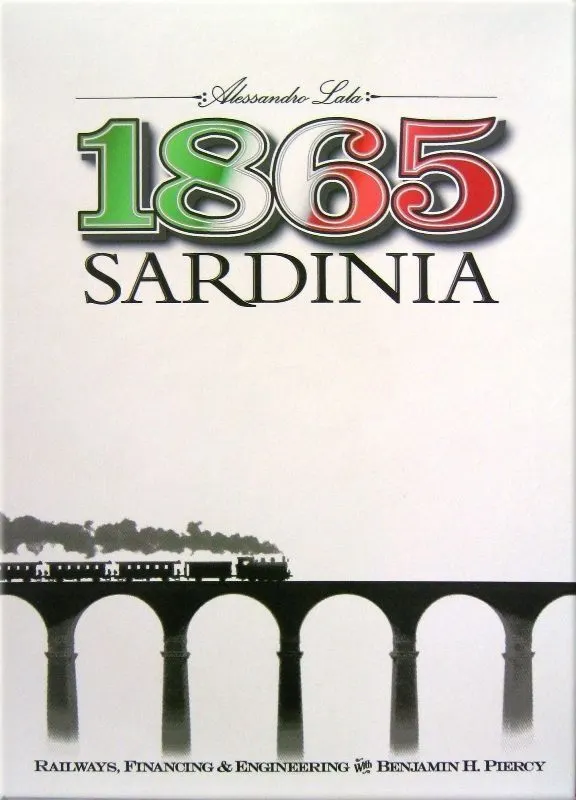
1865: Sardinia to gra planszowa wydana w 2011 roku dla 2–4 graczy, z rozgrywką trwającą 240 minut i dla osób od 14 lat. Projekt gry: Alessandro Lala. Główne mechaniki: Auction / Bidding, Tile Placement i Network and Route Building.

Po angielsku
1865 Sardinia is a board game belonging to the 18xx series for 2-4 players and set on the Sardinia island (and Corsica). Players play the role of 19th century entrepreneurs investing in the construction as well as the financial and operational management of railways. Selling and buying shares on the stock market, seeking new sources of funding, laying track and placing stations, running trains and paying dividends are all basic elements of 18xx games. In addition, 1865 Sardinia has several features that make it different from other 18xx titles. The most important distinctions are: a traffic based system that makes calculating company's revenues easier and faster foreign investors (Dragons) trade in certificates in addition to human players an absorption mechanism that allows companies to acquire each other Other interesting points: before phase 5, all companies start as minor companies with 40%/20%/20%/20% shares converting a company from minor to major requires a direct route from a company base to a historical destination city private companies become 2 trains when transferred to a company and also provide extra traffic buying trains from bank makes the share price jump up the last 2, 3, and 4 train comes with a discount withholding money in company doesn't reduce the share price tiles can be replaced with another tile of same color, provided the current connections are retained bankrupt players are given enough loans to keep them in game, loans are then deducted from final score in the end Dragons during stock rounds, the Dragons will also trade each stock round begins with a Dragon and Dragons also play between each player dragons are interested in company's rank, an indicator based on the sum of trains phase and tokens on board, followed on a special table on the board dragons will immediately sell certificates in companies ranked red and will buy certificates ranked green, according to a fairly simple and consistent algorithm. players can buy shares from Dragons, but must pay a premium for well-ranked shares share prices are adjusted down when shares are sold by Dragons or the company president Traffic system when a company places a station marker, it gets to collect traffic chips from the board along the route mines also produce traffic chips, but diminish in value as the game proceeds each traffic chip is worth $10 in revenue revenues are the smaller value of total revenue in traffic chips and train capacity available phase 2 trains, for example, have 8 capacity each, so if company has two of those for 16 capacity and 14 traffic chips, it will make $140 in revenue, while adding three chips would increase the revenue to $160 because the capacity hits the roof at that point
Według katalogu 1865: Sardinia obsługuje od 2 do 4 graczy. Ten zakres odpowiada liczbie graczy podanej przez wydawcę, więc grę można przygotować dla dowolnej grupy w jego granicach. Przygotowanie, niektóre zasady i punktacja mogą jednak różnić się w zależności od liczby graczy; dokładną konfigurację sprawdź w instrukcji swojego wydania.
Podany czas rozgrywki w 1865: Sardinia wynosi 240 minut. To szacunek wydawcy dla pełnej partii. Rzeczywisty czas zależy od grupy, liczby graczy i znajomości zasad: pierwsze partie zwykle trwają dłużej, a doświadczone grupy kończą szybciej. Przygotowanie gry i tłumaczenie zasad nie są wliczone w ten szacunek.
Katalog podaje dla 1865: Sardinia wiek od 14 lat. To zalecenie wydawcy, które uwzględnia wymagania dotyczące czytania, złożoność zasad i drobne elementy, a nie tylko tematykę. Młodsi gracze często mogą dołączyć z pomocą dorosłego; sprawdź zalecenie wiekowe swojego wydania i weź pod uwagę doświadczenie grupy z grami planszowymi.
1865: Sardinia ma ocenę złożoności 3,9 na 5 według graczy BoardGameGeek, co czyni ją grą ciężką. Ocena pokazuje, ile znajomości zasad, planowania i podejmowania decyzji wymaga typowa rozgrywka. Cięższe gry wymagają dłuższego pierwszego tłumaczenia, dlatego przed wieczorem z grami warto skorzystać z przewodnika przygotowania.
1865: Sardinia należy do tych kategorii: Economic, Trains i Transportation. Główne mechaniki to Auction / Bidding, Tile Placement i Network and Route Building. Kategorie opisują temat i świat gry, a mechaniki to, co gracze faktycznie robią w swojej turze. Każda mechanika prowadzi do strony katalogu z podobnymi grami, co pomaga znaleźć coś porównywalnego na kolejny wieczór.
Autorzy wymienieni przy 1865: Sardinia to: Alessandro Lala. Te informacje pochodzą z opublikowanych danych gry i wskazują osoby odpowiedzialne za jej projekt, a nie ilustratorów czy wydawców. Strony autorów w MeepleRules zbierają inne tytuły tych samych twórców, co pomaga, gdy gra ci się podoba i szukasz podobnych.
W katalogu 1865: Sardinia figuruje jako gra podstawowa. Można w nią grać samodzielnie, korzystając z elementów z pudełka, bez żadnego innego tytułu. Dodatki, jeśli istnieją, dokładają nową zawartość lub zasady i są wymienione w katalogu osobno, z odnośnikiem do tej gry podstawowej.