
- Pozycja w BGG
- BGG #6169
- Ocena BGG
- 6,9
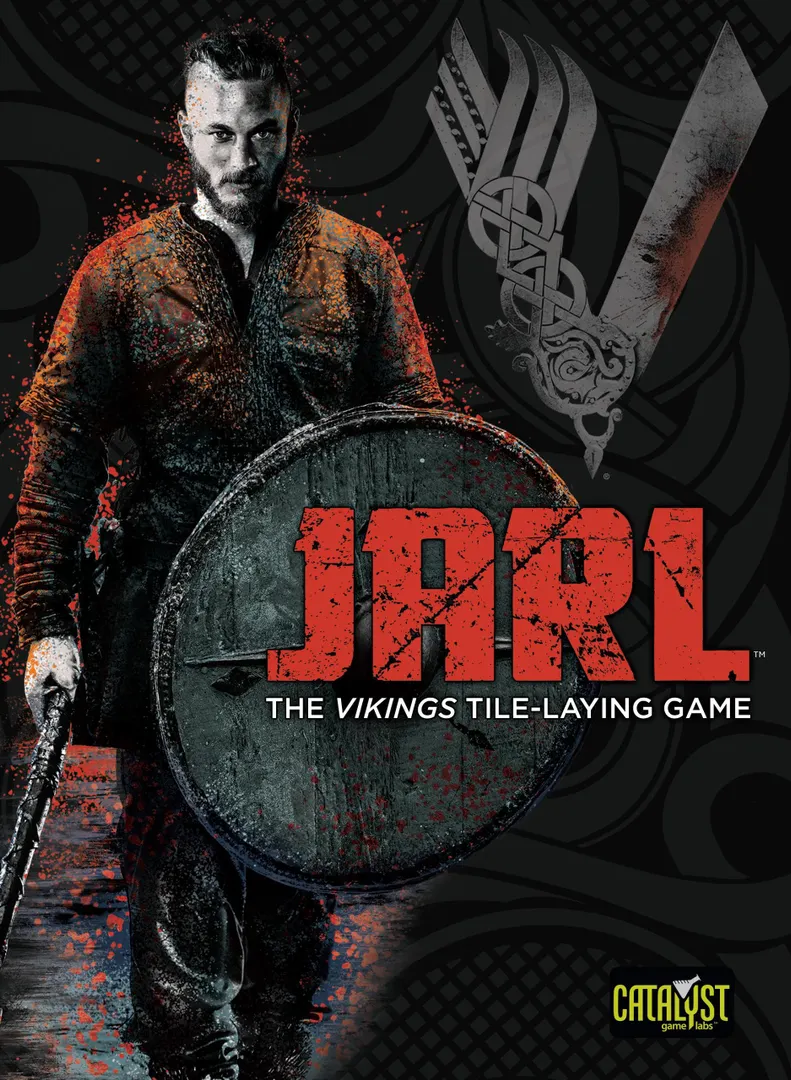
Jarl: The Vikings Tile-Laying Game
- 2 graczy
- 15–25 min
- Złożoność 2,7/5
- 2015
1851
Pomoc w zasadach gry 3-D Chess
Zrozumiałe wyjaśnienia tur, efektów kart i spornych sytuacji z odnośnikami do oficjalnych źródeł i zapisaną historią pytań.
Dla 2 graczy
Co chcesz wiedzieć?
Odpowiedzi pochodzą z oficjalnej instrukcji, ze stroną do sprawdzenia.
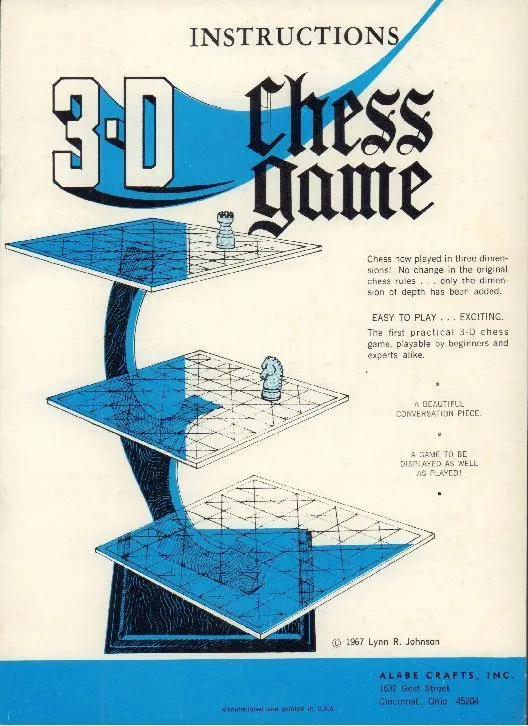
3-D Chess to gra planszowa wydana w 1851 roku dla 2 graczy i z rozgrywką trwającą 90 minut. Projekt gry: Lionel Adalbert Bagration Felix Kieseritzky. Główne mechaniki: Grid Movement.




Po angielsku
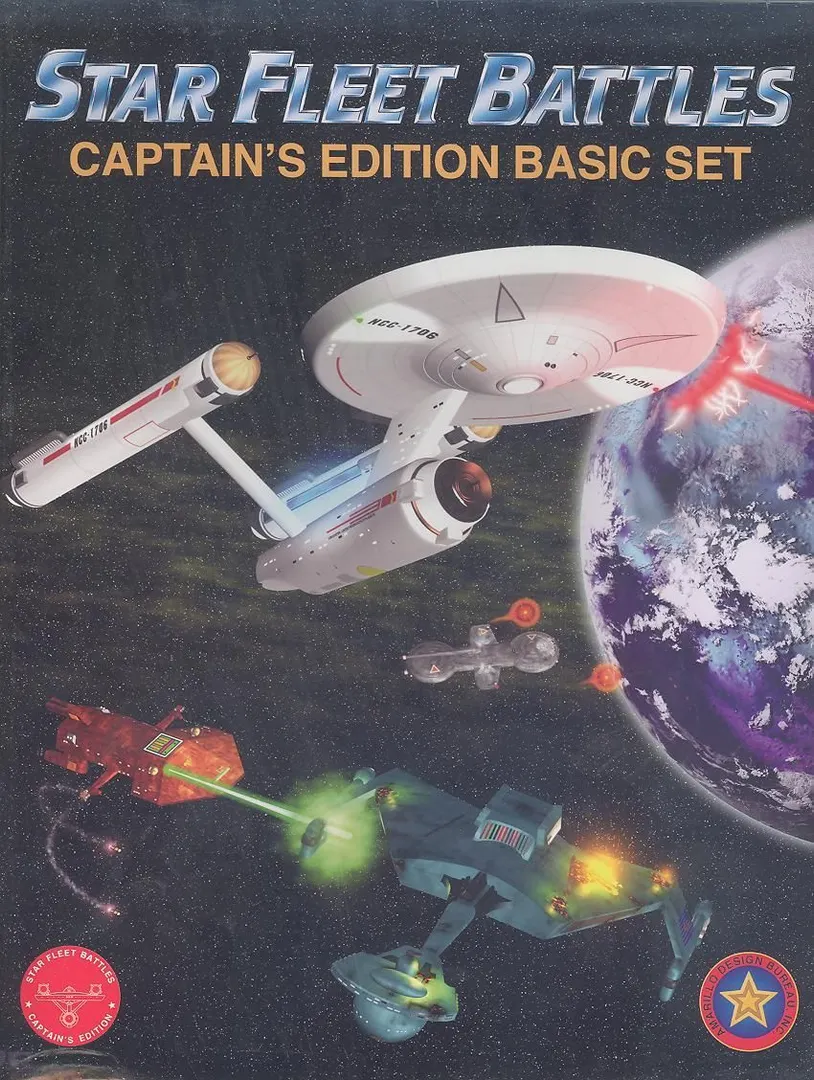
There are many forms of 3D Chess, the earliest being Kubicschach, which is German for Cubic Chess and was designed by the French Chess master Lionel Adalbert Bagration Felix Kieseritzky, in 1851. Kubicschach, as the name suggests, is eight standard Chess boards stacked up to for an 8x8x8 cube, it never became a popular game. Kubicschach was reduced by Doctor Ferdinand Maack in 1907, to five 5x5 boards and renamed Raumschach, which is German for Space Chess. It was played a lot in Germany during the beginning of the 20th century. Dimensional Games, Inc launched "The Original 3D Chess" in 1967, designed by NASA engineer Lynn R. Johnson. It includes three 8x8 boards and was sold until the late 90's. It was reproduced and relaunched in 2025, using the original design. The Dynamic Games company first produced a three 8x8 board in 1973 and sold it under the name Strato Chess. The game has been copied by many companies since and is the most widely available of all 3D Chess boards. The most famous variant of 3D Chess appeared in the Star Trek television show in 1966, in which it was referred to as 'Three Dimensional Chess'. The original stage property was designed by Irving A Feinberg and consisted of three 4x4 boards and four movable 2x2 boards. It was developed into a real game by the technical designer Franz Joseph Schnaubelt in his 1975 book, the Star Fleet Technical Manual and improved by a fan and chess player Andrew Bartmess, whose rules are some of the most popular. Fans of Star Trek still call it 'Three Dimensional Chess' but players of the game call it by the title Schnaubelt popularised 'Tri Dimensional Chess'. In 1985, the game design Gary Gygax published rules for Dragon Chess in Dragon magazine. A Dragon Chess board is three 8x12 boards stacked up and includes the extra pieces: Sylph, Griffon, Dragon, Warrior, Oliphant, Unicorn, Hero, Thief, Cleric, Mage, Paladin, Dwarf, Basilisk and Elemental. Max Chappell started designing Hyperchess in the early '70s but didn't produce and sell the first commercial set until 1996. Although it was influenced by the tri dimensional chess board, it has been described as more helical in design. In 2001 William d'Agostino recreated the Strato Chess board and called it Millenium Chess, with the idea of extending Classic Chess, without distorting the game.
Według katalogu 3-D Chess obsługuje 2 graczy. To liczba graczy podana przez wydawcę, więc gra jest zaprojektowana dokładnie dla takiej liczby uczestników. Warianty dla grup innej wielkości, jeśli w ogóle istnieją, opisano w instrukcji twojego wydania; sprawdź ją uważnie, zanim przygotujesz inną konfigurację stołu.
Podany czas rozgrywki w 3-D Chess wynosi 90 minut. To szacunek wydawcy dla pełnej partii. Rzeczywisty czas zależy od grupy, liczby graczy i znajomości zasad: pierwsze partie zwykle trwają dłużej, a doświadczone grupy kończą szybciej. Przygotowanie gry i tłumaczenie zasad nie są wliczone w ten szacunek.
3-D Chess ma ocenę złożoności 4,1 na 5 według graczy BoardGameGeek, co czyni ją grą ciężką. Ocena pokazuje, ile znajomości zasad, planowania i podejmowania decyzji wymaga typowa rozgrywka. Cięższe gry wymagają dłuższego pierwszego tłumaczenia, dlatego przed wieczorem z grami warto skorzystać z przewodnika przygotowania.
3-D Chess należy do tych kategorii: Movies / TV / Radio theme i Abstract Strategy. Główne mechaniki to Grid Movement. Kategorie opisują temat i świat gry, a mechaniki to, co gracze faktycznie robią w swojej turze. Każda mechanika prowadzi do strony katalogu z podobnymi grami, co pomaga znaleźć coś porównywalnego na kolejny wieczór.
Autorzy wymienieni przy 3-D Chess to: Lionel Adalbert Bagration Felix Kieseritzky. Te informacje pochodzą z opublikowanych danych gry i wskazują osoby odpowiedzialne za jej projekt, a nie ilustratorów czy wydawców. Strony autorów w MeepleRules zbierają inne tytuły tych samych twórców, co pomaga, gdy gra ci się podoba i szukasz podobnych.
W katalogu 3-D Chess figuruje jako gra podstawowa. Można w nią grać samodzielnie, korzystając z elementów z pudełka, bez żadnego innego tytułu. Dodatki, jeśli istnieją, dokładają nową zawartość lub zasady i są wymienione w katalogu osobno, z odnośnikiem do tej gry podstawowej.