
- Pozycja w BGG
- BGG #561
- Ocena BGG
- 7,9
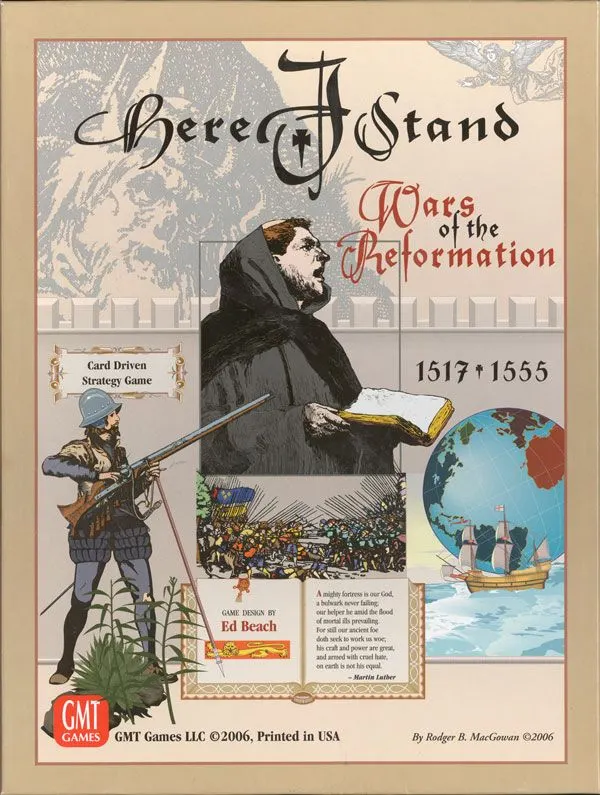
Here I Stand
- 2–6 graczy
- 180–900 min
- Złożoność 4,2/5
- 2006
1977
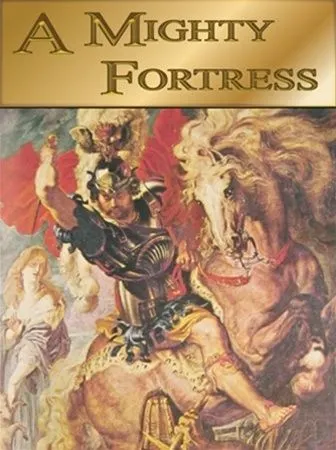
Pomoc w zasadach gry A Mighty Fortress
Zrozumiałe wyjaśnienia tur, efektów kart i spornych sytuacji z odnośnikami do oficjalnych źródeł i zapisaną historią pytań.
Dla 6 graczy
Co chcesz wiedzieć?
Odpowiedzi pochodzą z oficjalnej instrukcji, ze stroną do sprawdzenia.
A Mighty Fortress to gra planszowa wydana w 1977 roku dla 6 graczy, z rozgrywką trwającą 240 minut i dla osób od 14 lat. Projekt gry: Rudolph W. Heinze. Główne mechaniki: Variable Player Powers i Hexagon Grid.
Po angielsku
Subtitle of the game: "Reformation and Counter-Reformation, 1532-1555" On the box cover: "The time is 6 February 1531." One of the games in SPI's Power Politics series. From the publisher: Recreating the turbulent era of the Reformation, from the viewpoint of political/religious interaction and military activity. A Mighty Fortress is designed with a mechanical simplicity that is matched only by the subtlety of the game's interplay among contesting forces. A Mighty Fortress simulates the conditions, which made possible the spread of the Lutheran Reformation and the subsequent Catholic reaction (the Counter-Reformation) in the years 1532-1555. The game recreates the actual historical objectives of the major countries in Europe in the Sixteenth Century as well as their military strengths and resources. There are six players in the game representing the six major countries, England, France, the Ottoman Empire, the Hapsburgs, the Pope, and the collection of German states we will call The Lutherans. The Lutheran player is intent on promoting the Protestant cause throughout Europe, and the Papacy is equally resolved to gather any straying nations back into the Catholic fold. The Hapsburg Empire -- strong in arms and sprawling across half the continent -- seeks to maintain its possessions in the face of pressure from all directions. In England, Henry VIII is engaged with his own confrontation with the Pope; and French forces are marshalling to dismantle the Hapsburg dominions. And Suleiman the Magnificent is constantly watching for the opportunity to expand his Ottoman empire -- at anyone's expense. The Hapsburgs have, by far, the largest number of combat forces. Unhindered by other problems, they could easily suppress Lutheranism. However, other players have objectives that can usually be achieved only at the expense of the mighty Hapsburgs. Therefore, depending on the rapidly shifting political situation, there will probably be several alliances against Hapsburg influence. Because of this convoluted political situation, the players will often find themselves at cross-purposes with other players whom they were aiding the Game-Turn before. Thus, the possibilities for political and military interaction are extensive. A Mighty Fortress covers the twenty-four years from 1532 to 1555 -- a period fraught with shifting alliances, political and religious fervor, and frantic efforts to shift the balance of power. Theological debates, treaties of peace, declarations of war, excommunication, taxation, and missionaries -- all are included in this simulation of one of the most violent and implacably hostile eras of European history. The game covers all actions from the year 1532 -- right after formation of the Schmalkaldic League -- until 1555 and the Peace of Augsburg, which guaranteed Lutheranism as a religion [sic] and allowed the German estates to choose between that and Catholicism. Other notes: Special rules include those for missionaries, conversion, peace treaties, formal alliances, truces, ultimata, ceding territory, income and borrowing, theological debates, excommunication, Henry VIII's divorce and hidden, variable victory conditions. Counters = 200 Other credits: Graphic Design: Redmond A. Simonsen Development: Richard Berg Production: Bill Bauer, Larry Catalano, Brad Hessel, Manfred F. Milkuhn, Harry L. Park, Robert J. Ryer Playtesting: Anthony Beavers, Barry Lazarnik, Thomas Hamilton, David Pan, John Gautier, Joe Perez, Winston Forrest
Według katalogu A Mighty Fortress obsługuje 6 graczy. To liczba graczy podana przez wydawcę, więc gra jest zaprojektowana dokładnie dla takiej liczby uczestników. Warianty dla grup innej wielkości, jeśli w ogóle istnieją, opisano w instrukcji twojego wydania; sprawdź ją uważnie, zanim przygotujesz inną konfigurację stołu.
Podany czas rozgrywki w A Mighty Fortress wynosi 240 minut. To szacunek wydawcy dla pełnej partii. Rzeczywisty czas zależy od grupy, liczby graczy i znajomości zasad: pierwsze partie zwykle trwają dłużej, a doświadczone grupy kończą szybciej. Przygotowanie gry i tłumaczenie zasad nie są wliczone w ten szacunek.
Katalog podaje dla A Mighty Fortress wiek od 14 lat. To zalecenie wydawcy, które uwzględnia wymagania dotyczące czytania, złożoność zasad i drobne elementy, a nie tylko tematykę. Młodsi gracze często mogą dołączyć z pomocą dorosłego; sprawdź zalecenie wiekowe swojego wydania i weź pod uwagę doświadczenie grupy z grami planszowymi.
A Mighty Fortress ma ocenę złożoności 3,3 na 5 według graczy BoardGameGeek, co czyni ją grą średnio złożoną. Ocena pokazuje, ile znajomości zasad, planowania i podejmowania decyzji wymaga typowa rozgrywka. Cięższe gry wymagają dłuższego pierwszego tłumaczenia, dlatego przed wieczorem z grami warto skorzystać z przewodnika przygotowania.
A Mighty Fortress należy do tych kategorii: Wargame, Religious i Renaissance. Główne mechaniki to Variable Player Powers i Hexagon Grid. Kategorie opisują temat i świat gry, a mechaniki to, co gracze faktycznie robią w swojej turze. Każda mechanika prowadzi do strony katalogu z podobnymi grami, co pomaga znaleźć coś porównywalnego na kolejny wieczór.
Autorzy wymienieni przy A Mighty Fortress to: Rudolph W. Heinze. Te informacje pochodzą z opublikowanych danych gry i wskazują osoby odpowiedzialne za jej projekt, a nie ilustratorów czy wydawców. Strony autorów w MeepleRules zbierają inne tytuły tych samych twórców, co pomaga, gdy gra ci się podoba i szukasz podobnych.
W katalogu A Mighty Fortress figuruje jako gra podstawowa. Można w nią grać samodzielnie, korzystając z elementów z pudełka, bez żadnego innego tytułu. Dodatki, jeśli istnieją, dokładają nową zawartość lub zasady i są wymienione w katalogu osobno, z odnośnikiem do tej gry podstawowej.