

- Pozycja w BGG
- BGG #15 783
- Ocena BGG
- 5,8
Humans!!!
- 2–6 graczy
- 60 min
- Złożoność 1,9/5
- 2008
2003
Pomoc w zasadach gry Dante's Inferno
Zrozumiałe wyjaśnienia tur, efektów kart i spornych sytuacji z odnośnikami do oficjalnych źródeł i zapisaną historią pytań.
Co chcesz wiedzieć?
Odpowiedzi pochodzą z oficjalnej instrukcji, ze stroną do sprawdzenia.
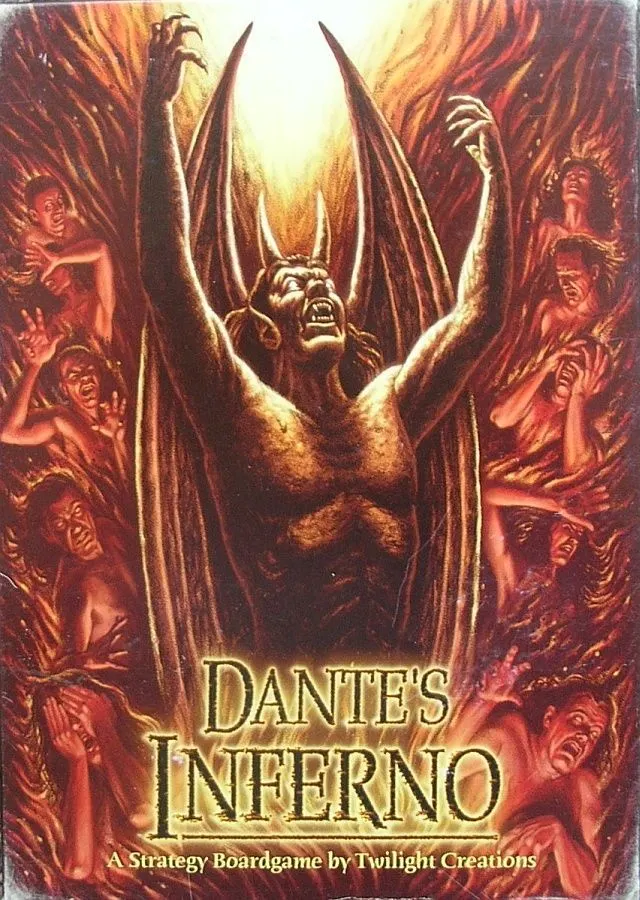
Dante's Inferno to gra planszowa wydana w 2003 roku dla 3–6 graczy, z rozgrywką trwającą 90 minut i dla osób od 12 lat. Projekt gry: Todd Breitenstein i Kerry Breitenstein. Główne mechaniki: Tile Placement.







Po angielsku
This is a fairly complex strategy game featuring resource management and trading. The objective is to move one of your player tokens to the 9th circle and defeat Lucifer. The initial setup is the outer ring of the board. Each tile is two rings and the tiles are numbered. Players take turns placing 3 of their player tokens on the tile of their choice. Each tile corresponds to one of four resources. At the beginning of each player's turn, two dice are rolled. A 7 brings a demon into play in a corner of that player's choice. Any other number will result in some players gaining resources. Rolling doubles gives your regular allotment of resources, plus a resource of your choice. Rolling 2 or 12 allows you to place a marker on one tile that either doubles or eliminates production for that tile. Players can use their resources to bring out new player tokens, buy new tiles for inner circles of hell, move themselves, descend deeper into hell, move others, flip tiles, or alter die rolls. Players can trade resources with other players during their turn. The lower circles of hell generate more resources (2 for 3/4, 3 for 5/6 and 4 for 7/8). The game ends when a player descends to the ninth level and defeats Lucifer by rolling a 10 or better on two dice.
Według katalogu Dante's Inferno obsługuje od 3 do 6 graczy. Ten zakres odpowiada liczbie graczy podanej przez wydawcę, więc grę można przygotować dla dowolnej grupy w jego granicach. Przygotowanie, niektóre zasady i punktacja mogą jednak różnić się w zależności od liczby graczy; dokładną konfigurację sprawdź w instrukcji swojego wydania.
Podany czas rozgrywki w Dante's Inferno wynosi 90 minut. To szacunek wydawcy dla pełnej partii. Rzeczywisty czas zależy od grupy, liczby graczy i znajomości zasad: pierwsze partie zwykle trwają dłużej, a doświadczone grupy kończą szybciej. Przygotowanie gry i tłumaczenie zasad nie są wliczone w ten szacunek.
Katalog podaje dla Dante's Inferno wiek od 12 lat. To zalecenie wydawcy, które uwzględnia wymagania dotyczące czytania, złożoność zasad i drobne elementy, a nie tylko tematykę. Młodsi gracze często mogą dołączyć z pomocą dorosłego; sprawdź zalecenie wiekowe swojego wydania i weź pod uwagę doświadczenie grupy z grami planszowymi.
Dante's Inferno ma ocenę złożoności 2,0 na 5 według graczy BoardGameGeek, co czyni ją grą lekką. Ocena pokazuje, ile znajomości zasad, planowania i podejmowania decyzji wymaga typowa rozgrywka. Cięższe gry wymagają dłuższego pierwszego tłumaczenia, dlatego przed wieczorem z grami warto skorzystać z przewodnika przygotowania.
Dante's Inferno należy do tych kategorii: Fantasy, Horror i Religious. Główne mechaniki to Tile Placement. Kategorie opisują temat i świat gry, a mechaniki to, co gracze faktycznie robią w swojej turze. Każda mechanika prowadzi do strony katalogu z podobnymi grami, co pomaga znaleźć coś porównywalnego na kolejny wieczór.
Autorzy wymienieni przy Dante's Inferno to: Todd Breitenstein i Kerry Breitenstein. Te informacje pochodzą z opublikowanych danych gry i wskazują osoby odpowiedzialne za jej projekt, a nie ilustratorów czy wydawców. Strony autorów w MeepleRules zbierają inne tytuły tych samych twórców, co pomaga, gdy gra ci się podoba i szukasz podobnych.
W katalogu Dante's Inferno figuruje jako gra podstawowa. Można w nią grać samodzielnie, korzystając z elementów z pudełka, bez żadnego innego tytułu. Dodatki, jeśli istnieją, dokładają nową zawartość lub zasady i są wymienione w katalogu osobno, z odnośnikiem do tej gry podstawowej.