

- Pozycja w BGG
- BGG #5135
- Ocena BGG
- 7,3
Stalingrad Pocket: 2nd Edition – The Wehrmacht's Greatest Disaster
- 1–2 graczy
- 180–900 min
- Złożoność 2,6/5
- 1996
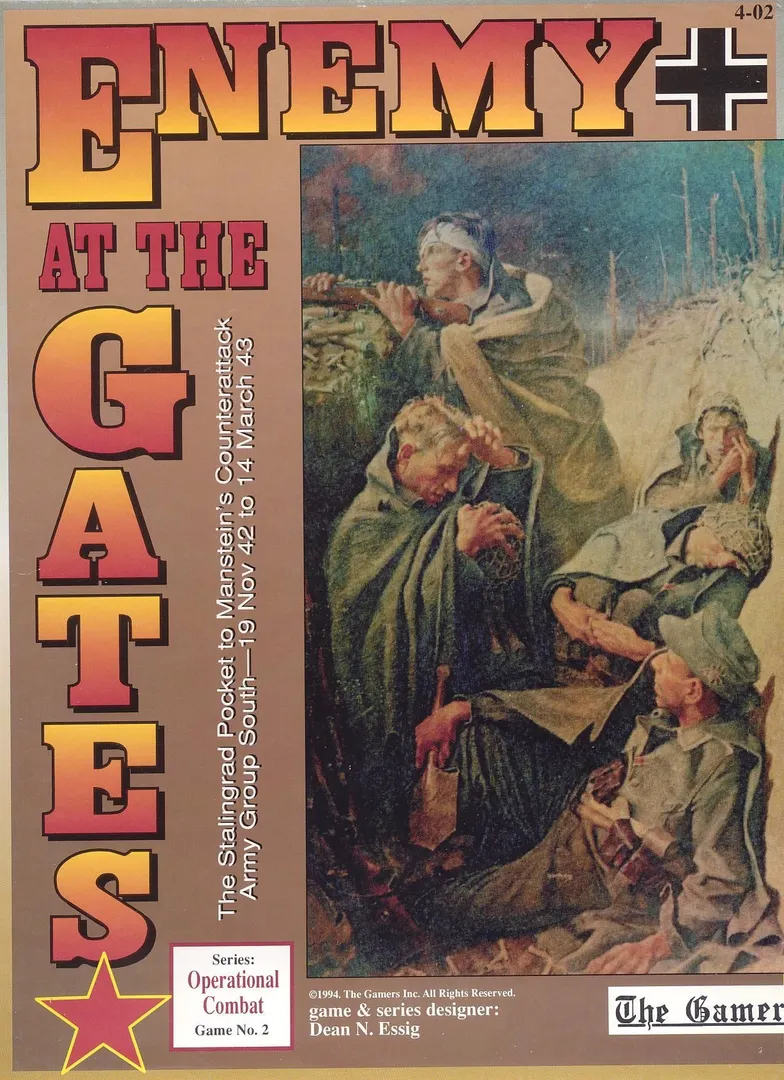
1994
Pomoc w zasadach gry Enemy at the Gates
Zrozumiałe wyjaśnienia tur, efektów kart i spornych sytuacji z odnośnikami do oficjalnych źródeł i zapisaną historią pytań.
Dla 1 gracza
Co chcesz wiedzieć?
Odpowiedzi pochodzą z oficjalnej instrukcji, ze stroną do sprawdzenia.
Enemy at the Gates to gra planszowa wydana w 1994 roku dla 1–4 graczy, z rozgrywką trwającą 240–6000 minut i dla osób od 12 lat. Projekt gry: Dean Essig. Główne mechaniki: Dice Rolling, Hexagon Grid i Simulation.




Po angielsku
On a cold, foggy morning in November, 1942, a four-hour artillery barrage rocked the Rumanian lines north and south of Stalingrad. Countless swarms of Red infantry, tanks, and guns then swept the lines. In four days, the pincers met near Kalach-um-Don – entombing the 6th Army in Stalingrad. During the next three months, the Germans will reel from successive Soviet hammer blows, try in vain to relieve the 6th Army, and fail to supply it from the air. The 6th Army surrenders, and only the counter-attack by von Manstein’s panzers stop the red tide. The turning point of World War II in Europe has passed. Enemy at the Gates, the second Operational Combat Series release by The Gamers, offers players different challenges from those in the very popular game Guderian’s Blitzkrieg. The Soviet army has rearmed and reorganized their Tank Corps – their challenge to the Panzer Divisions. The unique force structures of each side force players to fight differently in order to maximize their strengths. And, of course, players must face the toughest operation and strategic choices they have ever faced. When to stand, when to run…and when to strike. Enemy at the Gates covers the entire period from 19 November 1942 to mid-March 1943. There are numerous one and two map scenarios. The game covers Operation Uranus, Operation Little Saturn, the German Relief and airlift efforts, and Operation Star and Gallup (to include von Manstein’s famous “backhand blow”). Extensively researched, playtested, and developed, Enemy at the Gates will satisfy the Eastern Front interest of any gamer who wants to know more than the pulp-history version of these pivotal events! Features: Dynamic and fluid situation All of the pivotal battles in AG South The creation of the Stalingrad pocket The relief effort and airlift Mansteins famous Backhand Blow! Follow-on to the popular Guderian's Blitzkrieg: The Drive on Moscow game and system- refined based on player feedback Player skill is highly rewarded Game Scale: Turn: Half-week Hex: 5 miles / 8 Km Units: Battalion to Army Game Inventory: Four 22 x 34" maps (Maps A, B, C & D) One 8 x 11" Stalingrad 'Blow-Up' map Eight dual-side printed countersheets (5 combat, 3 markers - 2,800 1/2" counters) One 36-page OCS rules booklet One 36-page Enemy at the Gate game specific rules booklet Two 6-page OCS version 2.0 Charts & Tables Folders Four Player Aid cards Two 6-sided dice Complexity: High Solitaire Suitability: High Playing Time: 4-100 hours Players: 1 or more (from the Game Box) All 4 maps were changed and reprinted in 2001. Updated and replaced by Case Blue.
Według katalogu Enemy at the Gates obsługuje od 1 do 4 graczy. Ten zakres odpowiada liczbie graczy podanej przez wydawcę, więc grę można przygotować dla dowolnej grupy w jego granicach. Przygotowanie, niektóre zasady i punktacja mogą jednak różnić się w zależności od liczby graczy; dokładną konfigurację sprawdź w instrukcji swojego wydania.
Podany czas rozgrywki w Enemy at the Gates wynosi 240–6000 minut. To szacunek wydawcy dla pełnej partii. Rzeczywisty czas zależy od grupy, liczby graczy i znajomości zasad: pierwsze partie zwykle trwają dłużej, a doświadczone grupy kończą szybciej. Przygotowanie gry i tłumaczenie zasad nie są wliczone w ten szacunek.
Katalog podaje dla Enemy at the Gates wiek od 12 lat. To zalecenie wydawcy, które uwzględnia wymagania dotyczące czytania, złożoność zasad i drobne elementy, a nie tylko tematykę. Młodsi gracze często mogą dołączyć z pomocą dorosłego; sprawdź zalecenie wiekowe swojego wydania i weź pod uwagę doświadczenie grupy z grami planszowymi.
Enemy at the Gates ma ocenę złożoności 4,3 na 5 według graczy BoardGameGeek, co czyni ją grą ciężką. Ocena pokazuje, ile znajomości zasad, planowania i podejmowania decyzji wymaga typowa rozgrywka. Cięższe gry wymagają dłuższego pierwszego tłumaczenia, dlatego przed wieczorem z grami warto skorzystać z przewodnika przygotowania.
Enemy at the Gates należy do tych kategorii: Wargame i World War II. Główne mechaniki to Dice Rolling, Hexagon Grid i Simulation. Kategorie opisują temat i świat gry, a mechaniki to, co gracze faktycznie robią w swojej turze. Każda mechanika prowadzi do strony katalogu z podobnymi grami, co pomaga znaleźć coś porównywalnego na kolejny wieczór.
Autorzy wymienieni przy Enemy at the Gates to: Dean Essig. Te informacje pochodzą z opublikowanych danych gry i wskazują osoby odpowiedzialne za jej projekt, a nie ilustratorów czy wydawców. Strony autorów w MeepleRules zbierają inne tytuły tych samych twórców, co pomaga, gdy gra ci się podoba i szukasz podobnych.
W katalogu Enemy at the Gates figuruje jako gra podstawowa. Można w nią grać samodzielnie, korzystając z elementów z pudełka, bez żadnego innego tytułu. Dodatki, jeśli istnieją, dokładają nową zawartość lub zasady i są wymienione w katalogu osobno, z odnośnikiem do tej gry podstawowej.