
- Pozycja w BGG
- BGG #1069
- Ocena BGG
- 8,1
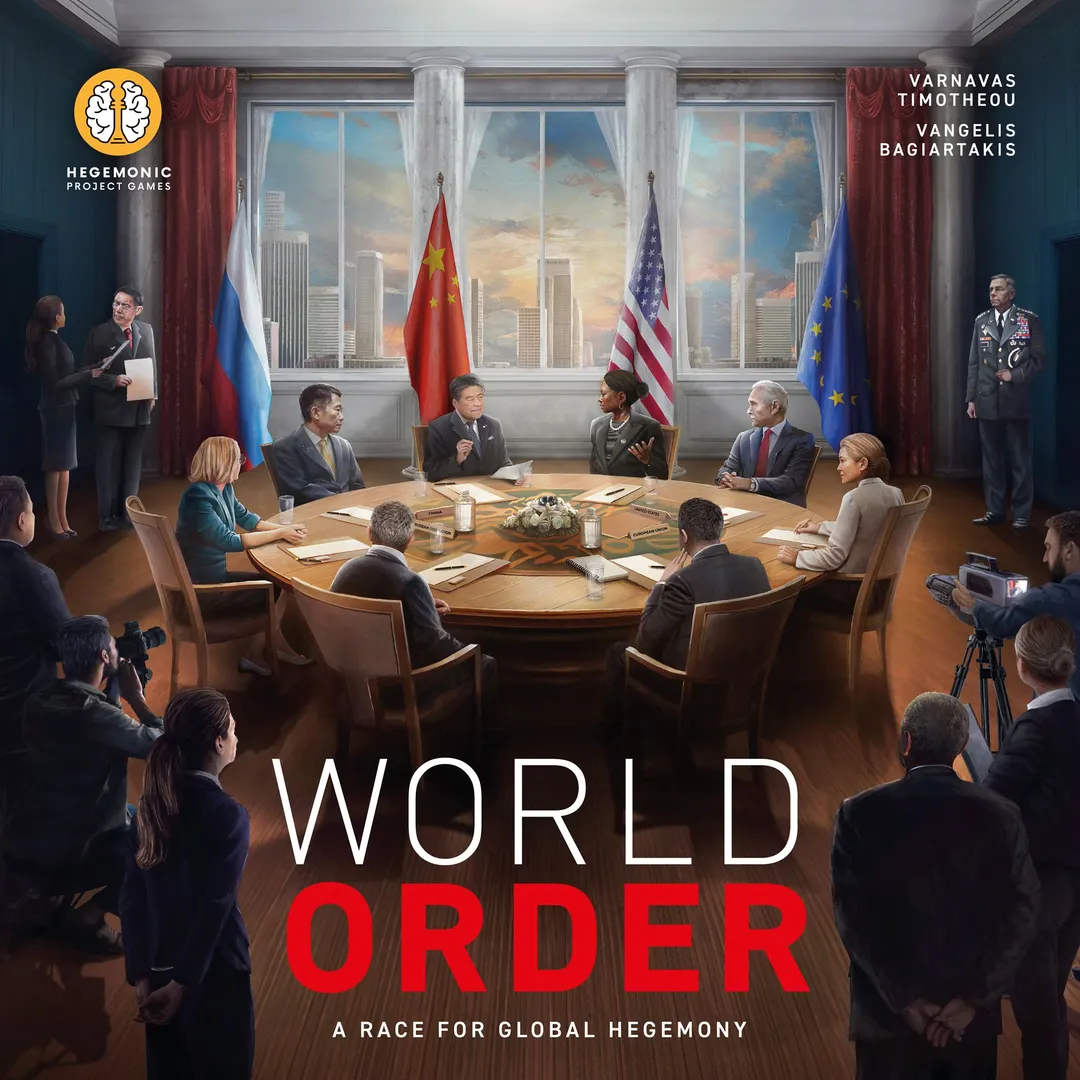
World Order
- 2–4 graczy
- 120–180 min
- Złożoność 3,8/5
- 2026
2026
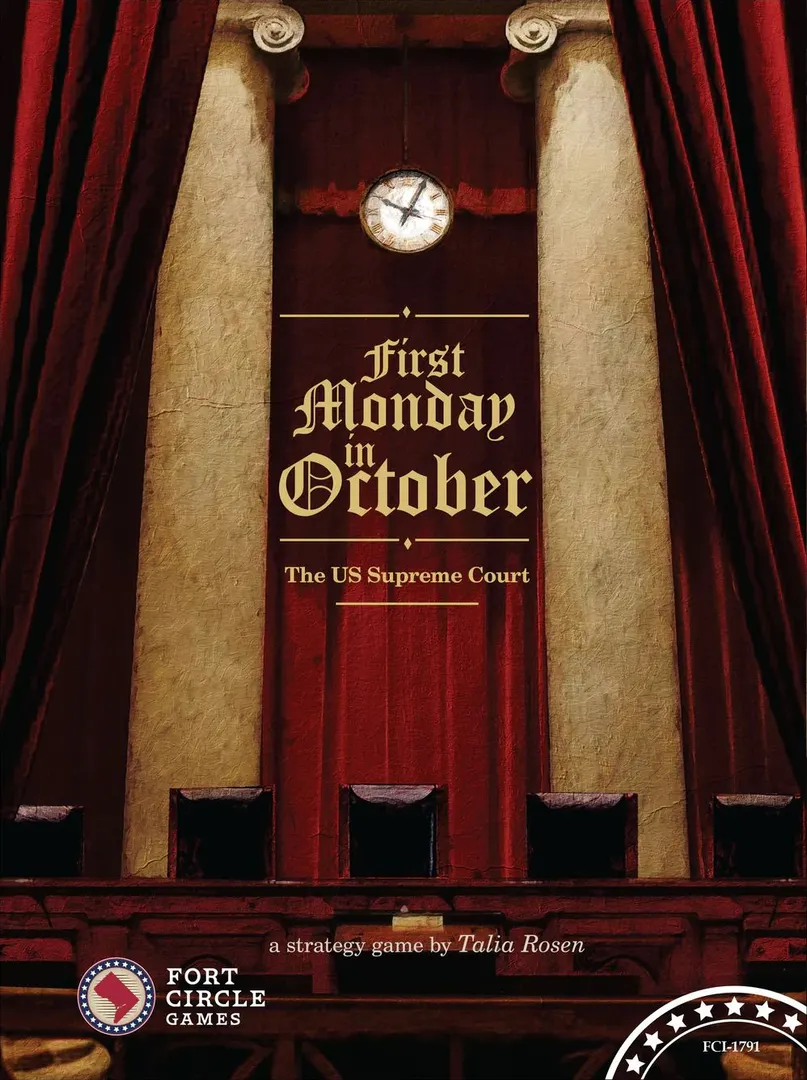
Pomoc w zasadach gry First Monday in October
Zrozumiałe wyjaśnienia tur, efektów kart i spornych sytuacji z odnośnikami do oficjalnych źródeł i zapisaną historią pytań.
Dla 1 gracza
Co chcesz wiedzieć?
Odpowiedzi pochodzą z oficjalnej instrukcji, ze stroną do sprawdzenia.
First Monday in October to gra planszowa wydana w 2026 roku dla 1–4 graczy, z rozgrywką trwającą 90–120 minut i dla osób od 12 lat. Projekt gry: Talia Rosen. Główne mechaniki: Dice Rolling, Area Majority / Influence i End Game Bonuses.






Po angielsku
On the First Monday in October, the all-powerful Justices of the U.S. Supreme Court gather each year in their "marble palace" to decide the fate of a nation. Over the course of two hours, First Monday in October re-creates the history of the U.S. Supreme Court from 1789 to the present day, through three distinct eras: Era I represents the founding of the Court in 1789 through the Civil War in 1865; Era II represents the time period from 1866 until the seminal decision of Brown v. Board in 1954; and Era III represents the modern era from 1955 until 2010. Players compete to score renown points in this card-driven strategy game by advocating for the winning side of cases decided by the Supreme Court and by shaping the judicial philosophy of the Court to align with their objectives. During each round, players can choose to place their clerks on what they hope to be the winning side of cases as they progress along the Docket track. In order to help their litigants win, players can take actions to change the composition of the Court by encouraging Justices throughout history to retire and by supporting judicial candidates. At the end of each round, one case will be scored and awarded to the player with the most clerks on the prevailing side. The player with the most points at the end of the game wins. Each player represents a long-standing institution or school of thought attempting to gain renown by shaping the composition of the high court. Players need to use their limited influence and actions wisely to manipulate the judicial philosophy of the Court and to prevail in as many cases as possible. Commerce Clause: This track represents the scope of Article I, Section 8 of the U.S. Constitution, which grants Congress the power to "regulate commerce" among the several states. Equality & Liberty: This track broadly represents the scope of individual equality and liberty, including but not limited to the 14th Amendment (i.e., equal protection, due process, and privacy rights). Free Speech: This track represents the obligation in the 1st Amendment that Congress make no law abridging a person's freedom of speech, and the scope of permissible restrictions on that freedom. Executive Power: This track broadly represents the scope of Article II of the U.S. Constitution, which enumerates the powers of the executive branch, including the Office of the President and law enforcement. Shifting each philosophy one way generally represents a more expansive Federalist interpretation of the above constitutional provisions that supports a stronger centralized federal government, whereas shifting each philosophy the other direction generally represents a more narrow Anti-Federalist application of these provisions that supports a more decentralized approach to government with less power concentrated at the federal level. —description from the publisher
Według katalogu First Monday in October obsługuje od 1 do 4 graczy. Ten zakres odpowiada liczbie graczy podanej przez wydawcę, więc grę można przygotować dla dowolnej grupy w jego granicach. Przygotowanie, niektóre zasady i punktacja mogą jednak różnić się w zależności od liczby graczy; dokładną konfigurację sprawdź w instrukcji swojego wydania.
Podany czas rozgrywki w First Monday in October wynosi 90–120 minut. To szacunek wydawcy dla pełnej partii. Rzeczywisty czas zależy od grupy, liczby graczy i znajomości zasad: pierwsze partie zwykle trwają dłużej, a doświadczone grupy kończą szybciej. Przygotowanie gry i tłumaczenie zasad nie są wliczone w ten szacunek.
Katalog podaje dla First Monday in October wiek od 12 lat. To zalecenie wydawcy, które uwzględnia wymagania dotyczące czytania, złożoność zasad i drobne elementy, a nie tylko tematykę. Młodsi gracze często mogą dołączyć z pomocą dorosłego; sprawdź zalecenie wiekowe swojego wydania i weź pod uwagę doświadczenie grupy z grami planszowymi.
First Monday in October ma ocenę złożoności 3,0 na 5 według graczy BoardGameGeek, co czyni ją grą średnio złożoną. Ocena pokazuje, ile znajomości zasad, planowania i podejmowania decyzji wymaga typowa rozgrywka. Cięższe gry wymagają dłuższego pierwszego tłumaczenia, dlatego przed wieczorem z grami warto skorzystać z przewodnika przygotowania.
First Monday in October należy do tych kategorii: Political i Educational. Główne mechaniki to Dice Rolling, Area Majority / Influence i End Game Bonuses. Kategorie opisują temat i świat gry, a mechaniki to, co gracze faktycznie robią w swojej turze. Każda mechanika prowadzi do strony katalogu z podobnymi grami, co pomaga znaleźć coś porównywalnego na kolejny wieczór.
Autorzy wymienieni przy First Monday in October to: Talia Rosen. Te informacje pochodzą z opublikowanych danych gry i wskazują osoby odpowiedzialne za jej projekt, a nie ilustratorów czy wydawców. Strony autorów w MeepleRules zbierają inne tytuły tych samych twórców, co pomaga, gdy gra ci się podoba i szukasz podobnych.
W katalogu First Monday in October figuruje jako gra podstawowa. Można w nią grać samodzielnie, korzystając z elementów z pudełka, bez żadnego innego tytułu. Dodatki, jeśli istnieją, dokładają nową zawartość lub zasady i są wymienione w katalogu osobno, z odnośnikiem do tej gry podstawowej.